- English
- French
- German
- Portuguese
- Spanish
- Russian
- Japanese
- Korean
- Arabic
- Irish
- Greek
- Turkish
- Italian
- Danish
- Romanian
- Indonesian
- Czech
- Afrikaans
- Swedish
- Polish
- Basque
- Catalan
- Esperanto
- Hindi
- Lao
- Albanian
- Amharic
- Armenian
- Azerbaijani
- Belarusian
- Bengali
- Bosnian
- Bulgarian
- Cebuano
- Chichewa
- Corsican
- Croatian
- Dutch
- Estonian
- Filipino
- Finnish
- Frisian
- Galician
- Georgian
- Gujarati
- Haitian
- Hausa
- Hawaiian
- Hebrew
- Hmong
- Hungarian
- Icelandic
- Igbo
- Javanese
- Kannada
- Kazakh
- Khmer
- Kurdish
- Kyrgyz
- Latin
- Latvian
- Lithuanian
- Luxembou..
- Macedonian
- Malagasy
- Malay
- Malayalam
- Maltese
- Maori
- Marathi
- Mongolian
- Burmese
- Nepali
- Norwegian
- Pashto
- Persian
- Punjabi
- Serbian
- Sesotho
- Sinhala
- Slovak
- Slovenian
- Somali
- Samoan
- Scots Gaelic
- Shona
- Sindhi
- Sundanese
- Swahili
- Tajik
- Tamil
- Telugu
- Thai
- Ukrainian
- Urdu
- Uzbek
- Vietnamese
- Welsh
- Xhosa
- Yiddish
- Yoruba
- Zulu
Buyer’s Guide: How to Choose the Best Ceiling T Grid Roll Forming Machine
Selecting the right ceiling T-grid roll shaping machine is significant for producers looking to deliver high-quality suspended ceiling components proficiently. With various alternatives accessible in the advertise, it can be challenging to decide which machine will best meet your generation needs and quality benchmarks. This comprehensive direct will walk you through the key components to consider when choosing a ceiling T grid roll forming machine, making a difference for you to make an educated choice for your business.
What criteria determine the best ceiling T-grid roll forming machine for suspended ceiling production?
When evaluating ceiling T-grid roll forming machines, several critical factors come into play:
Production Capacity and Speed
One of the essential contemplations is the machine's generation capacity. High-quality ceiling T grid roll forming machines regularly offer generation speeds extending from 15-40 meters per diminutive. The perfect speed for your operation depends on your production volume needs and the complexity of the profiles you require to produce.
Material Compatibility
Ensure the machine can handle the particular materials you proposed to utilize. Most ceiling T-grid profiles are made from galvanized steel or aluminum, with thicknesses ordinarily extending from 0.3mm to 0.5mm. A flexible machine that can handle different fabric sorts and thicknesses offers more adaptability for your generation needs.
Profile Precision and Consistency
The precision of the shaped profiles is fundamental in ceiling framework frameworks. See for machines that offer tight resistances and reliable yield. Progressed frameworks utilize servo engines and precision-engineered shaping stations to maintain dimensional exactness throughout long production runs.
Automation and Control Systems
Modern ceiling T-grid roll forming machines consolidate modern control frameworks, frequently including PLC (Programmable Logic Controller) interfacing and touch-screen HMIs (Human-Machine Interfaces). These frameworks permit exact control over generation parameters, simple profile changeovers, and real-time observing of machine performance.
Durability and Reliability
Given the ceaseless operation of these machines frequently persevere, strength is a key calculate. See for machines built with high-quality materials, such as heat-treated steel for shaping rollers and vigorous systems planned to withstand the rigors of long-term use.
Customization Capabilities
The capacity to create different T-grid profiles with a ceiling T grid roll forming machine is important for producers serving assorted advertising needs. Machines that offer speedy and simple profile changes or measured plans for including unused profile capabilities give more flexibility and future-proofing for your investment.
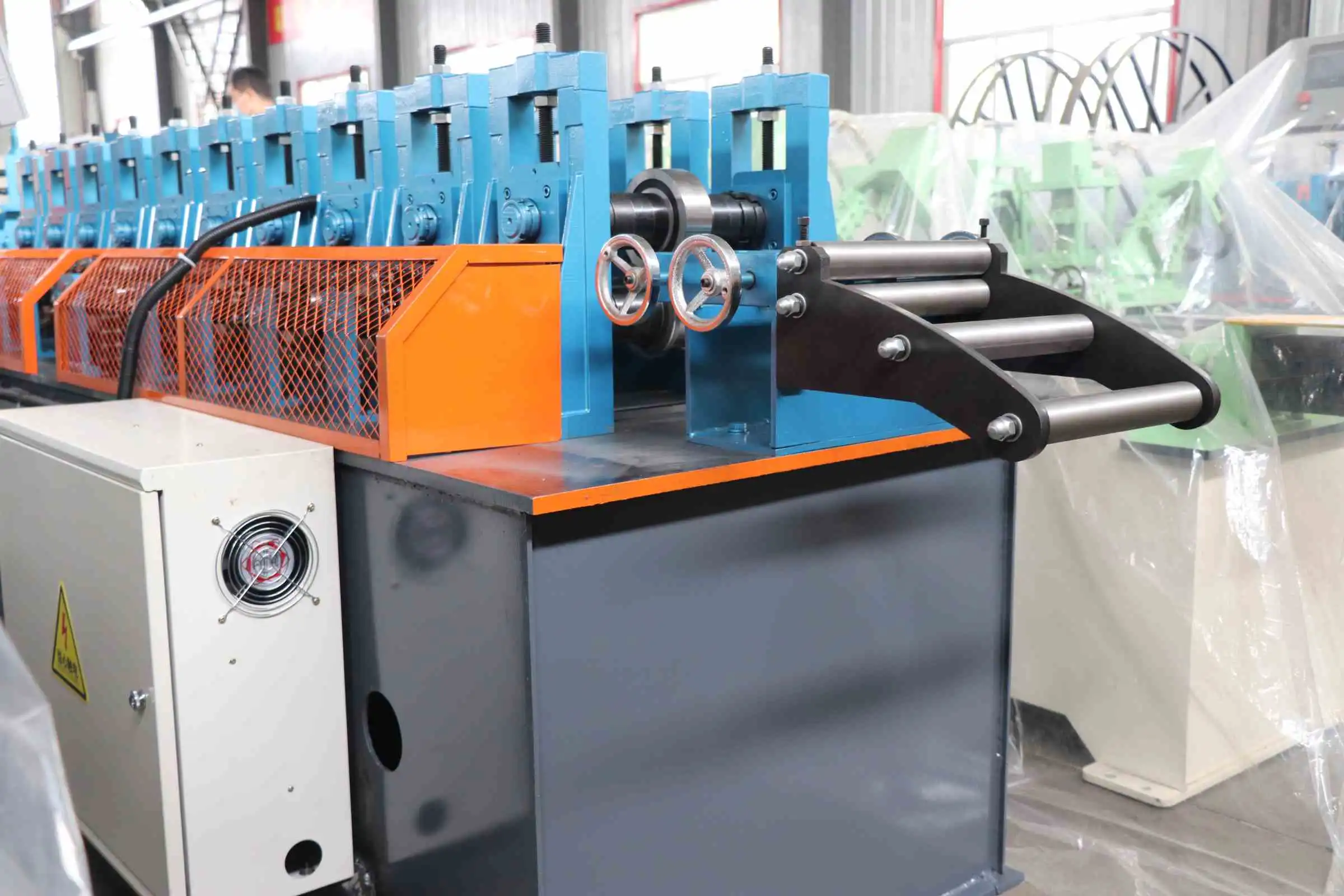
Design and performance features to look for in a ceiling T-grid roll former
When evaluating the design and performance of a ceiling T grid roll forming machine, pay close attention to these key features:
Roller Design and Material
The quality of the forming rollers significantly impacts the finished product's accuracy and surface quality. Look for machines with:
- Precision-machined rollers made from high-grade apparatus steel (e.g., Cr12, GCr15)
- Heat-treated rollers with surface hardness of HRC58-62 for amplified wear resistance
- Roller setups optimized for a smooth fabric stream and negligible stretch on the sheet metal
Drive System
The drive system affects the machine's performance, energy efficiency, and maintenance requirements. Consider machines featuring:
- High-efficiency gearboxes or servo engine frameworks for exact speed control
- Direct drive frameworks that diminish control loss and maintenance compared to chain-driven setups
- Variable frequency drives (VFDs) for smooth speed alterations and vitality savings
Cutting Mechanism
Efficient and precise cutting is crucial for maintaining production speed and quality. Advanced machines offer:
- Flying cut frameworks that permit persistent fabric nourish without ceasing for cutting
- Hydraulic or servo-driven cutters for clean, burr-free cuts
- Programmable length control for exact and steady piece lengths
Material Feeding and Alignment
Proper material handling at the input stage is critical for consistent output. Look for:
- Motorized decoilers with pressure control to guarantee smooth fabric feed
- Guide frameworks with fine alteration capabilities to keep up exact fabric alignment
- Pre-punching stations for making holder gaps or other highlights, some sometimes recently forming
Punching and Notching Capabilities
Many ceiling T-grid profiles require punching or notching operations. Advanced machines integrate these features:
- Servo-controlled punching stations for precise gap placement
- Multi-function punching units capable of making different gap designs and notches
- Quick-change tooling frameworks for diminished setup times between profile changes
Safety Features
Operator safety is paramount. Ensure the machine includes:
- Emergency stop buttons at key locations around the machine
- Safety guards and enclosures around moving parts and pinch points
- Light curtains or other presence-sensing devices in operator areas
Maintenance and Serviceability
Consider the long-term maintenance aspects of the ceiling T grid roll forming machine:
- Easily accessible lubrication points and wear components
- Modular design allowing for quick replacement of individual components
- Remote diagnostics capabilities for efficient troubleshooting and support
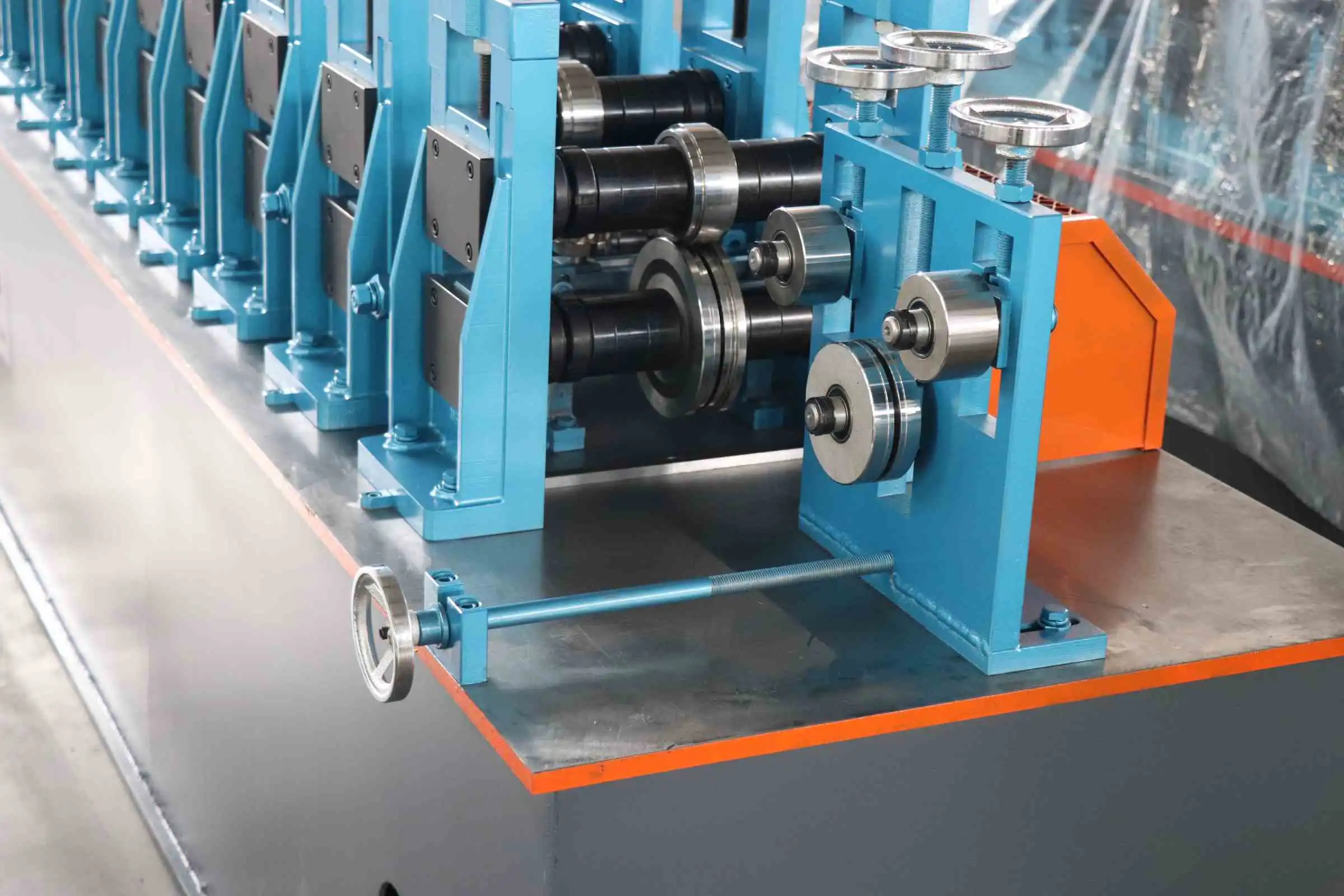
Applications and throughput requirements for ceiling T-grid manufacturing lines
Understanding your particular application needs and generation volume prerequisites is significant in selecting the right ceiling T grid roll forming machine. Let's investigate different scenarios and how they affect machine selection:
High-Volume Production for Large-Scale Projects
For manufacturers supplying large commercial or institutional projects, high-throughput machines are essential:
- Look for machines with generation speeds of 30-40 meters per minute or higher
- Consider dual-line setups for concurrent generation of primary tees and cross tees
- Automated bundling and bundling frameworks have become vital for taking care of tall yields volumes
Flexible Production for Diverse Product Lines
Manufacturers serving varied markets may require greater flexibility:
- Opt for machines with quick-change tooling frameworks for quick profile switchovers
- Consider secluded machines that permit the simple expansion of unused profile capabilities
- Look for control frameworks that can store different profile settings for simple recall
Specialty and Custom Profiles
For producers focusing on unique or proprietary ceiling grid systems:
- Seek machines with customizable roller plans to suit non-standard profiles
- Consider machines with coordinates, embossing, or texturing capabilities for enhancing finishes
- Look for producers willing to collaborate on custom machine designs
Entry-Level or Small-Scale Production
Smaller manufacturers or those new to T-grid production may have different priorities:
- Consider compact, all-in-one machines that combine forming, punching, and cutting in a single unit
- Look for machines with lower initial investment costs but room for future upgrades
- Prioritize ease of use and straightforward maintenance requirements
Integrated Production Lines
For comprehensive ceiling system manufacturers:
- Consider T-grid machines that can be effectively coordinated with other generation gear (e.g., tile manufacturing, packaging lines)
- Look for machines with standardized communication conventions for consistent integration with plant administration systems
- Evaluate the potential for future development and how effortlessly the machine can be joined into a bigger generation ecosystem
Energy Efficiency and Sustainability Considerations
As energy costs and environmental concerns rise, consider:
- Machines with energy-efficient motors and drive systems
- Equipment designed for minimal material waste and scrap
- Machines with the capability to process recycled or eco-friendly materials
When assessing throughput prerequisites, it's fundamental to consider not fair current needs but also anticipated development. A machine that meets today's generation volumes may end up a bottleneck as your trade grows. Alternatively, over-investing in capacity that won't be utilized can strain budgetary resources.
To accurately assess your throughput needs:
- Analyze authentic deals, information, and development trends
- Consider regular vacillations in demand
- Factor in potential unused markets or item lines
- Evaluate the effect of strides made in productivity on your competitiveness
Remember that the highest-speed ceiling T grid roll forming machine isn't continuously the best choice. Adjust speed with other variables like quality, adaptability, and add up to fetch of possession to discover the ideal arrangement for your business.
Conclusion
Choosing the best ceiling T grid roll forming machine manufacturer requires cautious thought of various components, from generation capacity and fabric compatibility to progressed features and long-term unwavering quality. By altogether assessing your particular needs against the criteria sketched out in this direct, you can make an educated choice that will back your fabricating objectives and drive trade growth.
Remember that the beginning venture in a high-quality machine frequently pays profits through increased efficiency, decreased downtime, and prevalent product quality. As you explore the determination handle, do not hesitate to lock in with trustworthy producers and look for point by point exhibits or trial runs of the gear you're considering.
Ultimately, the best ceiling T-grid roll forming machine for your operation will be one that not as it were meets your current generation necessities but also gives the adaptability and flexibility to adjust to future advertise requests and innovative developments in the suspended ceiling industry.
FAQs
Q1: How often do ceiling T-grid roll forming machines require maintenance?
A: Maintenance frequency depends on usage intensity and environmental conditions. Generally, daily visual inspections, weekly lubrication checks, and monthly more thorough inspections are recommended. Major servicing is typically required annually or every 2000-3000 operating hours, whichever comes first. Always refer to the manufacturer's specific maintenance schedule for your machine model.
Q2: Can a single ceiling T-grid roll forming machine produce both main tees and cross tees?
A: Yes, many modern machines are designed with quick-change tooling systems that allow for the production of both main tees and cross tees on the same line. However, for high-volume operations, separate dedicated lines for each profile type may be more efficient.
Q3: What is the typical return on investment (ROI) period for a ceiling T-grid roll forming machine?
A: The ROI period can vary widely depending on factors such as production volume, market conditions, and the specific machine's capabilities. However, many manufacturers report ROI periods of 1-3 years for well-matched, high-quality machines operating at near-capacity in stable markets. It's crucial to conduct a detailed financial analysis based on your specific business case when evaluating potential investments.
High-Quality Ceiling T Grid Roll Forming Machine Manufacturers | ZTRFM
Are you in the market for a top-tier ceiling T grid roll forming machine? Look no further than Cangzhou Zhongtuo Roll Forming Machinery Co., Ltd. (ZTRFM). With over a decade of experience in designing and manufacturing roll forming equipment, we offer customized solutions tailored to your specific production needs.
Our ceiling T grid roll forming machines are built with precision-engineered components, ensuring high-speed production without compromising on quality. Whether you need a compact, entry-level machine or a high-capacity production line, our expert team can guide you to the perfect solution.
Take advantage of our industry-leading expertise and commitment to customer satisfaction. Contact us today at coo@zhongtuocn.com to discuss your ceiling T grid production requirements and discover how ZTRFM can elevate your manufacturing capabilities.
References
1. Smith, J. (2022). Advanced Manufacturing Techniques in Suspended Ceiling Systems. Journal of Building Technologies, 45(3), 278-295.
2. Johnson, A. & Lee, S. (2023). Optimization of Roll Forming Processes for Light Gauge Steel Applications. International Journal of Metal Forming, 16(2), 189-204.
3. Brown, R. (2021). Energy Efficiency in Modern Roll Forming Equipment. Sustainable Manufacturing Review, 8(4), 412-428.
4. Garcia, M. et al. (2023). Quality Control Strategies in T-Grid Production for Suspended Ceilings. Construction Materials Today, 12(1), 67-82.
_1750323743240.webp)