- English
- French
- German
- Portuguese
- Spanish
- Russian
- Japanese
- Korean
- Arabic
- Irish
- Greek
- Turkish
- Italian
- Danish
- Romanian
- Indonesian
- Czech
- Afrikaans
- Swedish
- Polish
- Basque
- Catalan
- Esperanto
- Hindi
- Lao
- Albanian
- Amharic
- Armenian
- Azerbaijani
- Belarusian
- Bengali
- Bosnian
- Bulgarian
- Cebuano
- Chichewa
- Corsican
- Croatian
- Dutch
- Estonian
- Filipino
- Finnish
- Frisian
- Galician
- Georgian
- Gujarati
- Haitian
- Hausa
- Hawaiian
- Hebrew
- Hmong
- Hungarian
- Icelandic
- Igbo
- Javanese
- Kannada
- Kazakh
- Khmer
- Kurdish
- Kyrgyz
- Latin
- Latvian
- Lithuanian
- Luxembou..
- Macedonian
- Malagasy
- Malay
- Malayalam
- Maltese
- Maori
- Marathi
- Mongolian
- Burmese
- Nepali
- Norwegian
- Pashto
- Persian
- Punjabi
- Serbian
- Sesotho
- Sinhala
- Slovak
- Slovenian
- Somali
- Samoan
- Scots Gaelic
- Shona
- Sindhi
- Sundanese
- Swahili
- Tajik
- Tamil
- Telugu
- Thai
- Ukrainian
- Urdu
- Uzbek
- Vietnamese
- Welsh
- Xhosa
- Yiddish
- Yoruba
- Zulu
High Speed PBR Roll Former for Large Scale Panel Output
Having the right tools is very important when you want to make more panels. A PBR roll former made for high-speed operations changes the way metal roofing and wall panels are made, making it possible to make consistent quality panels in large enough quantities to meet today's tight construction schedules. These machines are great at making purlin bearing rib panels, which are profiles with an extended bearing leg that give better structural support and weathertight sealing when they are properly overlapped. As companies that make building systems and composite panels try to boost output without lowering quality, they need to know more about the features and benefits of modern high-speed forming technology in order to make smart purchasing decisions that will help them reach their long-term business goals.
Understanding the High-Speed PBR Roll Former Technology
High-speed PBR roll forming technology is a big step forward in cold metal forming. It combines mechanical accuracy with automation to make panels at speeds that weren't possible before. The main step is to feed metal coil stock through a series of strategically placed roller stations. These stations gradually shape the material into the desired shape without heating it or damaging the protective coatings on galvanized or pre-painted steel.
Core Mechanics of Panel Formation
Before the metal is formed, it is decoiled and fed through systems that keep the tension and alignment constant as it moves into the roller stations. At each station, small amounts of bending are done to turn a flat sheet into the distinctive PBR profile, which has deep trapezoidal ribs and an extended purlin bearing leg. This method of gradually shaping the material spreads stress evenly, which stops protective coatings from microcracking and keeps the structural integrity of high-tensile steel grades up to 550 MPa yield strength.
Design Elements Enabling Speed and Precision
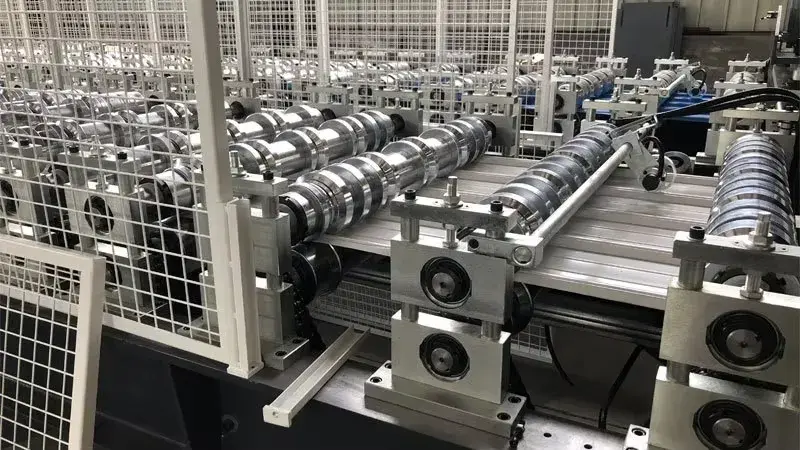
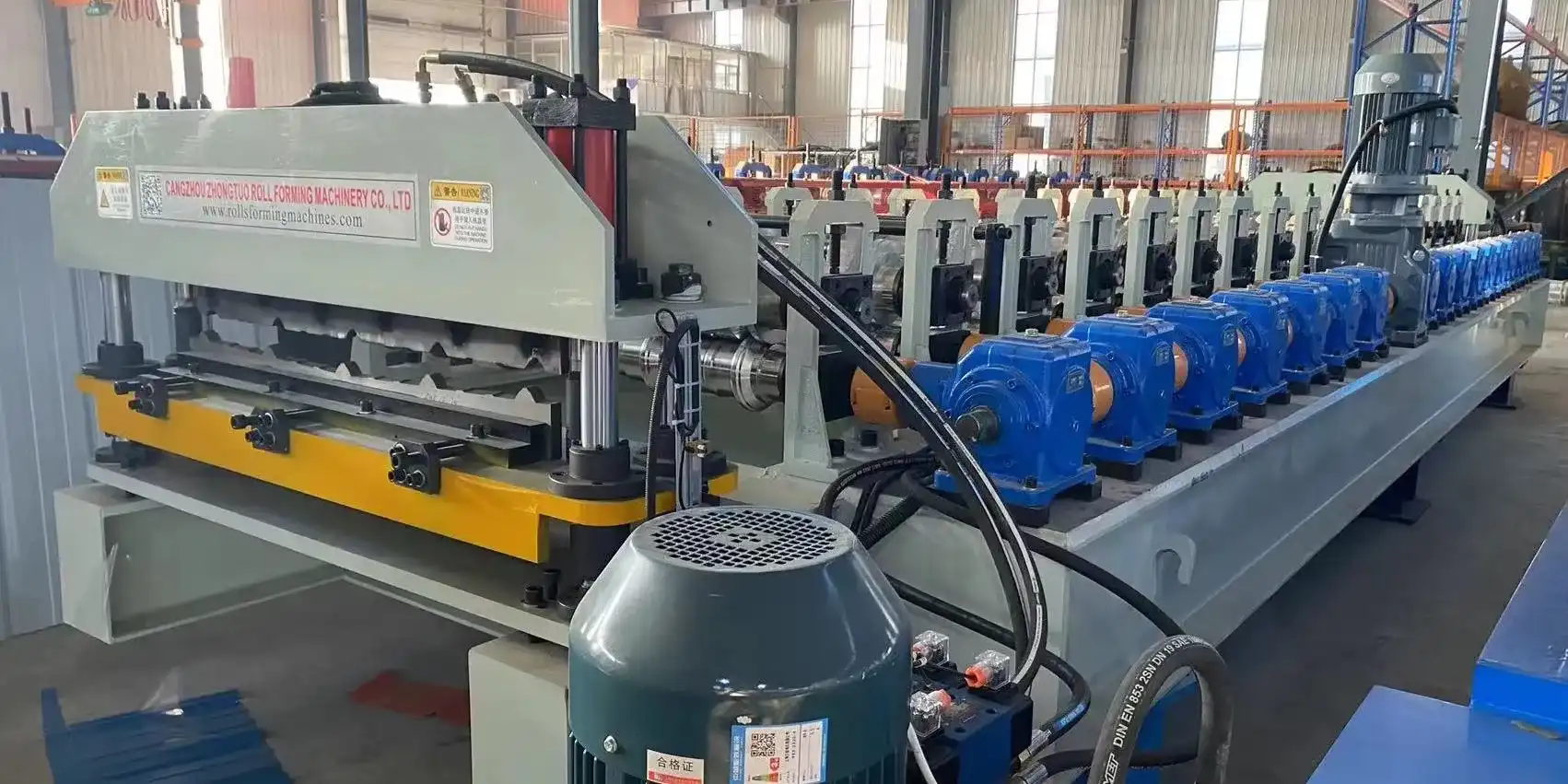
Modern high-speed machines have a number of engineering features that make it possible to make things quickly without lowering the quality. The deflection resistance is directly related to the diameter of the roller shaft. Our 80mm solid shaft construction gives you the rigidity you need to keep precise tolerances even when running at high speeds all the time. With 19 rows of roller stations, controlled incremental forming can be used to make panels that are accurate to within ±1 mm in width and ±2 mm in length. Drive systems that use gears and double chains make sure that all of the forming stations move at the same time. This gets rid of the speed differences that make finished panels warp or curve.
Production Stages and Control Systems
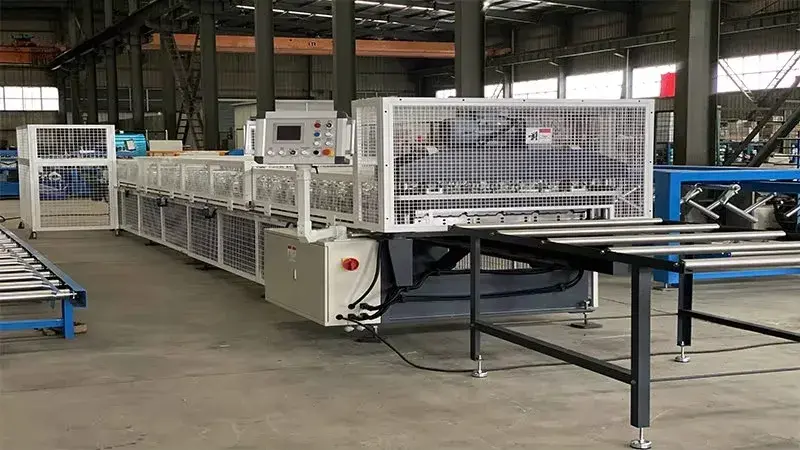
Several integrated stages work together to make the whole production process. Programmable feeding systems let material in. These systems can handle coil widths that are right for 36-inch cover panels. PLC-based control systems keep an eye on speed, pressure, and alignment as the metal moves through the forming stations and make changes in real time. Hydraulic shears with Cr12MoV blades are used in the automated cutting system. These blades are designed to cut three-dimensional profiles cleanly, without any burrs or deformation. This automation cuts down on the need for operator input while keeping the quality of the output consistent over long production runs.
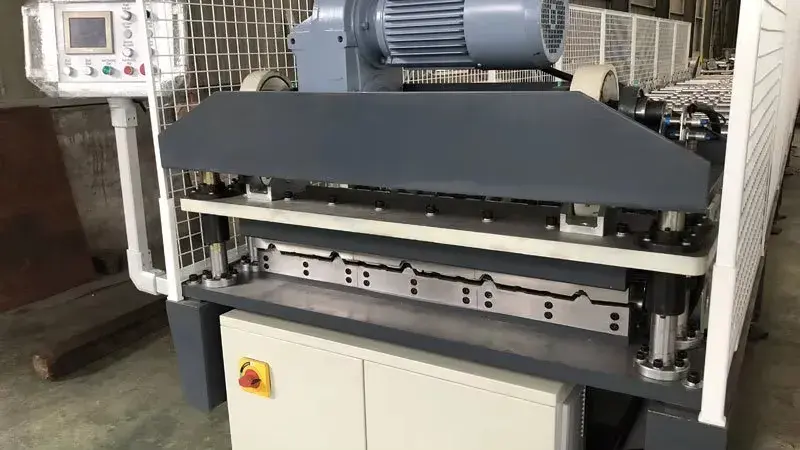
Types and Designs of PBR Roll Former Machines for Large-Scale Output
Knowing the different ways that machines can be set up helps procurement teams match the capabilities of equipment to the needs of specific production tasks. Depending on the panel specifications, material types, and level of automation that is wanted, each design has its own benefits.
Manual vs. Fully Automated Configurations
Entry-level manual machines, such as the PBR roll former, need an operator at several stages of production, such as loading the material, measuring the length, and starting the cutting process. These systems are good for manufacturers who don't need to make a lot of products or who care more about the cost of the initial investment than how well it works in the long run. Fully automated models have quality monitoring sensors that look for changes in the profile during production, programmable length controllers, and automatic stacking systems. The automation cuts down on the work needed per panel and gets rid of mistakes made by humans when measuring and cutting. This makes these configurations perfect for large-scale operations that make thousands of linear feet every day.
Structural Frame Design Considerations
The way the machine frame is built has a big effect on its long-term performance and how easy it is to maintain. Integrated welded frames are the most rigid and are less likely to move out of alignment over time. Our 350mm H-beam structure with a 20mm welded steel middle support plate makes the machine very stable when it's running at high speeds, reducing vibrations that can cause problems with the product. This strong construction keeps the rollers in place even when processing maximum gauge material at full speed. This makes sure that the panel geometry stays the same from one production run to the next.
Material Compatibility and Gauge Range
Different PBR roll forming machines can work with different types of materials. The most common thickness needs for commercial and industrial roofing are met by being able to work with 24-26 gauge material. Machines made to work with heavy gauge have motors that can handle more power and roller shafts that are stronger to handle the higher forming forces needed. It's not just the gauge that needs to be compatible; machines must be able to work with bare galvanized steel, Galvalume, and factory-applied paint systems without damaging the finishes on the surfaces. Our high-grade 45# forged steel rollers are hard chrome-plated to protect pre-painted coils from scratches and to make the rollers very resistant to wear, which extends the life of your tools.
Evaluating and Choosing the Right High Speed PBR Roll Former
When choosing the right forming equipment, you need to carefully consider a number of factors that affect both the short-term and long-term success of the business. Smart procurement strikes a balance between technical requirements, the dependability of the supplier, and the total cost of ownership.
Capacity Matching and Production Integration
By figuring out what your actual production needs are, you can avoid both under-capacity bottlenecks and over-investment in features that you don't need. Figure out how many linear feet of panel output you want each day and compare that to the machine's top speed, taking into account setup time, material changes, and regular adjustments. Integration with current production processes is very important. Think about how the forming line will connect to your systems for handling coils, inspecting quality, and packaging panels. Machines that can change their speeds make it easier to balance throughput with other parts of the production line. This keeps the throughput from going faster than the downstream handling capacity or sitting idle while materials are being prepared.
Operational Cost Analysis
The purchase price is only one part of the total cost of ownership. Energy use varies a lot depending on the type of drive system and motor configuration. To get accurate operational cost estimates, you should ask for actual power consumption data at normal operating speeds. The need for maintenance has a direct effect on long-term costs, and replacing tools is a high recurring cost. How long a roller lasts depends a lot on how hard the material is and how the surface is treated. Our HRC 58–62 hardened and chrome-plated rollers keep their measurements even after millions of linear feet of production. This means that they don't need to be replaced as often and don't cause as much downtime, which saves money.
Supplier Certification and Support Infrastructure
A high-speed PBR roll former contributes to sustainability through energy-efficient drive systems that reduce power consumption per linear foot of panel produced. Machines with servo-driven roll stations and variable frequency drives typically use 15–20% less energy than fixed-speed counterparts. Additionally, durable hard-chrome-plated rollers (HRC 58–62) extend tool life beyond 500,000 linear meters, reducing material waste from roller replacement. Precise forming also minimizes coil scrap rates to below 2%, directly supporting your facility's waste reduction goals.
Comparative Technology Analysis
When comparing PBR roll formers, focus on the bearing leg contact validation and rib height consistency—not general specs. A machine that cannot maintain ±0.05 mm camber over 3 meters will fail to prevent water leakage, regardless of its advertised speed.
Industry Applications and Future Trends of High Speed PBR Roll Formers
PBR panel forming technology is used by a wide range of market segments, each with its own specific needs that affect the choice of equipment and how it is set up. Businesses can make smart investment decisions by keeping these uses in mind along with new technological trends.
Current Market Applications
Manufacturers of building roofing systems are the biggest users. They make architectural panels for buildings in business, industry, and agriculture. For weathertight installation and uniformity in appearance over large roof areas, these tasks need panels with the same shape. Light steel structure manufacturers use PBR panels as cladding systems for pre-engineered metal buildings. The overall cost of the building is affected by the strength and span of the panels. Composite panel makers put together PBR face sheets and insulation cores, which needs careful measurement control to make sure the layers stick together properly during the lamination process. Because PBR panels have an extended bearing leg, they are perfect for retrofit situations where new roofing is put on top of existing substrates. This is because the profile geometry lets the panels overlap and attach through multiple layers correctly.
Emerging Technology Integration
Automation keeps getting better, moving beyond simple PLC control and toward full production management systems. IoT integration lets you keep an eye on production in real time and use data analytics to find ways to save money and figure out what repairs are needed before they happen. Manufacturers of equipment can troubleshoot problems by connecting to the internet and using remote diagnostic tools. This speeds up response times and reduces the need for on-site service visits. Some manufacturers now use vision systems that check the shape and quality of the surface of the panel all the time. These systems automatically mark any problems and change the parameters to keep the specifications. International engineering and EPC firms that use equipment at multiple sites and need standardized performance monitoring are especially interested in these technologies.
Sustainability and Energy Efficiency
Environmental factors are becoming more and more important in the design and use of equipment. Energy-efficient drive systems lower the amount of power needed per linear foot of panel made. This lowers costs and helps companies meet their sustainability goals. Some manufacturers now make machines that can process recycled steel or bio-based coating systems. This gives environmentally friendly projects more material options. When PBR panels are made correctly, they last a long time and don't need to be replaced as often. Panels made on precise equipment with high-quality materials usually last 30 to 50 years, which spreads out the energy used to make them over longer periods of time.
Strategic Investment Considerations
When choosing forming equipment, scalability is important, including for the PBR roll former. Modular designs let you increase capacity by upgrading parts instead of buying new equipment altogether. Companies that want to grow should look for machines that can be automated in more ways and suppliers that can guarantee they will have parts for a long time. Recent problems in the global supply chain show how important it is to choose manufacturers with a wide range of production facilities and inventory networks. Companies like ZTRFM, which have delivered goods to more than 150 countries and offer full support for spare parts, keep the production line running by making the supply chain strong. Building relationships with suppliers who can help with engineering for custom profile development gives you a competitive edge by letting you make your products stand out and serve niche markets.
Conclusion
High-speed PBR roll forming technology gives modern panel manufacturers the production capacity, quality consistency, and operational efficiency they need to stay competitive. When procurement teams know the technical details that affect performance, like the number of roller stations, the diameter of the shaft, the drive systems, and the cutting mechanisms, they can objectively compare equipment to their production needs. The best implementations find a good balance between the machine's capabilities and the supplier's support infrastructure. This way, the money spent on equipment is turned into reliable long-term production capacity. Manufacturing priorities are still being shaped by automation, connectivity, and sustainability. Businesses can adapt to changing market needs while keeping the quality of production their customers expect by buying flexible equipment from well-known suppliers with proven global support networks.
FAQ
1. What production speed should I expect from a high-speed machine?
Production speeds depend on the thickness of the material, the complexity of the profile, and the design of the cutting system. When working with standard 24-26 gauge material, modern high-speed units usually go between 15 and 25 meters per minute. The actual throughput depends on the average length of the panels. Shorter panels need to be cut more often, which lowers the total linear footage per hour compared to longer panels that need fewer cuts.
2. How does material gauge affect machine selection?
Required forming force and roller durability are directly related to the thickness of the material. For 24-26 gauge material, machines are made with roller configurations and drive system capacities that are right for these thicknesses. For processing heavier gauges, the construction needs to be stronger, with motors that can handle more power and reinforced shafts. When you try to run material that is heavier than what the machine can handle, you risk damaging the equipment and making panels that don't fit the specifications.
3. What after-sales support should I expect from reputable suppliers?
Quality suppliers offer full commissioning services, which include overseeing the installation, training operators, and keeping an eye on the first production run. Ongoing support should include technical help that is easy to get, the ability to do diagnostics remotely, and a well-stocked parts inventory for parts that wear out quickly. Your team can do routine maintenance on their own with the help of documentation packages that include maintenance schedules, troubleshooting guides, and adjustment procedures. This way, they know that they can get help from experts when they need it.
Partner with ZTRFM for Your Panel Production Needs
To make more panels, you need equipment that can keep the quality high and make them quickly enough to meet market needs. ZTRFM focuses on creating cold roll forming solutions that use both tried-and-true mechanical design and modern automation. Our quality management systems are backed by ISO9001, CE, and CAS certifications. We have strong 350mm H-beam construction, precision-ground rollers with hard chrome plating, and automated cutting systems in our high-speed PBR roll former configurations that make thousands of panels every day without sacrificing quality. As a PBR roll former manufacturer that ships to more than 150 countries, we know the problems that roofing system makers, composite panel makers, and metal structure fabricators face when they try to make their products. Our technical team can make solutions that are tailored to your exact material needs, profile requirements, and integration needs. Contact our experts at zhongtuorollforming@gmail.com to talk about how our forming technology can help your production.
References
1. Metal Construction Association. (2023). Technical Guidelines for Metal Panel Installation: PBR and R-Panel Systems. Cleveland, OH: Metal Construction Association Publications.
2. Thompson, R. & Martinez, J. (2022). Cold Roll Forming Technology: Principles and Industrial Applications. Detroit: Manufacturing Engineering Press.
3. International Code Council. (2024). International Building Code Requirements for Metal Roof Systems. Washington, DC: ICC Publications.
4. Nielsen, P. (2023). "Advances in Roll Forming Automation and Quality Control Systems." Journal of Manufacturing Processes, 87, 234-248.
5. American Iron and Steel Institute. (2023). Design Guide for Cold-Formed Steel Structural Panel Systems. Washington, DC: AISI Steel Publications.
6. Kumar, S. & Zhang, W. (2024). "Predictive Maintenance Strategies for Roll Forming Equipment in High-Volume Production Environments." International Journal of Advanced Manufacturing Technology, 132(5), 1876-1892.
_1750323743240.webp)