- English
- French
- German
- Portuguese
- Spanish
- Russian
- Japanese
- Korean
- Arabic
- Irish
- Greek
- Turkish
- Italian
- Danish
- Romanian
- Indonesian
- Czech
- Afrikaans
- Swedish
- Polish
- Basque
- Catalan
- Esperanto
- Hindi
- Lao
- Albanian
- Amharic
- Armenian
- Azerbaijani
- Belarusian
- Bengali
- Bosnian
- Bulgarian
- Cebuano
- Chichewa
- Corsican
- Croatian
- Dutch
- Estonian
- Filipino
- Finnish
- Frisian
- Galician
- Georgian
- Gujarati
- Haitian
- Hausa
- Hawaiian
- Hebrew
- Hmong
- Hungarian
- Icelandic
- Igbo
- Javanese
- Kannada
- Kazakh
- Khmer
- Kurdish
- Kyrgyz
- Latin
- Latvian
- Lithuanian
- Luxembou..
- Macedonian
- Malagasy
- Malay
- Malayalam
- Maltese
- Maori
- Marathi
- Mongolian
- Burmese
- Nepali
- Norwegian
- Pashto
- Persian
- Punjabi
- Serbian
- Sesotho
- Sinhala
- Slovak
- Slovenian
- Somali
- Samoan
- Scots Gaelic
- Shona
- Sindhi
- Sundanese
- Swahili
- Tajik
- Tamil
- Telugu
- Thai
- Ukrainian
- Urdu
- Uzbek
- Vietnamese
- Welsh
- Xhosa
- Yiddish
- Yoruba
- Zulu
Pbr Roll Former for Construction and Roofing Contractors
PBR roll formers are cold-forming machines that manufacture purlin-bearing rib panels from wrapped metal bases. This equipment is for roofing and construction enterprises. It makes accurate structural panels from galvanised steel, Galvalume, or pre-painted aluminium with overlapping bearing legs for weatherproofing and weight capacity. PBR roll formers employ innovative roller configurations and automated cutting systems to manufacture panels that can span great lengths between roof purlins while preserving precision for commercial and industrial applications.
Understanding the PBR Roll Former Machine: Functionality and Design Principles
How does PBR panel production work?
The process begins when metal coil material is supplied via an uncoiler station into precisely aligned manufacturing stations. Small bends turn the flat base into the classic PBR shape with elevated ribs and long bearing legs as it passes through each pair of rollers. Modern machines shape high-tensile steel slowly with 19 forming stations to avoid stress fractures and layer damage.
For a PBR sheet roll forming machine, the shaft diameter directly influences forming stability when processing 24–26 gauge structural steel. Typical configurations use 75mm to 85mm solid shafts made from 40Cr or equivalent alloy steel. This prevents deflection under continuous production loads, maintaining consistent panel geometry across the full length of each sheet.
Core Components That Define Performance
Rollers and drives are key to a good panel-forming procedure. Our tools' rollers are composed of high-grade 45# forged steel, which is perfect for sharpening without damaging the surface. Each roller is coated in hard chrome to prevent zinc from clinging to galvanised surfaces and scratching pre-painted surfaces.
350 mm H-beams with 20 mm welded steel centre support plates form the machine body frame. This method distributes operating pressures equally over the equipment base, preventing frame warping and panel quality loss. The driving system employs gear mechanisms and double-chain transmission to transfer power uniformly and maintain forming pressure.
Cutting operations utilise automatic Cr12MoV blades to cut three-dimensional objects without deforming them. Due to its material combination, this blade's cutting blades last 100,000 to 200,000 rounds, longer than steel cutters. ASTM A792 dimensions for commercial construction projects are met by the hydraulic cutting system's 2 mm length control.
Manual Versus Automated System Configurations
Two major equipment systems are available to procurement staff. Mechanical turnbuckles and hand-held measurement instruments modify roller spacing and cutting lengths in manual adjustment systems. These designs can be used by smaller enterprises with restricted gauge ranges or builders that create regular panel lengths for projects.
Automated versions use PLC control systems and HMI touchscreens to store several profiles. Operators choose panel specifications using digital inputs. This initiates the roller and cutting cycle automatic adjustment. Automation saves time and money in panel manufacturing operations. This reduces setup time between product runs while maintaining quality.

Comparing PBR Roll Formers with Other Roll Formers: Making an Informed Choice
Profile Characteristics and Structural Advantages
You may choose wisely by comparing the PBR roll-former to others. Standing seam systems use concealed fasteners and clip mechanisms to produce vertical leg panels that expand with warmth. These panels look attractive and can be utilised in low-slope industrial situations, but they are harder to install and cost more per square foot in materials and labour. PBR panels provide similar weather protection and are quicker to install, making them ideal for industrial warehouses and farm buildings.
Traditional sinusoidal wave patterns are generated via corrugated panel technology but lack PBR forms' structural depth, including PBR roll formers. The ribs aren't high enough to span as far; thus, the purlins must be closer together, raising construction costs. For architectural applications, standing seam panel machines produce vertical leg panels with concealed fasteners. They are less compatible than PBR roll formers and PBR panels, which are utilised in all structures.
Economic Analysis for Production Planning
Manufacturing costs go beyond tool prices. They also consider material efficiency and production speed. PBR-forming machinery on 24-gauge steel at 18 metres per minute creates 1,080 square metres per hour, which is a lot of panels for medium-sized firms. Material scrap rates are normally below 2% with suitable coil handling and cutting processes.
A PBR sheet roll forming machine typically has lower mechanical complexity compared to standing seam equipment. This results in reduced maintenance requirements and lower spare parts costs over five years of operation. For roofing contractors producing their own panels, the machine investment becomes profitable when monthly sheet volume exceeds 15,000 square metres, based on direct material savings and reduced lead times.
Workers realise the cost-effectiveness when they calculate panel production expenses. Direct material costs, equipment amortisation, and manpower reduce manufacturing costs by 40–55 per cent compared to bulk panels. This makes equipment investment profitable for high-volume firms.

Maintenance, Troubleshooting, and Technical Specifications for Long-Term Performance
Essential Maintenance Protocols
Lubrication and component inspection processes must be performed consistently to keep tools operating. Chain drive systems need high-viscosity gear oil every 40 hours to perform effectively. Roller bearing housings need grease gun servicing every 80 hours to revolve smoothly under a steady load.
Hydraulic cutting systems require their fluid tanks to be updated every 2,000 hours to perform well. Operators should monitor hydraulic pressure gauges during manufacturing. System readings within the manufacturer's suggested ranges indicate proper operation. If pressure varies or steadily drops, the seal may be failing and has to be repaired to maintain cutting precision.
Roller surface inspection should occur weekly, examining chrome plating for wear patterns or coating damage. Deeper scoring requires fresh rollers to avoid marking the base; however, surface faults smaller than 0.3 mm don't influence panel quality. Our modular technology enables us to replace rollers without disassembling the station, reducing maintenance downtime.
Common Technical Issues and Resolution Strategies
Panel camber or longitudinal bending indicates unequal rolling pressure between forming locations. Technicians should use precise measurement equipment to keep roller-changing systems parallel. The gaps must be modified in a deliberate manner from the first production station to the last until the material tracks correctly again.
Worn blades or low hydraulic pressure cause cutting system failures with ragged edges or missing shears. Studying the blade's edge should reveal its condition. If the blade is round or chipped, replace it. Checking hydraulic pressure helps reveal if the pump's output satisfies system demands and distinguishes mechanical from fluid power issues.
Panel edge wrinkling indicates a forming speed too rapid for the gauge and tensile strength of the material. Slowing the line by 15-20% and monitoring panel quality can address this problem without technological adjustments. To distribute twisting pressures, materials with yield strengths above 550 MPa may need more forming units.
Critical Technical Specifications
Production locations must ensure their tools have enough electricity. In normal configurations, 380V/480V, 50/60Hz three-phase power supplies and 5.5kW to 7.5kW main motors are employed. Hydraulic stations can cut heavy gauge materials with 3kW to 4kW of power.
Tools with 8–12-metre-long and 1.2–1.5-metre-wide footprints should fit on the floor. To accommodate coil loading and panel release, the manufacturing line is extended by four to six metres. We keep the ceiling height low at 3.5 metres so an overhead crane can reach the coil-moving region.
Material handling defines output variety. Equipment that can handle 24–26 gauge steel, such as a PBR sheet roll forming machine, can roof most businesses. For larger agricultural and industrial structures vulnerable to snow and wind loads, 22-gauge steel is recommended. Including bearing legs, typical panel widths are 900mm to 1,200mm, and complete panel coverage widths are 850mm to 1,150mm after accounting for overlapping bearing legs.
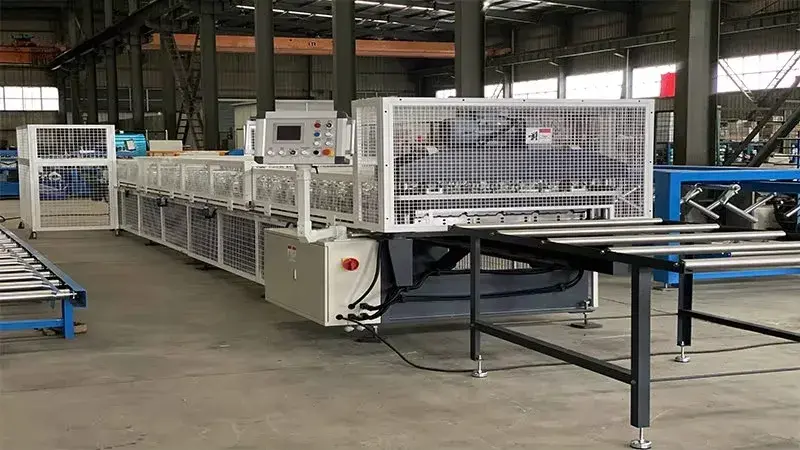
Procurement Guide for PBR Roll Former Machines: Finding Reliable Suppliers and Brands
Supplier Evaluation Criteria
When evaluating a PBR sheet roll forming machine supplier, verify that the equipment is specifically rated for continuous production of purlin bearing rib panels. Key technical documents should include roller station count (typically 18–22 stations for 24-gauge steel), shaft material certification (e.g., 45# forged steel with HRC 50–55 hardness), and cutting blade specifications (Cr12MoV steel with a 100,000–200,000 cycle life). ISO 9001 certification confirms quality management systems, while CE marking ensures electrical and mechanical safety compliance for industrial environments.
Engineering-focused tool producers differ from basic tool sellers in customisation. Contractors that need unique panel sizes, non-standard gauge capacities, or manufacturing line features benefit from in-house design suppliers. Technical guidance during specification generation helps determine the optimal combinations to suit production goals without establishing too many specifications, which adds costs.
After-sales infrastructure affects long-term owner satisfaction. Suppliers with regional service centres and qualified experts can address technological issues faster than manufacturers that simply employ remote support. When replacement parts are stored in the US, downtime waiting for international orders is avoided. This is crucial for firms with continuing manufacturing plans.
Warranty and Support Frameworks
A full warranty should last 12 months after installation or 18 months after shipment. Coverage terms must be unambiguous, especially for high-wear elements like cutting blades and chain drives. Progressive dealers provide extended warranty options for an additional fee, which helps manage maintenance expenditures by providing more information.
Technical documentation quality reflects how much the producer wants the consumer to succeed. Full electrical blueprints, hydraulic schematics, and mechanical assembly drawings allow repair workers to do routine maintenance without outside support. Operators learn quicker and rely less on manufacturer assistance using video training libraries that demonstrate changes and fixes.

Future Trends and Innovations in PBR Roll Former Technology
Automation Integration and Digital Controls
Future PBR roll former technology trends and ideas often involve the integration of digital controls and automation. More contemporary tools use servo motor drives instead of chain transmission. Servo technology eliminates mechanical feedback and provides precise speed control. Panel length is more precise, and mechanical wear is reduced. Digital positioning systems change roller gaps instantly when workers use touchscreens to choose different material sizes. Switching materials takes less than 10 minutes, down from 45 minutes.
IoT allows production and machine health data to be tracked remotely. Cloud dashboards provide real-time production, panel counts, and maintenance warnings. Mobile users can view these dashboards. To predict mechanical faults, predictive maintenance algorithms analyse motor current draw and sound patterns. They arrange service for breaks, not crises.
Evolving Material Standards and Profile Requirements
Weatherproofing and heat performance are required by changing building requirements. Heavy bases and specialist coatings are needed. Panel-forming machines must operate with high-tensile steel alloys with yield strengths of 550 MPa and maintain the current multilayer paint systems' coats. When manufacturers invest in robust roller materials and additional stations, their equipment can manage changing material needs.
Environmentally friendly building codes demand recycled metal roofing systems. Modern forming equipment may deal with varied quantities of reused steel without affecting quality if the mechanical properties are tested properly. Tools that operate with LEED-approved sustainable materials might help contractors promote their green construction credentials.
When you acquire tools strategically, you consider future growth. Modular designs that allow adding manufacturing stations or connecting to other equipment like a PBR sheet roll forming machine, allow production to grow. Contractors wishing to enhance capacity should search for companies that offer suitable system components that can be added to present installations without rebuilding the line.

Conclusion
Selecting a PBR roll former directly impacts production efficiency and panel quality for roofing and construction enterprises. Understanding forming station count (18–22 stations), shaft material (40Cr alloy with 75–85mm diameter), and cutting blade life (Cr12MoV steel, 100,000–200,000 cycles) enables informed procurement decisions. Comparison with other roll forming systems highlights PBR’s structural advantages in spanning long distances between purlins. Regular maintenance protocols and supplier certifications (ISO 9001, CE) ensure long-term performance.
FAQ
1. What distinguishes PBR panels from standard R-panel profiles?
The overlap joints of PBR panels are supported by an additional bearing leg on the underlap side. This makes the panels weathertight and prevents breakage during installation. Without this design element, standard R-panels can't span as far and may leak where panels join.
2. Can the equipment process both galvanised and pre-painted steel?
Modern pressing equipment can function with many substrates if the roller surfaces are protected. Chrome-plated rollers prevent zinc from collecting up from galvanised materials and paint from damaging finished surfaces. This allows the equipment to work with many finishing techniques without changing rollers.
3. How do production speeds affect panel quality?
Between 15 and 20 metres per minute is the optimum output-forming accuracy ratio for standard gauge materials. Too rapid speeds can wrinkle edges or distort measurements, especially on surfaces with a high tensile strength that must be produced gradually across numerous stations to avoid coating damage.
Partner With ZTRFM for Your PBR Roll Former Requirements
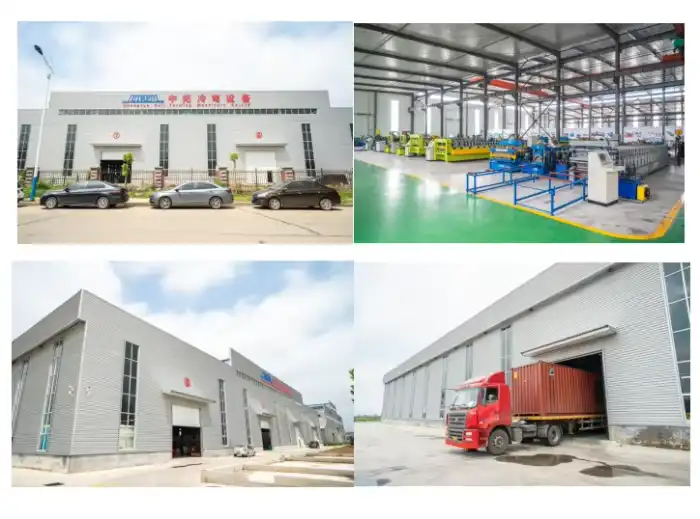
For 10 years, Cangzhou Zhongtuo has provided precision-engineered roll forming to partners in over 150 countries. Strong 350mm H-beam frames, 45# hard chrome-plated cast steel rollers, and automated Cr12MoV cutting systems maintain output across millions of linear metres in our PBR panel equipment. ISO 9001 and CE-certified manufacturing procedures fulfil worldwide quality requirements. We provide complete technical support and replacement parts programmes to maintain equipment during its lifespan.
Our engineering team collaborates with roofing contractors and building system manufacturers to discover the optimum designs for new and increased panel manufacturing. Contact our specialists at zhongtuorollforming@gmail.com to discuss bespoke equipment, technical requirements, or facility visits. As a leading PBR roll former provider, we offer straightforward pricing, flexible financing, and comprehensive installation support, making equipment purchases a long-term competitive advantage.
References
11. American Society for Testing and Materials. (2021). ASTM A792/A792M-21: Standard Specification for Steel Sheet, 55% Aluminum-Zinc Alloy-Coated by the Hot-Dip Process. West Conshohocken: ASTM International.
2. Metal Construction Association. (2020). Technical Guide for Metal Panel Systems: Design, Installation, and Performance Standards. Glenview: Metal Construction Association Publications.
3. Halmos, G. T. (2018). Roll Forming Handbook: Engineering Principles and Applications in Cold Roll Manufacturing. Boca Raton: CRC Press.
4. Sheet Metal Occupations Industry Training Board. (2019). Modern Roll Forming Technology: Processes, Equipment, and Quality Control in Metal Panel Production. London: Construction Industry Publications.
5. National Roofing Contractors Association. (2022). Metal Roofing Systems: Specification Guidelines for Commercial and Industrial Applications. Rosemont: NRCA Technical Services.
6. International Code Council. (2021). International Building Code Chapter 15: Roof Assemblies and Rooftop Structures, Commentary on Metal Panel Systems. Washington: ICC Publications.
_1750323743240.webp)