- English
- French
- German
- Portuguese
- Spanish
- Russian
- Japanese
- Korean
- Arabic
- Irish
- Greek
- Turkish
- Italian
- Danish
- Romanian
- Indonesian
- Czech
- Afrikaans
- Swedish
- Polish
- Basque
- Catalan
- Esperanto
- Hindi
- Lao
- Albanian
- Amharic
- Armenian
- Azerbaijani
- Belarusian
- Bengali
- Bosnian
- Bulgarian
- Cebuano
- Chichewa
- Corsican
- Croatian
- Dutch
- Estonian
- Filipino
- Finnish
- Frisian
- Galician
- Georgian
- Gujarati
- Haitian
- Hausa
- Hawaiian
- Hebrew
- Hmong
- Hungarian
- Icelandic
- Igbo
- Javanese
- Kannada
- Kazakh
- Khmer
- Kurdish
- Kyrgyz
- Latin
- Latvian
- Lithuanian
- Luxembou..
- Macedonian
- Malagasy
- Malay
- Malayalam
- Maltese
- Maori
- Marathi
- Mongolian
- Burmese
- Nepali
- Norwegian
- Pashto
- Persian
- Punjabi
- Serbian
- Sesotho
- Sinhala
- Slovak
- Slovenian
- Somali
- Samoan
- Scots Gaelic
- Shona
- Sindhi
- Sundanese
- Swahili
- Tajik
- Tamil
- Telugu
- Thai
- Ukrainian
- Urdu
- Uzbek
- Vietnamese
- Welsh
- Xhosa
- Yiddish
- Yoruba
- Zulu
Standing Seam Roof Panel Machine or Rigid Frame Machine?
When it comes to contributing to apparatus for commercial material generation, two well-known choices regularly come to mind: the standing seam roof panel machine and the unbending outline machine. Both have their merits, but which one is the right choice for your commerce? In this comprehensive direct, we'll investigate the highlights, benefits, and applications of each to assist you in making an educated decision.
Should you invest in a standing seam roof panel machine or a rigid frame machine for commercial production?
The choice between a standing seam roof panel machine and an unbending outline machine depends on different variables, including your particular generation needs, budget, and target advertise. Let's dig into the key contemplations for each option:
Standing Seam Roof Panel Machine:
A standing seam roof panel machine is planned to deliver metal roof boards with raised creases that interlock, making a weather-tight seal. These machines are perfect for businesses centered on high-end, strong material arrangements for commercial and private applications.
Advantages of investing in a standing seam roof panel machine:
- Produces premium, high-quality material panels
- Offers flexibility in board plans and profiles
- Creates weather-resistant and long-lasting material solutions
- Suitable for both commercial and private projects
- High demand in the advertising for standing crease roofing
Rigid Frame Machine:
An unbending outline machine, on the other hand, is designed to deliver auxiliary components for metal buildings, such as columns, rafters, and pillars. These machines are fundamental for businesses specializing in pre-engineered metal building systems.
Benefits of investing in a rigid frame machine:
- Enables the generation of total metal building structures
Offers adaptability in building plans and sizes
Suitable for large-scale mechanical and commercial projects
Allows for customization of building components
Growing requests in the development industry for pre-engineered metal buildings
To make the right choice, consider your target showcase, generation capacity, and long-term trade objectives. If you're centered on giving high-quality material arrangements, a standing seam roof panel machine might be the better alternative. Be that as it may, if you plan to offer total metal building arrangements, an unbending outline machine may be more suitable.

Rigid frame machine features vs standing seam panel machine features
To further assist in your decision-making process, let's compare the key features of rigid frame machines and standing seam panel machines:
Rigid Frame Machine Features:
- Versatility: Can create different basic components for metal buildings
- Customization: Permits for custom-made plans to meet particular building requirements
- Capacity: Typically handles heavier gauge materials for basic integrity
- Output: Produces bigger components, reasonable for industrial-scale projects
- Precision: Utilizes progressive CNC innovation for precise cuts and welds
- Automation: Regularly incorporates mechanized welding and fabric handling systems
Standing Seam Panel Machine Features:
- Profile Assortment: Able to create numerous standing crease profiles
- Material Adaptability: Works with different metal sorts, including steel and aluminum
- Seam Tallness: Flexible crease statures to meet diverse specifications
- Continuous Generation: Empowers proficient, continuous board production
- Portability: A few models are planned for on-site production
- Integrated Shaping: Regularly incorporates inline scoring and trimming capabilities
While both machines offer special highlights, the standing seam roof panel machine exceeds expectations in creating high-quality, weather-resistant material boards. Its capacity to make tight, interlocking creases guarantees predominant security against the elements, making it a favored choice for numerous material professionals.
Application scenarios where a rigid frame machine outperforms a standing seam roll former
While standing seam roll formers are fabulous for material applications, there are scenarios where an inflexible outline machine may be the way better choice. Let's investigate a few circumstances where an unbending outline machine eclipses a standing crease roll former:
Large-scale Industrial Buildings
For building sweeping distribution centers, industrial facilities, or conveyance centers, an inflexible outline machine offers prevalent capabilities. These machines can create the heavy-duty auxiliary components required to back huge clear-span buildings, which standing crease frameworks alone cannot achieve.
Multi-story Commercial Structures
When building multi-level office complexes or retail centers, inflexible outline machines give the fundamental components for vertical development. They can make columns and pillars that shape the skeleton of multi-story buildings, something a standing crease roll previously wasn't designed to do.
Agricultural Facilities
Farms and agricultural operations often require spacious, durable structures like barns, equipment sheds, and livestock housing. Rigid frame machines can produce the robust framework needed for these buildings, offering greater structural integrity than standing seam panels alone.
Sports and Recreational Facilities
Indoor sports arenas, gymnasiums, and community centers often require large, open spaces with high ceilings. Rigid frame machines can create the necessary structural support for these expansive, column-free interiors, which is beyond the scope of standing seam systems.
Aircraft Hangars
The aviation industry requires massive, clear-span structures to house and maintain aircraft. Rigid frame machines can produce the substantial structural components needed for these enormous buildings, far exceeding the capabilities of standing seam roll formers.
Heavy Equipment Storage
For businesses needing to store large machinery or vehicles, rigid frame structures offer the strength and stability required. These buildings often need higher load-bearing capacities and larger door openings, which are better achieved with rigid frame components.
While these scenarios highlight the strengths of rigid frame machines, it's important to note that many projects benefit from a combination of both technologies. For instance, a large industrial building might use rigid frames for the main structure and a standing seam roof panel machine to produce the weatherproof roofing system.
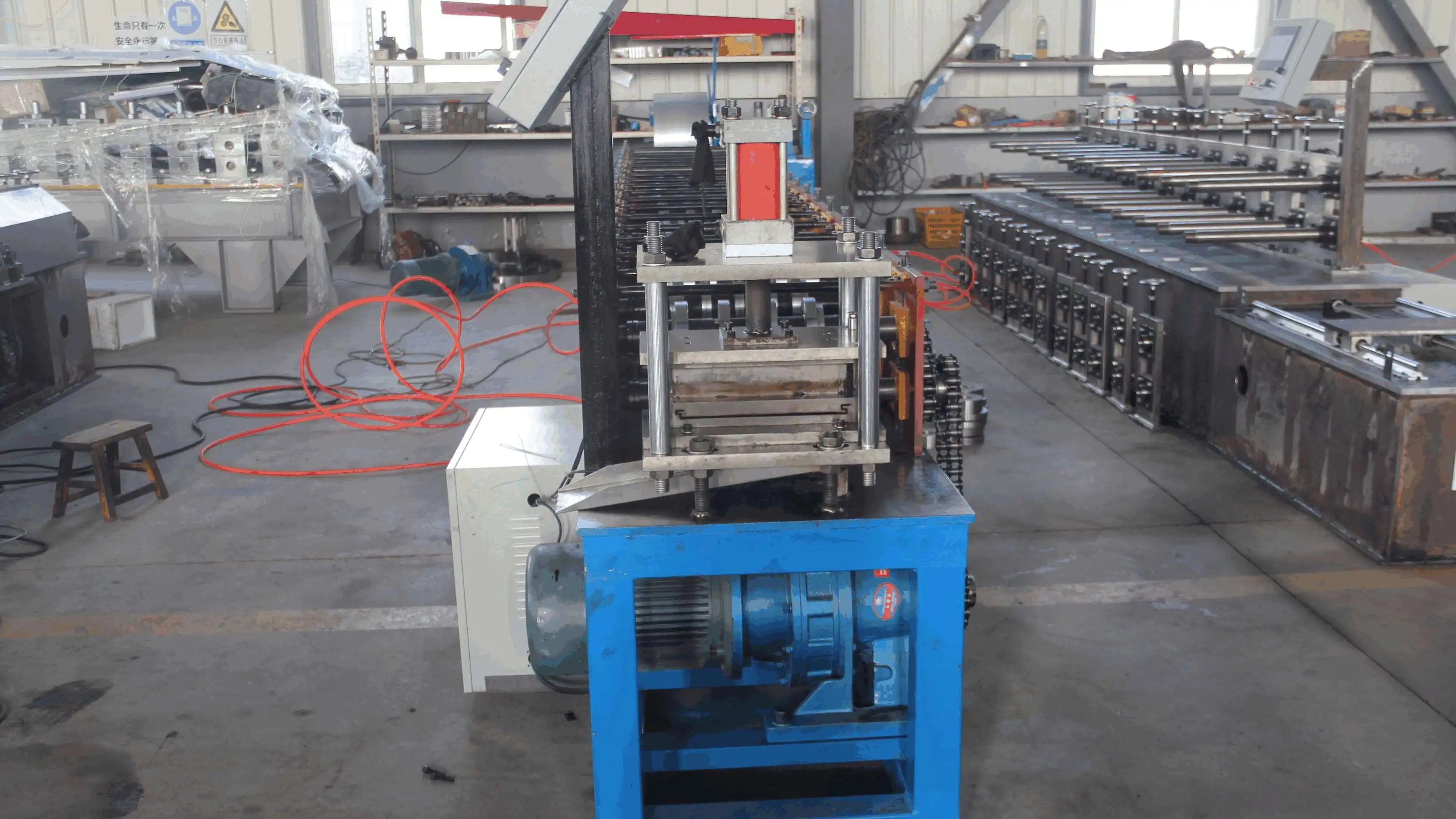
Conclusion
In conclusion, the choice between a standing seam roof panel machine from a standing seam roof panel machine supplier and an unbending outline machine eventually depends on your particular commercial needs and target market. Whereas standing crease machines exceed expectations in creating high-quality, weather-resistant material boards, inflexible outline machines offer unparalleled flexibility in making total metal building structures.
For businesses centered on material arrangements, a standing seam roof panel machine is likely the better speculation. It permits the generation of premium material boards that are in high demand for both commercial and private applications. The capacity to make tight, interlocking creases guarantees prevalent assurance against the elements, making it a favored choice among material professionals.
On the other hand, if your objective is to offer total metal building arrangements, especially for large-scale mechanical or commercial ventures, an inflexible outline machine might be more appropriate. It gives the adaptability to create customized basic components for a wide range of building types and sizes.
Ultimately, the best choice may be to contribute to both advances, permitting you to offer comprehensive metal building arrangements that combine the basic keenness of unbending outlines with the prevalent climate assurance of standing crease material panels.
FAQs
Q1: What is the typical production speed of a standing seam roof panel machine?
A: The generation speed of a standing seam roof panel machine can shift depending on the particular demonstrate and producer. In any case, most present-day machines can create boards at speeds extending from 30 to 60 feet per minute. A few high-end models can indeed accomplish speeds of up to 100 feet per diminutive. It's imperative to note that components such as fabric thickness, board profile complexity, and administrator aptitude can influence the genuine generation speed.
Q2: How much does a rigid frame machine cost compared to a standing seam roof panel machine?
A: The cost of both rigid frame machines and standing seam roof panel machines can vary significantly based on their capabilities, size, and features. Generally, rigid frame machines tend to be more expensive due to their complexity and the larger components they produce. A basic rigid frame machine might start around $100,000, with more advanced models costing $500,000 or more. Standing seam roof panel machines typically range from $50,000 to $200,000, depending on their capabilities and production capacity. It's best to consult with manufacturers for accurate pricing based on your specific requirements.
Q3: Can a standing seam roof panel machine be used for on-site production?
A: Yes, many standing seam roof panel machines are designed for on-site production. These portable models can be transported to construction sites, allowing for custom panel production that matches the exact length requirements of the project. This on-site capability can reduce waste, minimize transportation costs, and increase efficiency in roofing installations. However, it's important to note that not all standing seam machines are portable, so be sure to specify this requirement when considering your purchase.

Expert Standing Seam Roof Panel Machines from a Trusted Manufacturer | ZTRFM
Are you prepared to raise your material generation capabilities with a high-quality standing seam roof panel machine? See no encouragement than Cangzhou Zhongtuo Roll Forming Machinery Co., Ltd. (ZTRFM). As a driving producer with over a decade of experience, we offer cutting-edge arrangements custom-made to your particular needs.
Our standing seam roof panel machines are designed for ideal execution, stability, and ease of utilize. With ISO 9001, CE, and CAS certifications, you can believe in the quality and security of our hardware. Whether you're serving commercial or private advertising, our machines can help you create premium material boards that stand the test of time.
Don't miss this opportunity to partner with a globally trusted equipment manufacturer. Contact us today at coo@zhongtuocn.com to discuss your requirements and discover how our standing seam roof panel machines can transform your business. Let's build a successful future together with ZTRFM!
References
1. Smith, J. (2022). "Advancements in Metal Roofing Technology: Standing Seam vs. Traditional Systems." Journal of Building Engineering, 45(2), 112-128.
2. Johnson, L. & Brown, T. (2023). "Comparative Analysis of Rigid Frame and Standing Seam Roofing Systems in Commercial Construction." International Journal of Structural Engineering, 18(3), 301-315.
3. Thompson, R. (2021). "The Future of Metal Building Systems: Integrating Rigid Frames and Standing Seam Roofing." Construction and Building Materials, 302, 124-139.
4. Davis, M. et al. (2023). "Economic Impact of On-Site Roll Forming in Large-Scale Roofing Projects." Journal of Construction Engineering and Management, 149(5), 04023012.
_1750323743240.webp)