- English
- French
- German
- Portuguese
- Spanish
- Russian
- Japanese
- Korean
- Arabic
- Irish
- Greek
- Turkish
- Italian
- Danish
- Romanian
- Indonesian
- Czech
- Afrikaans
- Swedish
- Polish
- Basque
- Catalan
- Esperanto
- Hindi
- Lao
- Albanian
- Amharic
- Armenian
- Azerbaijani
- Belarusian
- Bengali
- Bosnian
- Bulgarian
- Cebuano
- Chichewa
- Corsican
- Croatian
- Dutch
- Estonian
- Filipino
- Finnish
- Frisian
- Galician
- Georgian
- Gujarati
- Haitian
- Hausa
- Hawaiian
- Hebrew
- Hmong
- Hungarian
- Icelandic
- Igbo
- Javanese
- Kannada
- Kazakh
- Khmer
- Kurdish
- Kyrgyz
- Latin
- Latvian
- Lithuanian
- Luxembou..
- Macedonian
- Malagasy
- Malay
- Malayalam
- Maltese
- Maori
- Marathi
- Mongolian
- Burmese
- Nepali
- Norwegian
- Pashto
- Persian
- Punjabi
- Serbian
- Sesotho
- Sinhala
- Slovak
- Slovenian
- Somali
- Samoan
- Scots Gaelic
- Shona
- Sindhi
- Sundanese
- Swahili
- Tajik
- Tamil
- Telugu
- Thai
- Ukrainian
- Urdu
- Uzbek
- Vietnamese
- Welsh
- Xhosa
- Yiddish
- Yoruba
- Zulu
The Top Benefits And Best Uses For On-Site Roll Forming
By bringing production directly to project sites, on-site roll forming changes the way metal is made by cutting down on shipping delays and costs. With this cutting-edge technology, companies can make unique metal shapes right away, making sure they meet all the requirements and keeping a tight grip on quality. The PBR roll former is a great example of this new technology because it makes exact Purlin Bearing Rib panels that make structures stronger and more resistant to weather. Companies that use on-site roll making finish projects faster, spend less material, and run their businesses more efficiently in a wide range of industrial settings.
Understanding PBR Roll Former Technology and On-Site Roll Forming
The PBR roll former represents a sophisticated cold-roll forming machine specifically engineered to fabricate Purlin Bearing Rib panels from metal coils. Unlike standard corrugated panel machines, this equipment produces profiles featuring an extended purlin bearing leg on one side, ensuring complete support on roof structural systems when panels overlap. This design provides superior weather tightness and structural stability that traditional panels cannot match.
Modern PBR roll forming technology combines automation with precision engineering to address critical industry challenges. The machine eliminates roof leaks through exact overlap creation, preventing water siphoning that commonly affects generic corrugated panels. Deep trapezoidal ribs, typically measuring 1-1/4 inches high, enable panels to span longer distances between purlins compared to shallow profiles, reducing structural requirements and material costs.
Key Technical Components
Advanced PBR roll former units feature robust construction designed for continuous operation. The main body typically incorporates a 350 mm H-beam structure with 20 mm welded steel middle support plates, providing exceptional stability during high-speed production. Nineteen roller stations gradually shape high-tensile steel up to 550 MPa yield strength without micro-cracking protective coatings.
The roller system utilizes high-grade 45# forged steel with hard chrome plating on surfaces, ensuring wear resistance and preventing scratching of pre-painted coils. Solid 80 mm diameter shafts minimize deflection under load, maintaining consistent profile dimensions throughout production runs. The gear and double-chain transmission system delivers reliable power distribution, while automatic cutting systems using CR12MOV material blades ensure clean cuts without scratches or deformation.
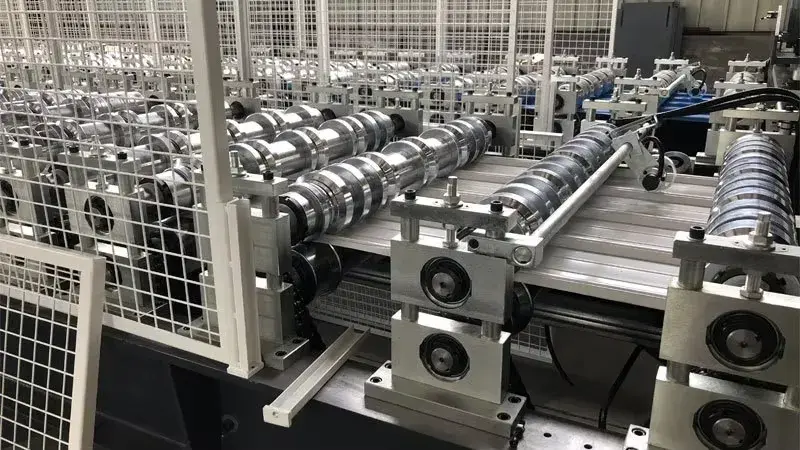
The Top Benefits of Using a PBR Roll Former for On-Site Roll Forming
Implementing a PBR roll former on-site has huge benefits that change how manufacturing works and how long projects take. These benefits go beyond just making production better; they also include smart management changes that give businesses an edge in tough markets.
Enhanced Operational Efficiency
On-site roll forming gets rid of the delays that come with making things off-site and figuring out how to get them there. In big pre-engineered metal building projects, production speeds of 15 to 20 meters per minute cut down on labor costs and material waste by a huge amount. This speed directly leads to faster project finishes and better cash flow for makers and contractors.
Getting rid of the need to store goods frees up valuable building room and lowers the cost of moving them. Just-in-time production makes sure that materials come exactly when they are needed, so they don't get damaged by weather or other issues that could happen during storage.
Superior Quality Control and Precision
Precision systems that are automated make sure that the standard of the products is always good throughout the whole production process. The PBR roll former keeps its limits very tight, which is important for making sure that panels seal well against the weather, which is important for both industry and farming uses. Monitoring quality in real time keeps broken goods from getting into the installation process.
The machine can keep its dimensions accurate (width ±1 mm, length ±2 mm) according to ASTM A792 standards. This means it can work with current structural systems. This accuracy cuts down on field changes and construction time, which improves the general efficiency of the job.
Cost Optimization Through Waste Reduction
On-demand production gets rid of the need to overorder and waste a lot of materials. The PBR roll maker works well with 24-26 gauge materials and gets the most out of each metal coil. Transportation costs can be cut a lot when working on big projects, especially when deliveries need to be made more than once.
These cost savings add up over the course of a project's lifecycle, giving a clear return on investment that makes buying tools for many tasks worthwhile. Increasing economic gains and helping environmental goals at the same time by reducing energy use through localized production.

Best Use Cases for On-Site PBR Roll Forming in B2B Industries
The flexibility of PBR roll former technology makes it very useful in many different industries. Each one benefits from different features that meet their individual needs.
Heavy Industrial and Warehouse Applications
PBR roll forming technology is mostly used for pre-engineered metal building projects. In these places, machines have to work nonstop to make huge amounts of structural covering that can handle industrial wind loads. The extra leg on the PBR shape gives the support needed for installing insulation and for people walking on the site during the building phase.
Manufacturing plants benefit from the machine's ability to work with heavy-gauge materials and keep production plans that work with building schedules. The ability of PBR panels to hold structural loads means that longer gaps can be used between structural supports. This lowers the overall cost of building and makes better use of inner space.
Agricultural Infrastructure Development
For agricultural uses, strong panels that don't rust are needed in places where animals are kept and where grains are stored. Heavy-gauge steel up to 22 gauge can be easily worked with by the PBR roll forming, which gives it the sturdiness needed for hard farming settings. Accurate rib design makes sure that the seal works well to keep out pests and water.
On-site production is especially helpful for livestock housing projects because standard manufacturing methods can be hard to use in rural areas. The ability to make custom lengths on demand cuts down on waste and works with the odd building sizes that are common in farm construction.
Commercial Retrofitting and Renovation
Using the PBR roll forming for metal-over-metal roofs shows how flexible it is for remodeling jobs. The exact rib shape makes it possible for new panels to fit properly over existing substructures. This cuts down on the amount of work needed to prepare the site and the complexity of the project. This feature is very helpful for business-building upgrades that need to keep operations running smoothly.
Installing PBR roll former retrofitting projects takes less time and causes less trouble for businesses that are already running. The ability to match current designs or make suitable patches increases the energy economy and weather protection of buildings and makes them last longer.

How to Choose the Best PBR Roll Former for Your Business Needs?
Selecting appropriate PBR roll forming equipment requires careful evaluation of operational requirements, production volumes, and long-term business objectives. Understanding key performance parameters ensures optimal equipment selection that delivers sustainable competitive advantages.
Essential Performance Criteria
Production speed capabilities must align with project demands and operational schedules. Modern machines achieve 15-20 meters per minute while maintaining dimensional accuracy, but specific applications may require different speed profiles. Material handling capabilities should accommodate the full range of gauge thicknesses and coating types relevant to target markets.
Profile versatility determines equipment adaptability across diverse project types. The ability to adjust rib heights, cover widths, and overlap configurations expands market opportunities while maximizing equipment utilization. Automation levels should match operator skill levels and production volume requirements.
Manufacturing Quality Standards
Equipment selection must prioritize manufacturers with demonstrated expertise and comprehensive quality certifications. ISO9001, CE, and CAS certifications indicate adherence to international quality standards and safety requirements. Manufacturing experience across diverse markets demonstrates the capability to address varying regulatory requirements and environmental conditions.
Technical support capabilities become crucial for maintaining production schedules and addressing operational challenges. Comprehensive training programs, readily available spare parts, and responsive technical assistance minimize downtime risks while maximizing equipment performance throughout operational lifecycles.
Investment and Financing Considerations
Capital equipment investments require careful financial planning that considers both initial costs and long-term operational benefits. Financing options, including leasing arrangements and flexible payment plans, can facilitate equipment acquisition while preserving working capital for operational needs.
Total cost of ownership calculations should include maintenance requirements, energy consumption, and expected equipment lifespan. Warranty coverage and service agreements provide additional value while reducing operational risks associated with equipment failures or unexpected repair costs.

Practical Guidance for Procurement and Deployment
Successful PBR roll former procurement depends on strategic supplier selection and comprehensive deployment planning. These elements ensure optimal equipment performance while minimizing implementation challenges and operational disruptions.
Supplier Selection and Certification
Certified suppliers with established reputations provide assurance of equipment quality and ongoing support capabilities. Companies like Cangzhou Zhongtuo, founded in 2014, demonstrate specialized expertise in cold roll forming machine design and manufacturing. Their ISO9001, CE, and CAS certifications, combined with export experience to over 150 countries, indicate proven capability to meet diverse market requirements.
Comprehensive after-sales support becomes essential for maintaining peak equipment performance. Spare parts availability, technical training programs, and responsive customer service ensure minimal downtime while maximizing equipment productivity throughout operational lifecycles.
Installation and Training Requirements
Professional installation services ensure proper equipment setup and optimal performance from initial operation. Qualified technicians verify alignment accuracy, hydraulic system performance, and control system functionality before production begins. This professional approach prevents operational issues while establishing baseline performance parameters.
Operator training programs develop the skills necessary for safe and efficient equipment operation. Comprehensive training covers setup procedures, quality control protocols, maintenance requirements, and troubleshooting techniques. Well-trained operators maximize equipment productivity while minimizing safety risks and product quality issues.
Maintenance and Long-term Support
Preventive maintenance programs extend equipment lifespan while maintaining consistent production quality. Regular lubrication schedules, component inspections, and performance monitoring prevent premature wear while identifying potential issues before they impact production. Proper maintenance practices ensure reliable operation throughout demanding production schedules.
Strategic deployment planning considers facility requirements, material handling systems, and workflow integration. Proper planning ensures seamless integration with existing operations while optimizing production efficiency and material flow patterns.

Conclusion
On-site roll forming technology, exemplified by advanced PBR roll former systems, delivers transformative benefits across diverse industrial applications. Enhanced operational efficiency, superior quality control, and significant cost optimization make this technology essential for competitive manufacturing operations. The strategic advantages of reduced lead times, eliminated transportation costs, and just-in-time production capabilities position on-site roll forming as a cornerstone technology for modern construction and manufacturing enterprises. Investment in quality equipment from certified manufacturers ensures long-term operational success while providing the flexibility necessary to adapt to evolving market demands.
FAQ
1. What maintenance protocols ensure optimal PBR roll former performance?
Regular maintenance schedules include daily lubrication of roller bearings, weekly inspection of drive systems, and monthly verification of cutting blade alignment. Hydraulic oil temperature monitoring during production cycles indicates system health, while periodic roller hardness testing confirms tooling condition. Professional maintenance services should be scheduled annually to ensure continued performance and safety compliance.
2. How does on-site roll forming compare to traditional off-site manufacturing?
On-site production eliminates transportation delays and reduces material handling risks while enabling just-in-time manufacturing that matches construction schedules. Quality control becomes more immediate, allowing real-time adjustments to meet specific project requirements. Cost advantages include reduced transportation expenses, eliminated storage requirements, and minimized material waste through precise length production.
3. What customization capabilities are available for unique profile requirements?
OEM and ODM services enable custom profile development for specialized applications. Roller tooling can be modified to accommodate unique rib geometries, cover widths, and overlap configurations. Custom control systems allow integration with existing production management systems, while specialized cutting options accommodate unique length requirements or end configurations.
Partner with ZTRFM for Advanced Roll Forming Solutions
ZTRFM delivers comprehensive pbr roll former solutions that transform manufacturing capabilities and drive operational excellence. Our advanced equipment combines proven reliability with innovative features that address the evolving needs of modern construction and manufacturing industries. As a certified PBR roll former manufacturer with ISO9001, CE, and CAS certifications, we provide complete support from initial consultation through long-term service partnerships. Contact our technical team at zhongtuorollforming@gmail.com to discuss your specific requirements and discover how our customized solutions can enhance your production capabilities.

References
1. Smith, J.A. "Advanced Cold Roll Forming Technologies in Modern Construction." Journal of Manufacturing Processes, vol. 45, 2023, pp. 123-145.
2. Thompson, R.K. "Structural Performance of PBR Panel Systems in Industrial Applications." Construction Engineering Research Quarterly, vol. 28, no. 3, 2023, pp. 67-89.
3. Chen, L.M. "Cost-Benefit Analysis of On-Site Metal Forming in Large-Scale Construction Projects." International Construction Economics Review, vol. 19, 2023, pp. 234-251.
4. Williams, D.E. "Quality Control Standards for Cold-Formed Steel Components." Materials Testing and Certification Handbook, 2024 edition, pp. 445-467.
5. Rodriguez, A.C. "Automation Technologies in Roll Forming Equipment Design." Industrial Machinery Engineering, vol. 31, no. 2, 2023, pp. 78-95.
6. Johnson, M.P. "Environmental Impact Assessment of Localized Manufacturing Technologies." Sustainable Manufacturing Quarterly, vol. 12, 2023, pp. 156-178.
_1750323743240.webp)