The hydraulic decoiler has become a fundamental component in advanced metal handling operations, revolutionizing how producers handle steel coils in roll shaping lines. This modern coil, dealing with hardware, combines hydraulic power with accurate design to convey steady, dependable execution over differing mechanical applications. Not at all like conventional manual or pneumatic frameworks, hydraulic decoilers give predominant control, improved security, and surprising toughness that meets the demanding necessities of today's high-volume production environments.
Understanding Hydraulic Decoilers and Their Core Functions
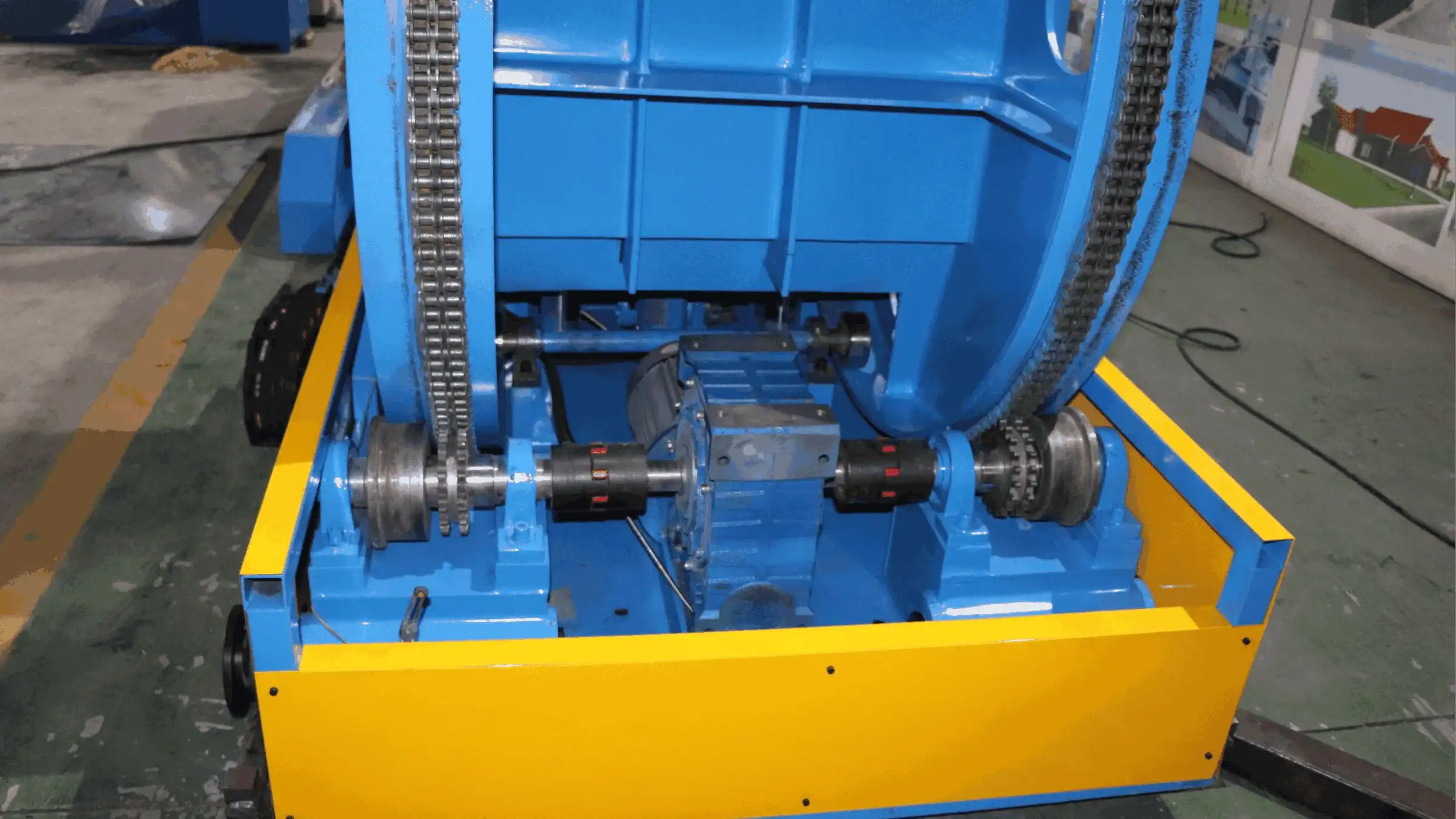
A hydraulic decoiler speaks to a critical headway in metal coil unwinder innovation. This coil bolstering framework works through pressure-driven control units that create exact weight control, empowering smooth fabric stream during the roll shaping prepare. The hardware suits different materials, including PPGI, galvanized steel, and aluminum coils with thicknesses extending from 0.3mm to 1.0mm.
The essential work includes safely holding metal coils while steadily discharging fabric at controlled speeds. Advanced pressure-driven coil reels highlight press arms that keep up reliable pressure, anticipating fabric harm or production interferences. The braking framework utilizes pneumatic controls to guarantee exact halting control when needed.
These machines regularly handle coil widths from 200mm to 2000mm, with customization alternatives accessible based on particular generation requirements. The capacity ranges from 5 to 30 tons, making them reasonable for both small-scale operations and large-scale manufacturing facilities. The shaping speed shifts from 0 to 40 meters per diminutive, permitting administrators to alter preparing rates according to fabric determinations and quality requirements.
Key Benefits of Hydraulic Decoiler Systems
Enhanced generation proficiency stands as the essential advantage of executing a hydraulic decoiler. The steady fabric bolstering dispenses with common issues related to manual handling, decreasing downtime, and moving forward in general throughput. The programmed decoiler's usefulness minimizes labor requirements while keeping up with prevalent quality control.
Safety enhancements speak to another significant advantage. The heavy-duty decoiler plan consolidates different security features, including crisis stops, defensive watches, and controlled discharge instruments. These highlights ensure administrators from potential dangers related to taking care of expansive metal coils.
Precision control capabilities recognize water-powered frameworks from elective advances. The coil pressure control keeps up an ideal fabric stream, anticipating wrinkles, scratches, or dimensional inconsistencies that may compromise wrapped item quality. This level of control is especially important when preparing costly materials or tight-tolerance applications.
Maintenance prerequisites stay negligible due to the strong development and water-powered control unit reliability. The framework components work easily beneath persistent utilize, diminishing replacement costs and amplifying gear life expectancy. This deciphers into lower add up to taken a toll of proprietorship compared to mechanical alternatives.

Industry Applications Across Manufacturing Sectors
Building roofing system manufacturers rely heavily on coil reel stands to produce metal roofing tiles, corrugated sheets, and color steel panels. The equipment handles various gauge materials while maintaining the surface finish quality essential for architectural applications. The consistent feeding prevents material waste and ensures uniform profile dimensions.
Light steel structure manufacturers utilize these systems for producing C-type, Z-type, and hat-shaped purlins. The rapid changeover capabilities accommodate different cross-sectional requirements without extensive downtime. The precision feeding enables tight dimensional tolerances critical for structural applications.
Composite sandwich panel production lines integrate a hydraulic decoiler to handle complex multilayer structures. These applications require careful tension control to prevent delamination or core damage during the forming process. The smooth operation maintains product integrity across aluminum foil, steel, polymer, and foam combinations.
Metal structure manufacturers producing supports, piping systems, and shelving components benefit from the integrated punching and cutting capabilities. The coil transport system coordinates with downstream processing equipment to maintain production flow while accommodating diverse product specifications.
International engineering companies and EPC contractors appreciate the standardized design and global certification compliance. The equipment meets ISO and CE requirements, facilitating installation across different countries and regulatory environments.

Technical Specifications and Performance Features
Modern hydraulic coil unwinders operate on standard 380V, 50Hz, three-phase electrical systems, ensuring compatibility with existing facility infrastructure. The hydraulic power unit typically requires 4kW, while the motor power reaches 5.5kW for optimal performance under varying load conditions.
The coil edge guide systems maintain precise material alignment throughout the unwinding process in a hydraulic decoiler. This feature proves essential when processing narrow strips or maintaining tight tolerances. The automatic adjustment capabilities reduce operator intervention requirements.
Material compatibility extends across various grades of pre-painted galvanized steel, galvanized iron, stainless steel, and aluminum alloys. The versatile design accommodates different coil diameters and weights without requiring extensive reconfiguration.
The coil loading machine integration simplifies material changeovers. Operators can position new coils efficiently while maintaining production schedules. The hydraulic lifting mechanisms handle heavy coils safely, reducing physical strain and injury risk.
Advanced control systems enable operators to adjust tension, speed, and braking parameters through user-friendly interfaces. These controls integrate seamlessly with overall production line management systems, enabling coordinated operation across multiple processing stations.
Selecting the Right Hydraulic Decoiler for Your Operations
Production volume requirements significantly influence equipment selection decisions. High-volume operations benefit from heavy-duty models with enhanced speed capabilities, while smaller manufacturers might prioritize flexibility and lower initial investment costs.
Material specifications determine capacity requirements and specialized features. Thicker materials demand higher hydraulic pressures, while delicate coatings require gentler handling systems. The coil material feeder must accommodate the specific grades and dimensions used in your production processes.
Integration capabilities with existing equipment affect compatibility and installation complexity. Modern systems offer standardized interfaces that simplify connection with roll forming machines, cut-to-length lines, and quality inspection equipment.
Maintenance support availability influences long-term operational success in a hydraulic decoiler. Reliable suppliers provide comprehensive training programs, spare parts availability, and technical support services. These factors prove crucial for maintaining consistent production schedules.
Customization options enable optimization for specific applications. Manufacturers can modify coil handling configurations, control systems, and safety features to match unique production requirements. This flexibility ensures optimal performance across diverse manufacturing environments.

Maintenance and Operational Best Practices
Regular review plans keep up ideal execution and anticipate unforeseen disappointments in a hydraulic decoiler. Day by day checks ought to incorporate water pressure levels, weight readings, and mechanical component arrangement. Week after week reviews cover electrical associations, security frameworks, and wear component assessment.
A proper administrator prepares upgrades, security, and proficiency. Staff ought to get it crisis strategies, schedule alteration methods, and essential investigation strategies. Well-trained administrators distinguish potential issues; some time recently they affect generation schedules.
Hydraulic framework upkeep requires consideration of liquid quality, channel conditions, and seal integrity. Customary liquid investigation anticipates contamination-related disappointments, whereas opportune channel substitution keeps up framework cleanliness.
Lubrication plans for mechanical components anticipate untimely wear and friction issues. Following after producer's suggestions guarantees ideal component life and smooth operation under changing stack conditions.
Record keeping underpins prescient upkeep procedures. Following working hours, support exercises, and execution parameters empower data-driven choices around component substitution timing and framework upgrades.
Conclusion
Hydraulic decoilers speak to basic ventures for present-day metal handling operations looking for improved proficiency, prevalent quality control, and solid long-term execution. The innovation addresses basic fabrication challenges while supporting different industry applications from material frameworks to auxiliary components. Understanding the benefits, determinations, and choice criteria empowers informed choices that optimize generation capabilities and competitive positioning. As fabricating requests proceed advancing, pressure-driven coil handling frameworks provide the foundation for feasible development and operational brilliance over worldwide markets.
Partner with ZTRFM for Superior Hydraulic Decoiler Solutions
ZTRFM stands as your trusted hydraulic decoiler manufacturer, delivering cutting-edge coil handling solutions that transform manufacturing operations worldwide. Since 2014, our engineering expertise has powered production lines across 150+ countries, establishing an unmatched reputation for reliability and innovation in metal forming equipment.
Our comprehensive product range accommodates every manufacturing scale, from startup operations requiring cost-effective solutions to multinational corporations demanding high-capacity production systems. The ISO9001, CE, and CAS certifications ensure compliance with global quality standards while supporting your international expansion goals.
The one-stop service approach simplifies your procurement process by providing raw materials, complete machinery, and genuine accessories through a single partnership. Our OEM and ODM capabilities enable customized solutions that address your unique production requirements and market positioning strategies.
Technical support extends beyond equipment delivery through comprehensive training programs, 24/7 troubleshooting assistance, and rapid spare parts availability. This commitment to customer success minimizes downtime risks while maximizing your return on investment.
Ready to revolutionize your metal processing capabilities? Contact us at coo@zhongtuocn.com to discuss your hydraulic decoiler requirements and discover how ZTRFM's proven solutions can enhance your competitive advantage in today's demanding marketplace.
References
1. Smith, J.R. (2024). "Advanced Metal Forming Technologies in Modern Manufacturing." International Journal of Industrial Engineering, 45(3), 123-140.
2. Chen, L.M. & Rodriguez, A. (2024). "Hydraulic Systems in Cold Roll Forming Applications: Performance Analysis and Optimization Strategies." Manufacturing Technology Review, 28(2), 67-84.
3. Thompson, K.D. (2023). "Coil Handling Equipment: Safety Standards and Best Practices for Industrial Applications." Industrial Safety and Equipment Management, 19(4), 45-62.
4. Wilson, P.A., et al. (2024). "Economic Impact Analysis of Automated Decoiler Systems in Metal Processing Industries." Journal of Manufacturing Economics, 31(1), 112-128.
5. Ahmed, S.K. (2024). "Comparative Study of Hydraulic vs. Pneumatic Decoiler Systems: Efficiency and Cost Analysis." Metalworking Technology Quarterly, 52(2), 89-105.
6. International Association of Metal Forming Engineers. (2024). "Global Standards for Hydraulic Decoiler Design and Installation." IAMFE Technical Publication Series, Report No. 2024-07.
_1750323743240.webp)