- English
- French
- German
- Portuguese
- Spanish
- Russian
- Japanese
- Korean
- Arabic
- Irish
- Greek
- Turkish
- Italian
- Danish
- Romanian
- Indonesian
- Czech
- Afrikaans
- Swedish
- Polish
- Basque
- Catalan
- Esperanto
- Hindi
- Lao
- Albanian
- Amharic
- Armenian
- Azerbaijani
- Belarusian
- Bengali
- Bosnian
- Bulgarian
- Cebuano
- Chichewa
- Corsican
- Croatian
- Dutch
- Estonian
- Filipino
- Finnish
- Frisian
- Galician
- Georgian
- Gujarati
- Haitian
- Hausa
- Hawaiian
- Hebrew
- Hmong
- Hungarian
- Icelandic
- Igbo
- Javanese
- Kannada
- Kazakh
- Khmer
- Kurdish
- Kyrgyz
- Latin
- Latvian
- Lithuanian
- Luxembou..
- Macedonian
- Malagasy
- Malay
- Malayalam
- Maltese
- Maori
- Marathi
- Mongolian
- Burmese
- Nepali
- Norwegian
- Pashto
- Persian
- Punjabi
- Serbian
- Sesotho
- Sinhala
- Slovak
- Slovenian
- Somali
- Samoan
- Scots Gaelic
- Shona
- Sindhi
- Sundanese
- Swahili
- Tajik
- Tamil
- Telugu
- Thai
- Ukrainian
- Urdu
- Uzbek
- Vietnamese
- Welsh
- Xhosa
- Yiddish
- Yoruba
- Zulu
2025 Hat Channel Machine Uses and Applications in Building Materials Industry
As we approach 2025, the building materials industry proceeds to advance, with imaginative innovations and effective manufacturing forms taking center arrange. One such game-changing innovation is the hat channel machine, a flexible piece of hardware that has revolutionized the generation of basic surrounding components. In this comprehensive direct, we'll investigate the multifaceted applications of hat channel machines in the building materials division, their effect on development proficiency, and why they're becoming a vital speculation for forward-thinking manufacturers.
What are hat channel machines and how are they used in the building materials industry?
Hat channel machines, also known as cap segment roll shaping machines, are specialized hardware designed to deliver hat-shaped metal profiles. These profiles, taking after a rearranged beat cap, are broadly utilized in development for different purposes, including:
- Structural bolster in dividers and ceilings
- Sound separator systems
- Furring strips for making level surfaces
- Facilitating discuss circulation in building envelopes
The machine works by bolstering a level metal strip through an arrangement of rollers, each set steadily twisting the fabric into the craved hat-shaped profile. This persistent process permits for quick, reliable generation of cap channels in different sizes and thicknesses.
In the building materials industry, hat channel machines have gotten to be indispensable to the fabrication of lightweight steel surrounding components. Their capacity to create exact, uniform profiles at high speeds has made them vital in advanced development zones that prioritize productivity and sustainability.
The versatility of hat channel profiles extends beyond basic framing. They're increasingly used in:
- Acoustic ceiling systems
- Facade cladding support structures
- HVAC ductwork reinforcement
- Suspended ceiling grids
As we look towards 2025, the demand for these profiles is expected to grow, driven by the construction industry's shift towards more efficient, modular building techniques and the increasing emphasis on energy-efficient structures.
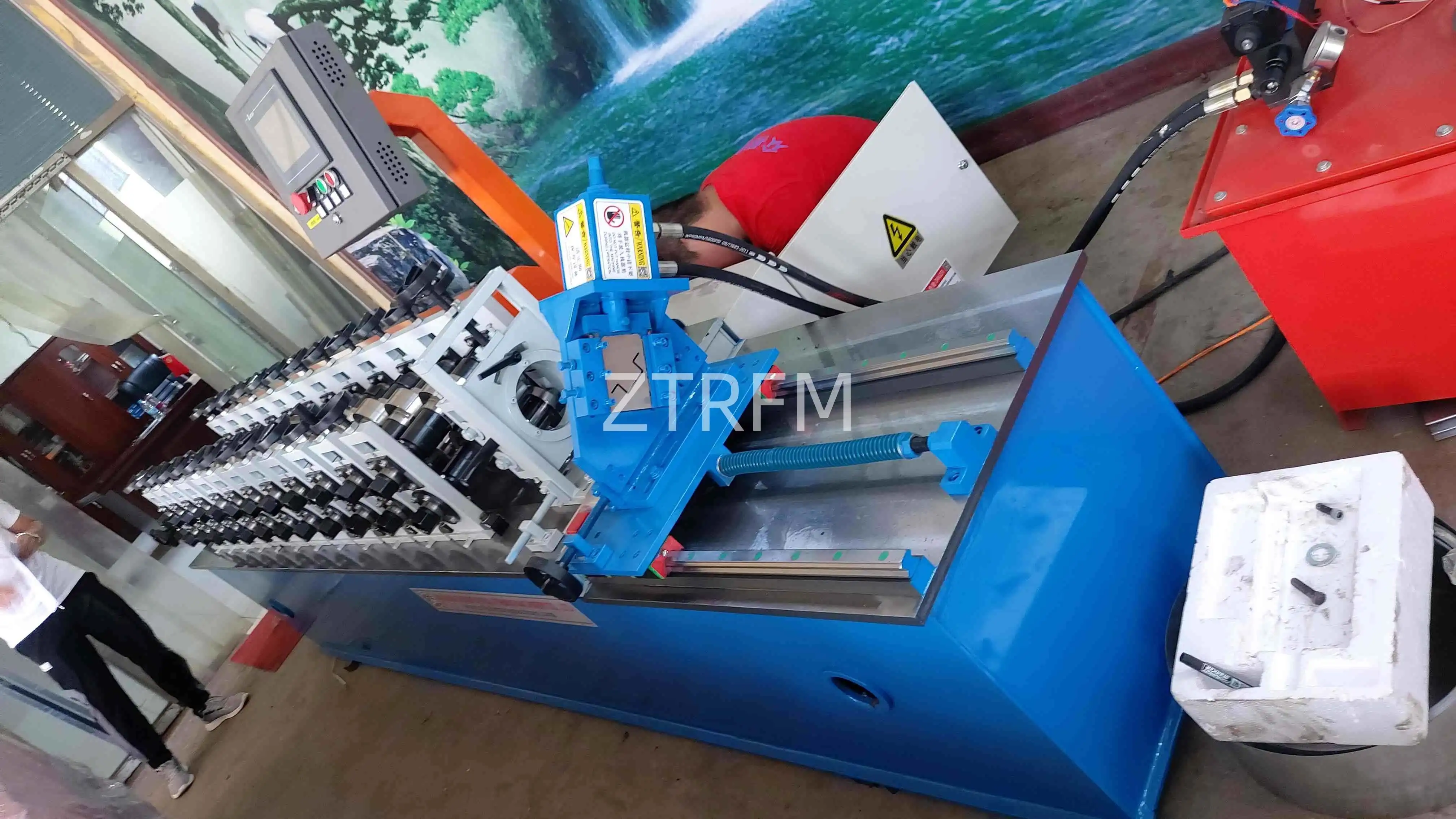
Uses of hat channel roll forming machines in drywall, facade, and industrial partition systems
The applications of hat channel roll forming machines extend far beyond basic framing. Let's delve into some specific uses across different construction systems:
Drywall Systems
In drywall construction, hat channels play a crucial role in creating smooth, even surfaces and improving sound insulation. The profiles produced by the hat channel machines are used to:
- Create a consistent plane for attaching drywall sheets, especially on uneven surfaces
- Provide a space for running electrical wires and plumbing without cutting into structural elements
- Enhance sound isolation between rooms by creating an air gap between the drywall and the structural wall
- Support ceiling drywall in both residential and commercial buildings
The precision and consistency offered by modern hat channel machines ensure that these profiles fit perfectly within standardized drywall systems, reducing installation time and improving overall build quality.
Facade Systems
In exterior applications, hat channels manufactured by roll forming machines are integral to many facade systems:
- Rainscreen cladding: Hat channels provide the necessary standoff from the building structure, creating a ventilation cavity that enhances moisture management and thermal performance.
- Support for exterior insulation: The profiles can be used to create a framework for attaching rigid insulation boards to building exteriors.
- Mounting systems for solar panels: Hat channels offer a sturdy, easy-to-install base for solar panel arrays on building facades.
- Decorative element support: They provide a stable foundation for attaching various architectural features to building exteriors.
The durability and corrosion resistance of the materials used in hat channel production make them ideal for these exterior applications, where they must withstand harsh environmental conditions.
Industrial Partition Systems
In industrial and commercial settings, hat channels are increasingly used in modular partition systems:
- Cleanroom dividers: The smooth profile of hat channels makes them ideal for creating sterile environments in the pharmaceutical and tech industries.
- Warehouse separators: Their strength-to-weight ratio allows for the creation of tall, stable partitions without excessive structural support.
- Office space dividers: Hat channels can be used to create flexible, reconfigurable office layouts that adapt to changing workplace needs.
- Sound-dampening walls: In industrial settings, hat channel-based walls can significantly reduce noise transmission between different areas.
The versatility of hat channel profiles in these applications showcases the importance of advanced roll forming technology in meeting diverse construction needs.
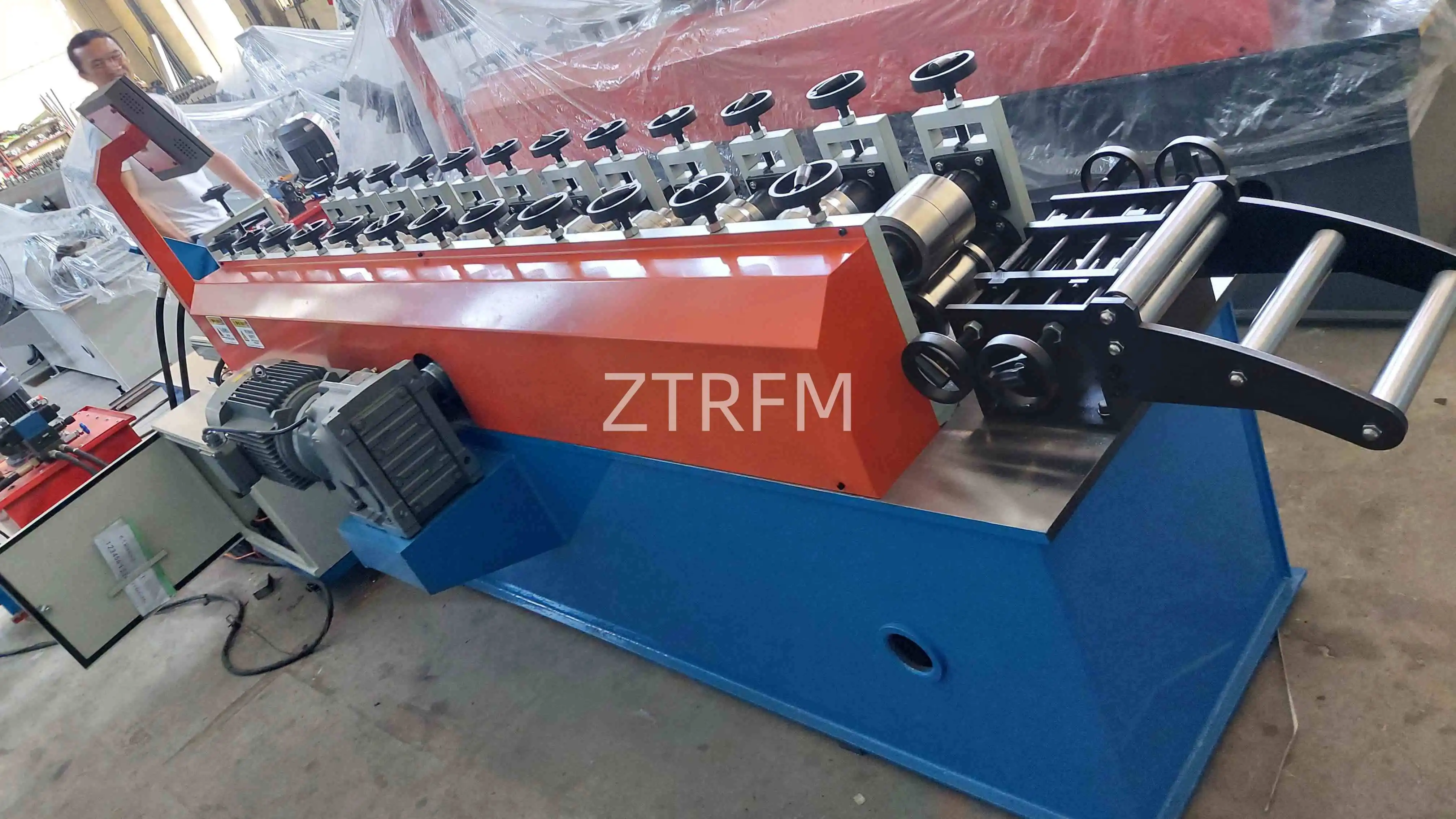
Industry outlook: why hat channel machines are an essential investment for structural framing production
As we look towards 2025 and beyond, several factors are converging to make the hat channel machines an essential investment for manufacturers in the structural framing industry:
Increasing Demand for Lightweight Steel Framing
The construction industry is increasingly shifting towards lightweight steel framing due to its numerous advantages:
- Durability and longevity compared to traditional wood framing
- Resistance to pests, mold, and fire
- Precision and consistency in manufacturing
- Recyclability, aligning with sustainability goals
Hat channel machines are at the forefront of this shift, enabling manufacturers to produce essential components for lightweight steel framing systems efficiently and cost-effectively.
Emphasis on Energy Efficiency in Buildings
With growing concerns about climate change and rising energy costs, there's an increased focus on improving building energy efficiency. Hat channels play a crucial role in this by:
- Facilitating the installation of additional insulation without increasing wall thickness
- Creating thermal breaks in building envelopes
- Supporting advanced ventilation systems in wall and roof assemblies
Manufacturers equipped with state-of-the-art hat channel machines will be well-positioned to meet this growing demand for energy-efficient building components.
Advancements in Machine Technology
The latest hat channel machines offer significant improvements over older models:
- Higher generation speeds, expanding yield, and efficiency
- Greater exactness, decreasing squander and making strides item quality
- Enhanced adaptability, permitting for speedy changes between diverse profile sizes
- Integration with computerized frameworks for advanced quality control and generation tracking
These advancements make investing in modern hat channel machines a strategic decision for manufacturers looking to stay competitive in the evolving construction market.
Growth in Modular and Prefabricated Construction
The trend towards modular and prefabricated construction methods is gaining momentum, driven by benefits such as:
- Reduced construction time
- Improved quality control
- Lower on-site labor costs
- Minimized construction waste
Hat channels are perfect components for these development strategies, and producers with proficient production capabilities will be well-positioned to capitalize on this developing showcase segment.
Increasing Customization Demands
As modelers and builders look for more plan adaptability, there's a growing demand for customized surrounding components. Progressed cap channel machines offer:
- The capacity to create a wide range of profile sizes and shapes
- Quick changeover capabilities to oblige small, specialized production runs
- Integration with a plan computer program for quick prototyping and production
This flexibility allows manufacturers to meet diverse client needs and explore new market opportunities.

Conclusion
As we approach 2025, the part of the hat channel machines from a hat channel machines supplier in the building materials industry is set to become indeed more significant. These flexible machines are not fair apparatuses for generation; they're catalysts for development in development zones, empowering the creation of more proficient, economical, and versatile buildings.
From upgrading vitality effectiveness and supporting secluded development to encouraging customized arrangements, hat channel machines are at the bleeding edge of the advancement in auxiliary surroundings. Their capacity to deliver exact, high-quality components quickly and reliably makes them a crucial resource for producers looking to remain competitive in a progressively demanding market.
As the development industry proceeds to advance, grasping innovations like progressed hat channel machines will be vital for producers, pointing to meet the changing needs of builders, designers, and end-users. The speculation in these machines is not fair around making strides in generation capabilities; it's approximately situating your commerce at the cutting edge of development innovation and being prepared to meet the challenges and opportunities of the future building materials landscape.
FAQs
Q1: What materials can be used in hat channel machines?
A: Hat channel machines can typically process a variety of materials, including galvanized steel, stainless steel, aluminum, and even some high-strength alloys. The choice of material depends on the specific application and environmental conditions where the hat channels will be used.
Q2: How do hat channel machines contribute to sustainable construction practices?
A: Hat channel machines contribute to sustainability in several ways. They enable the efficient use of materials, reducing waste. The steel used in hat channels is often recycled and recyclable. Additionally, the profiles produced can enhance building energy efficiency, contributing to lower energy consumption over a building's lifetime.
Q3: Can hat channel machines be integrated with other manufacturing processes?
A: Yes, modern hat channel machines can be integrated into larger manufacturing lines. They can be connected with pre-punching stations, in-line perforating units, and automated packaging systems to create a seamless production flow from raw material to finished product.
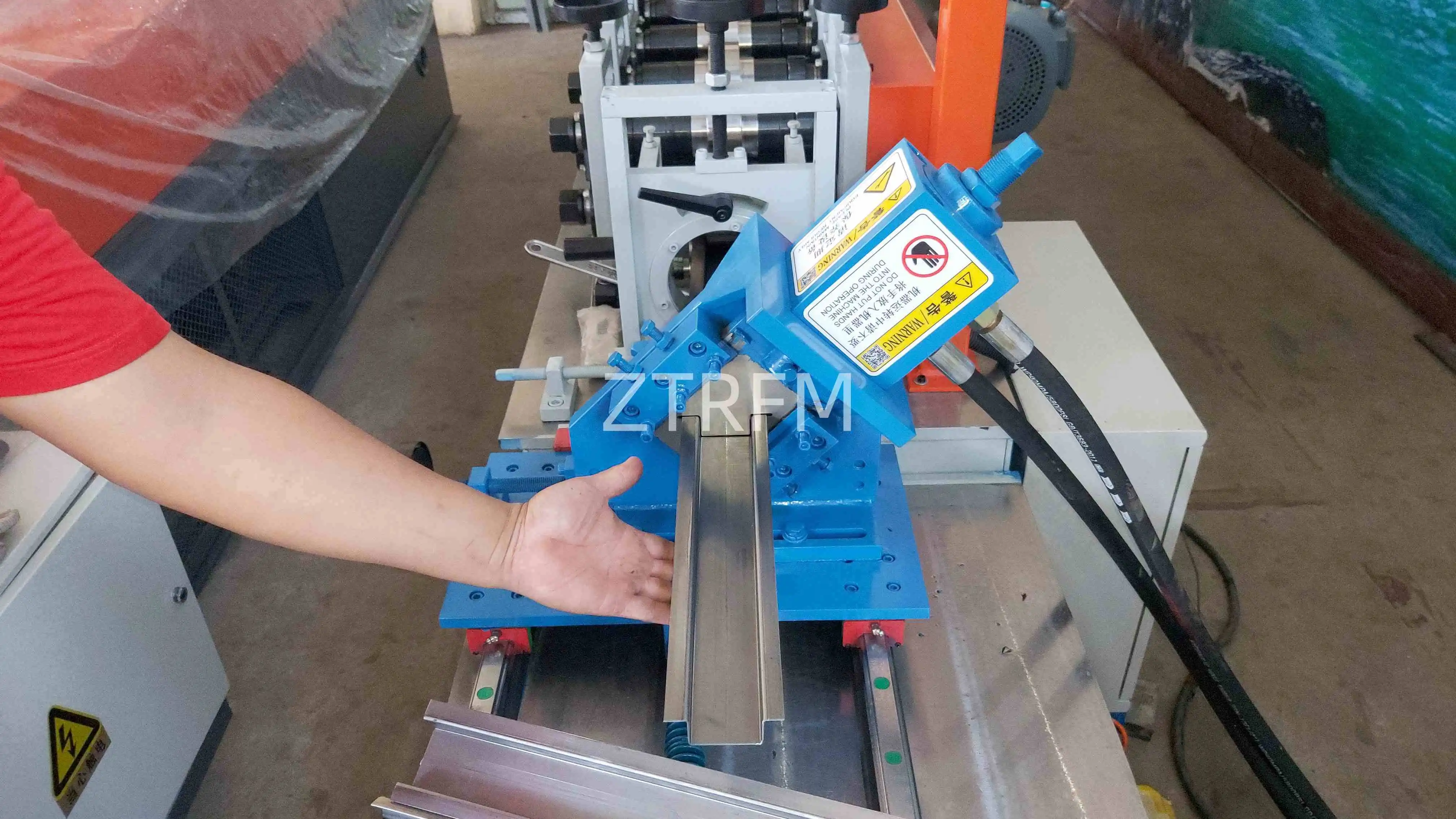
Top-Quality Hat Channel Machines for Efficient Structural Framing Production | ZTRFM
Ready to revolutionize your structural framing production with state-of-the-art hat channel machines? Look no further than Cangzhou Zhongtuo Roll Forming Machinery Co., Ltd. Our advanced machines offer unparalleled precision, efficiency, and versatility to meet all your manufacturing needs.
With over a decade of experience in exporting to more than 150 countries, we understand the unique requirements of diverse markets. Our ISO 9001, CE, and CAS-certified machines ensure you receive top-quality equipment that meets international standards.
Don't miss out on the opportunity to enhance your production capabilities and stay ahead in the competitive building materials industry. Contact us today at coo@zhongtuocn.com to discuss how our hat channel machines can transform your manufacturing process and drive your business growth.
References
1. Johnson, A. (2024). "The Future of Structural Framing: Trends and Technologies Shaping the Industry." Building Design & Construction Quarterly, 56(2), 78-92.
2. Smith, R. L., & Brown, T. K. (2023). "Energy Efficiency in Modern Construction: The Role of Advanced Framing Techniques." Journal of Sustainable Architecture, 18(4), 205-220.
3. Zhang, Y., et al. (2025). "Advancements in Roll Forming Technology for Construction Applications." International Journal of Manufacturing Engineering, 42(1), 15-30.
4. Martinez, C. (2024). "Modular Construction: Revolutionizing the Building Industry with Prefabricated Components." Construction Technology Review, 29(3), 112-128.
_1750323743240.webp)