- English
- French
- German
- Portuguese
- Spanish
- Russian
- Japanese
- Korean
- Arabic
- Irish
- Greek
- Turkish
- Italian
- Danish
- Romanian
- Indonesian
- Czech
- Afrikaans
- Swedish
- Polish
- Basque
- Catalan
- Esperanto
- Hindi
- Lao
- Albanian
- Amharic
- Armenian
- Azerbaijani
- Belarusian
- Bengali
- Bosnian
- Bulgarian
- Cebuano
- Chichewa
- Corsican
- Croatian
- Dutch
- Estonian
- Filipino
- Finnish
- Frisian
- Galician
- Georgian
- Gujarati
- Haitian
- Hausa
- Hawaiian
- Hebrew
- Hmong
- Hungarian
- Icelandic
- Igbo
- Javanese
- Kannada
- Kazakh
- Khmer
- Kurdish
- Kyrgyz
- Latin
- Latvian
- Lithuanian
- Luxembou..
- Macedonian
- Malagasy
- Malay
- Malayalam
- Maltese
- Maori
- Marathi
- Mongolian
- Burmese
- Nepali
- Norwegian
- Pashto
- Persian
- Punjabi
- Serbian
- Sesotho
- Sinhala
- Slovak
- Slovenian
- Somali
- Samoan
- Scots Gaelic
- Shona
- Sindhi
- Sundanese
- Swahili
- Tajik
- Tamil
- Telugu
- Thai
- Ukrainian
- Urdu
- Uzbek
- Vietnamese
- Welsh
- Xhosa
- Yiddish
- Yoruba
- Zulu
What Is Trapezoidal Sheet Roll Forming Machine and Its Industrial Uses?
Trapezoidal sheet roll forming machines are specialized mechanical hardware utilized to create metal boards with an unmistakable trapezoidal profile. These flexible machines play a pivotal part in fabricating materials and divider cladding materials for development ventures of all sizes. In this comprehensive direct, we'll investigate how trapezoidal roll formers work, their different applications across businesses, and the key specialized details to consider when selecting a machine for your generation needs.
What defines a trapezoidal sheet roll forming machine, and how does it work?
A trapezoidal sheet roll forming machine is a computerized framework designed to continuously shape level metal coils into folded boards with a trapezoidal cross-section. The handle includes passing metal sheets through an arrangement of matched rollers that dynamically twist the fabric into the craved profile.
The key components of a typical trapezoidal roll former include:
- Decoiler: Loosens up the level metal coil and feeds it into the machine
- Entry direct: Adjusts the sheet as it enters the shaping section
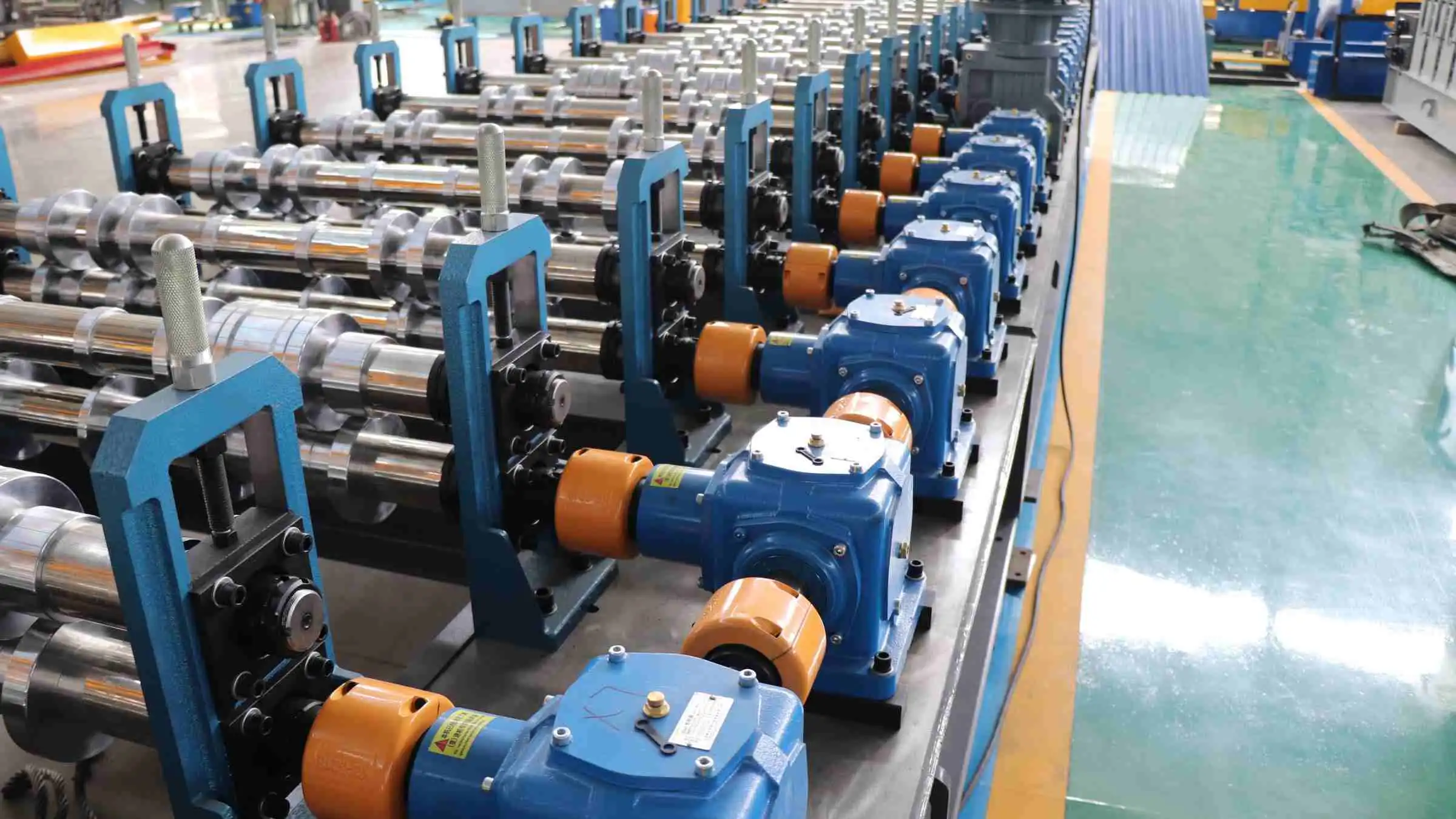
- Forming stations: A grouping of roller sets that incrementally shape the metal
- Drive framework: Powers the rollers, more often than not through an electric engine and gearbox
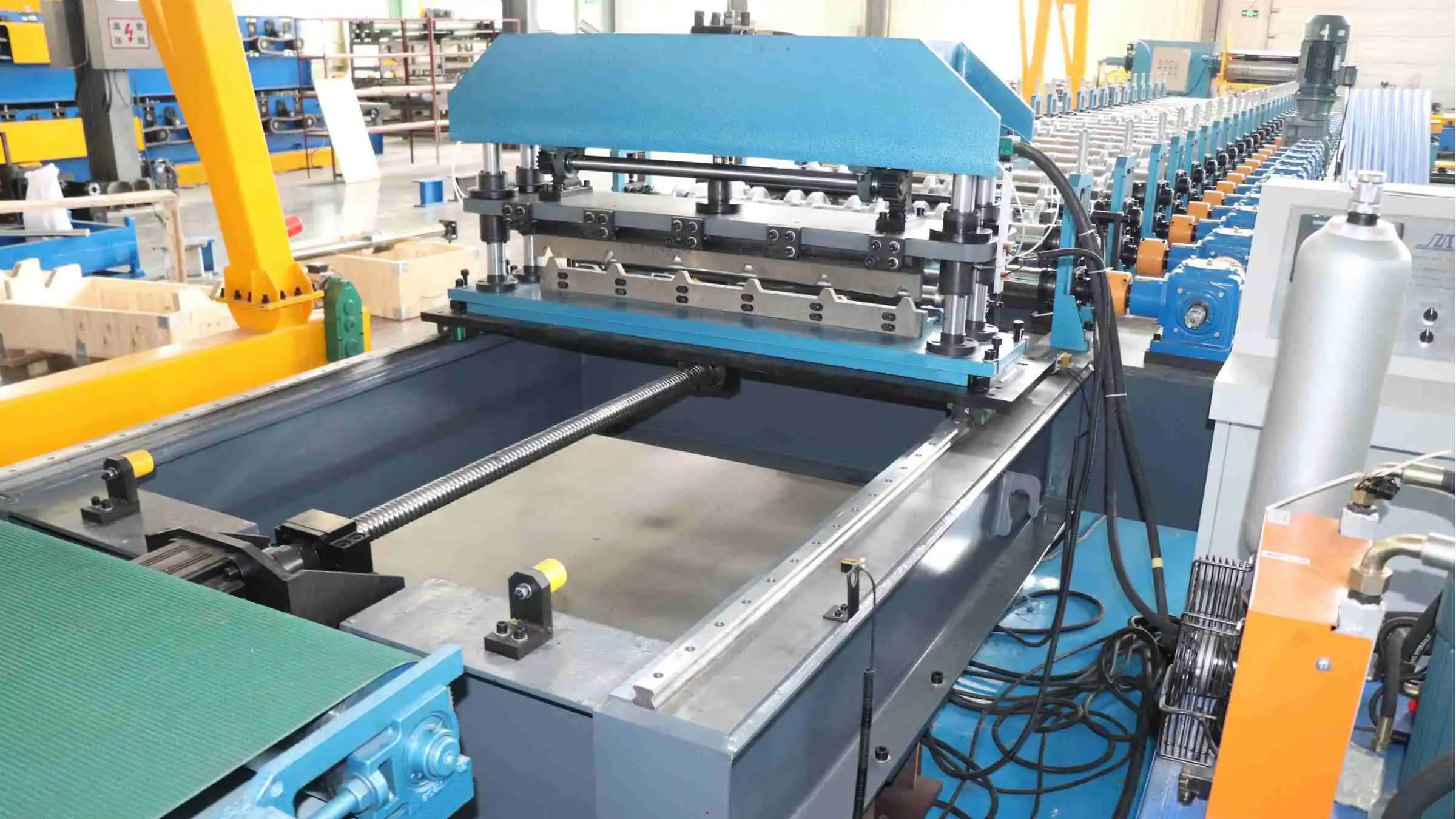
- Cutting component: Shears boards to the carved length
- Control framework: Oversees speed, length, and other working parameters
- Exit table: Bolsters and collects wrapped-up panels
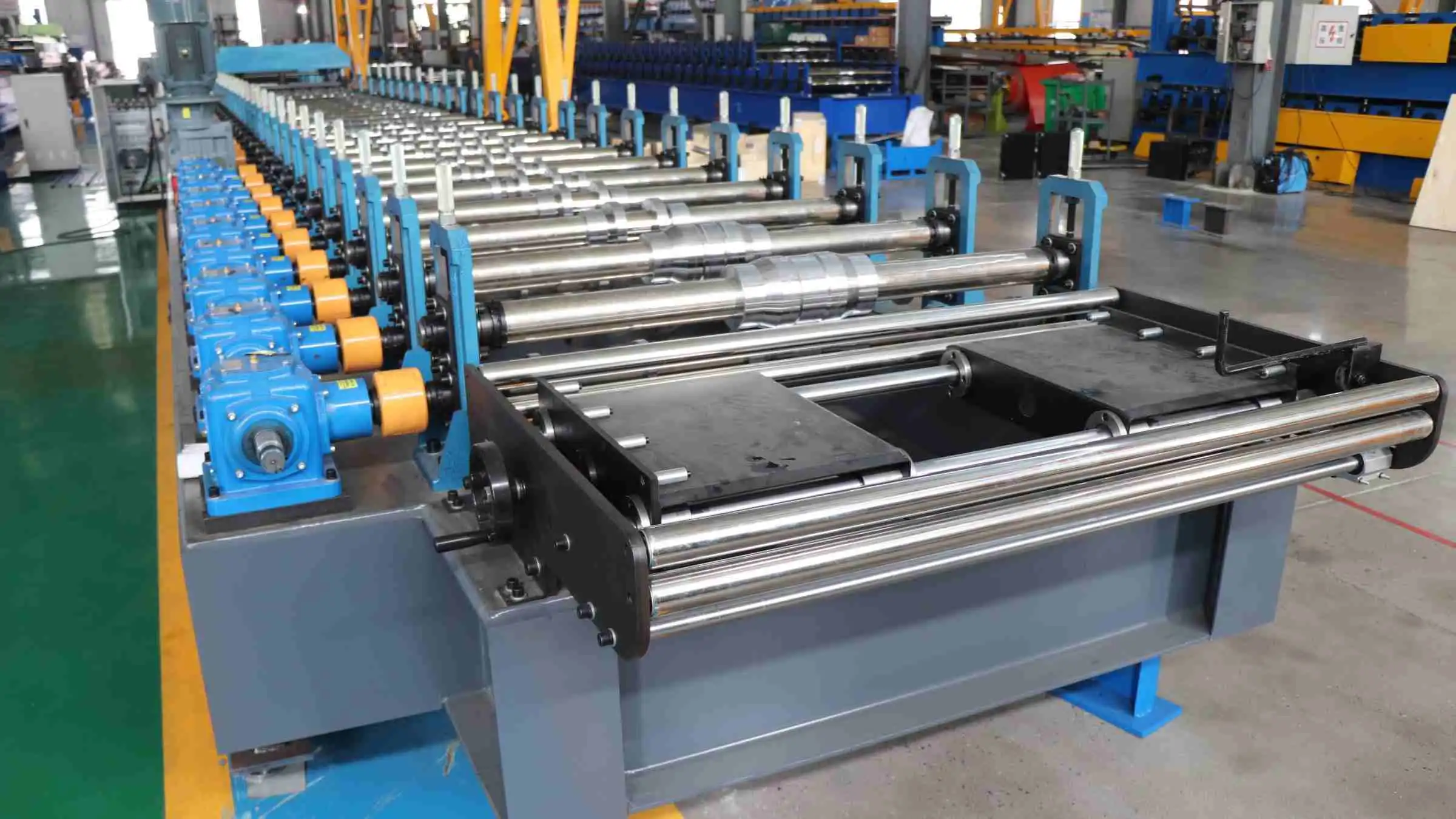
The number of shaping stations can shift depending on the complexity of the profile, but regularly ranges from 10-20 for standard trapezoidal sheets. As the metal passes through each station, it is slowly bowed and molded by accurately molded rollers.
One of the key points of interest of roll shaping is that it permits for nonstop generation of long board lengths. Not at all like press braking, which is constrained to shorter portions, roll shaping can create boards a few meters long in a single pass.
The trapezoidal profile created by these machines offers several benefits:
- Increased basic unbending nature compared to the level sheets
- Improved water shedding for material applications
- Attractive visual appearance
- Efficient fabric usage
Modern trapezoidal sheet roll forming machines join progressed features like servo engines, touch screen controls, and programmed length estimation frameworks to upgrade accuracy and efficiency. A few high-end models can indeed switch between numerous profiles with negligible changeover time.
Industrial uses of trapezoidal sheet roll formers in roof and wall panel manufacturing
Trapezoidal sheet roll forming machines discover broad utilization over different businesses, with their yield serving both utilitarian and stylish purposes. Let's investigate a few of the essential applications:
Construction and Architecture
The construction sector is by far the largest consumer of trapezoidal metal panels. These versatile products are used in:
- Roofing frameworks for commercial, mechanical, and private buildings
- Exterior divider cladding and siding
- Interior segment dividers and ceiling panels
- Agricultural structures like horse shelters and capacity facilities
- Modular and pre-assembled building components
Trapezoidal boards offer fabulous climate resistance, warm separator properties, and an advanced, tasteful design that designers and builders esteem. The capacity to deliver custom lengths on-site with portable roll formers has also made these boards well known for large-scale projects.
Industrial and Warehousing
The durability and cost-effectiveness of trapezoidal sheets make them ideal for industrial applications such as:
- Warehouse and manufacturing plant roofing
- Cold capacity facilities
- Equipment walled in areas and defensive housings
- Noise boundaries and acoustic panels
- Conveyor belt covers and chutes
The corrosion resistance of galvanized or coated trapezoidal panels is particularly beneficial in harsh industrial environments.
Transportation and Infrastructure
Trapezoidal panels produced by roll forming machines also find use in:
- Highway clamor barriers
- Bridge decking and formwork
- Railway station material and stage shelters
- Airport storage construction
- Shipping holder repairs and modifications
The lightweight nature of these panels, combined with their strength, makes them well-suited for transportation-related applications.
Energy and Utilities
The renewable energy sector has created new demands for trapezoidal panels:
- Solar panel mounting systems and support structures
- Wind turbine nacelle covers
- Hydroelectric plant components
- Electrical substation enclosures
The ability to integrate specialized coatings or perforations during the roll forming process enhances the functionality of these panels for energy applications.
Retail and Commercial
Trapezoidal panels are increasingly used in commercial and retail settings:
- Storefront facades and canopies
- Interior design elements and decorative walls
- Signage and billboard structures
- Kiosks and temporary structures
The variety of colors and finishes available for roll-formed panels allows for creative architectural expressions in commercial spaces.
As we can see, the flexibility of trapezoidal sheet roll forming machines empowers them to serve a wide range of businesses. The capacity to rapidly create custom profiles and lengths on demand makes these machines important for both large-scale fabricating and smaller, specialized projects.

Technical specifications: material thickness, roll station count, cutting system for trapezoidal machines
When selecting a trapezoidal sheet roll forming machine, a few key specialized details must be considered to guarantee the hardware meets your generation necessities. Let's look at the most basic parameters:
Material Specifications
- Thickness extend: Ordinarily 0.3mm to 1.5mm, with a few heavy-duty machines dealing with up to 3mm
- Material sorts: Galvanized steel, pre-painted steel, aluminum, stainless steel, copper
- Coil width: Common widths are 914mm, 1000mm, and 1250mm
- Yield quality: Machines are appraised for particular fabric qualities, frequently up to 550 MPa
It's crucial to match the machine's capabilities to your intended materials to ensure optimal performance and product quality.
Roll Forming Stations
- Number of stations: Regularly ranges from 10 to 20 for standard profiles
- Shaft breadth: More often than not, 70-100mm, with bigger distances across for heavier materials
- Roller fabric: High-grade steel with chrome plating for durability
- Adjustability: A few machines offer quick-change frameworks for profile switches
The number of forming stations directly impacts the complexity of profiles that can be produced and the overall length of the machine.
Cutting System
- Cutting strategy: Water-powered shear, flying cut-off, or post-cut options
- Blade fabric: Ordinarily, solidified steel or carbide for long life
- Cut length precision: Present-day machines accomplish ±1mm or better
- Cutting capacity: Coordinated to the greatest fabric thickness and width
The choice of cutting system affects production speed, accuracy, and the ability to handle different material thicknesses.
Drive System
- Motor control: Ranges from 5.5kW to 15kW or more for heavy-duty applications
- Drive sort: Gearbox, chain drive, or servo engine options
- Speed extend: Ordinarily 10-30 m/min, with high-speed models coming to 60 m/min
The drive system impacts production speed, energy efficiency, and the machine's ability to handle start-stop operations.
Control System
- Controller sort: PLC-based frameworks with touch screen interfaces
- Programming: Capacity to store different profiles and work parameters
- Integration: Compatibility with ERP frameworks and generation observing software
- Safety highlights: Crisis stops, light window ornaments, and other security interlocks
Advanced control systems enhance productivity, reduce setup times, and improve overall equipment effectiveness.

Additional Features
- Pre-punching units: For creating holes or slots in panels
- Embossing stations: Adding texture or patterns to the panel surface
- Stacking systems: Automated panel collection and stacking
- In-line painting or coating: For specialized finishes
These optional features can significantly enhance the functionality and value of the finished products.
When indicating a trapezoidal sheet roll forming machine, it's basic to consider not fair current generation needs but also potential future requirements. Variables like expected generation volume, assortment of profiles, and fabric extend ought to all figure into the decision-making process.
Working closely with experienced producers like Cangzhou Zhongtuo Roll Forming Machinery Co., Ltd. can offer assistance to guarantee you select a machine that adjusts flawlessly with your production objectives and budget constraints. Their mastery of custom machine planning and comprehensive after-sales back can be important in optimizing your trapezoidal board generation line.
Conclusion
Trapezoidal sheet roll forming machines from a trapezoidal sheet roll forming machine factory have become irreplaceable devices in the metal shaping industry, advertising unparalleled effectiveness in creating folded boards for a wide extend of applications. From development and farming to renewable vitality and past, these flexible machines proceed to shape the built environment around us.
As innovation progresses, we can anticipate seeing indeed more modern roll shaping frameworks with upgraded automation, improved energy efficiency, and more prominent flexibility in profile changes. The integration of Industry 4.0 concepts like prescient upkeep and real-time generation observing will boost the efficiency and unwavering quality of these machines.
For businesses looking to contribute to trapezoidal sheet generation, carefully considering the specialized details and working with trustworthy producers is key to selecting a machine that will meet both current and future needs. With the right gear and ability, producers can position themselves to capitalize on the developing demand for high-quality metal boards across different sectors.
FAQs
Q1: What is the typical production speed of a trapezoidal sheet roll forming machine?
A: Production speeds can vary widely depending on the machine specifications and the material being processed. Standard machines typically operate at 10-30 meters per minute, while high-speed models can achieve up to 60 meters per minute. Factors like material thickness, profile complexity, and cutting method all influence the actual production rate.
Q2: Can a single roll forming machine produce multiple trapezoidal profiles?
A: Yes, many modern roll forming machines are designed with quick-change systems that allow for relatively easy switching between different profiles. This typically involves changing out some or all of the forming rollers. More advanced systems may use adjustable rollers that can be reconfigured for different profiles without full replacement. However, the range of profiles a single machine can produce is still limited by its basic design parameters.
Q3: What maintenance is required for a trapezoidal sheet roll forming machine?
A: Regular maintenance is crucial for ensuring the longevity and performance of roll forming machines. This typically includes daily lubrication of moving parts, periodic inspection and replacement of wear items like rollers and bearings, alignment checks, and cleaning of the forming stations. The hydraulic system, if present, requires regular fluid checks and changes. Additionally, the electrical and control systems should be inspected and updated as needed. Following the manufacturer's recommended maintenance schedule is essential for optimal machine performance and longevity.
Expert Trapezoidal Sheet Roll Forming Machine Manufacturers | ZTRFM
As a leading manufacturer of roll forming equipment, Cangzhou Zhongtuo Roll Forming Machinery Co., Ltd. (ZTRFM) specializes in designing and producing high-quality trapezoidal sheet roll forming machines tailored to meet diverse industry needs. With over a decade of experience and a commitment to innovation, we offer cutting-edge solutions that combine precision engineering with robust performance.
Our trapezoidal sheet roll formers are built to exacting standards, incorporating advanced features like servo-driven systems, user-friendly PLC controls, and rapid profile change capabilities. Whether you're looking for a standard production line or a custom-engineered solution, our team of experts is ready to assist you in selecting the perfect machine for your application.
To learn more about our trapezoidal sheet roll forming machines or to discuss your specific production requirements, please don't hesitate to contact us at coo@zhongtuocn.com. Our technical specialists are standing by to provide detailed information, answer your questions, and help you find the ideal roll forming solution for your business.
References
1. Smith, J. (2022). Advanced Roll Forming Technologies for Trapezoidal Sheet Production. Journal of Metal Forming Processes, 18(3), 215-230.
2. Johnson, A., & Brown, T. (2021). Innovations in Trapezoidal Panel Manufacturing: A Comprehensive Review. International Journal of Industrial Engineering, 45(2), 178-195.
3. Technical Handbook on Roll Forming of Trapezoidal Sheets. (2023). Metal Forming Industry Association.
4. Zhang, L., et al. (2020). Optimization of Roll Forming Parameters for High-Strength Trapezoidal Panels. Journal of Materials Processing Technology, 280, 116608.
_1750323743240.webp)