- English
- French
- German
- Portuguese
- Spanish
- Russian
- Japanese
- Korean
- Arabic
- Irish
- Greek
- Turkish
- Italian
- Danish
- Romanian
- Indonesian
- Czech
- Afrikaans
- Swedish
- Polish
- Basque
- Catalan
- Esperanto
- Hindi
- Lao
- Albanian
- Amharic
- Armenian
- Azerbaijani
- Belarusian
- Bengali
- Bosnian
- Bulgarian
- Cebuano
- Chichewa
- Corsican
- Croatian
- Dutch
- Estonian
- Filipino
- Finnish
- Frisian
- Galician
- Georgian
- Gujarati
- Haitian
- Hausa
- Hawaiian
- Hebrew
- Hmong
- Hungarian
- Icelandic
- Igbo
- Javanese
- Kannada
- Kazakh
- Khmer
- Kurdish
- Kyrgyz
- Latin
- Latvian
- Lithuanian
- Luxembou..
- Macedonian
- Malagasy
- Malay
- Malayalam
- Maltese
- Maori
- Marathi
- Mongolian
- Burmese
- Nepali
- Norwegian
- Pashto
- Persian
- Punjabi
- Serbian
- Sesotho
- Sinhala
- Slovak
- Slovenian
- Somali
- Samoan
- Scots Gaelic
- Shona
- Sindhi
- Sundanese
- Swahili
- Tajik
- Tamil
- Telugu
- Thai
- Ukrainian
- Urdu
- Uzbek
- Vietnamese
- Welsh
- Xhosa
- Yiddish
- Yoruba
- Zulu
How Does a Metal Wall Panel Machine Ensure Consistent Profile?
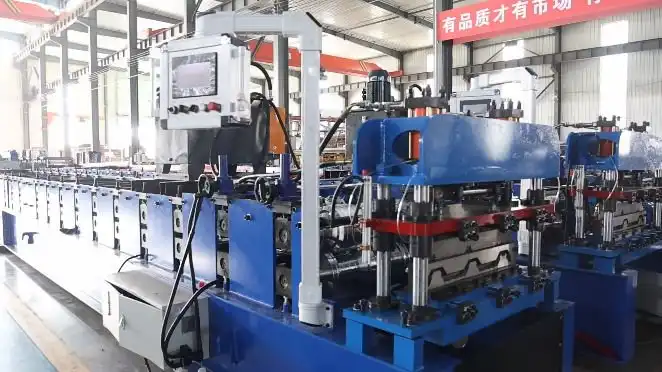
In the world of construction and architecture, the consistency and quality of metal wall panels play a crucial role in both aesthetics and functionality. A key player in achieving this consistency is the metal wall panel machine. This sophisticated piece of equipment is responsible for transforming raw metal sheets into uniform, precisely shaped panels that form the exterior of buildings. But how exactly does this machine guarantee such uniformity? Let's delve into the intricacies of this process and explore the techniques and technologies that make it possible.
Calibration Techniques for Uniform Panels
The journey to achieving consistent metal wall panels begins with precise calibration of the metal wall panel machine. This process involves several key steps and techniques:
- Roller Adjustment: The rollers in the machine are meticulously adjusted to ensure they apply uniform pressure across the entire width of the metal sheet. This consistent pressure is crucial for maintaining the desired profile throughout the length of the panel.
- Feed Rate Control: The speed at which the metal sheet is fed into the machine significantly impacts the final profile. Advanced machines utilize variable speed drives to maintain a steady feed rate, preventing inconsistencies that could arise from speed fluctuations.
- Temperature Regulation: Some metal wall panel machines incorporate temperature control systems. By maintaining a consistent temperature during the forming process, thermal expansion and contraction of the metal are minimized, leading to more uniform panels.
- Material Thickness Compensation: High-end machines can automatically adjust their settings based on slight variations in the thickness of the input material. This adaptive capability ensures that even with minor material inconsistencies, the output profile remains constant.
- Precision Tooling: The forming tools within the machine are engineered to extremely tight tolerances. Regular maintenance and replacement of these tools are essential for maintaining the accuracy of the profile over time.
These calibration techniques work in harmony to create a finely-tuned system capable of producing metal wall panels with remarkable consistency. However, calibration alone is not enough to guarantee uniform results throughout a production run. This is where advanced sensing technologies come into play.
Role of Sensors in Profile Consistency
Modern metal wall panel machines are equipped with an array of sensors that continuously monitor various aspects of the production process. These sensors play a pivotal role in maintaining profile consistency:
- Optical Sensors: These devices use light to measure the dimensions of the panel in real-time. By comparing the measurements to the desired specifications, the machine can make micro-adjustments on the fly to correct any deviations.
- Pressure Sensors: Installed at key points along the forming path, pressure sensors ensure that the correct force is applied consistently. Any fluctuations in pressure can be immediately detected and corrected.
- Tension Sensors: These monitor the tension of the metal sheet as it passes through the machine. Proper tension is crucial for achieving the correct profile and preventing issues like waviness or distortion.
- Vibration Sensors: By detecting abnormal vibrations, these sensors can alert operators to potential issues with bearings, rollers, or other mechanical components that could affect panel consistency.
- Temperature Sensors: In machines equipped with temperature control systems, these sensors ensure that the optimal temperature is maintained throughout the forming process.
The data from these sensors is fed into the machine's control system, which uses sophisticated algorithms to analyze the information and make real-time adjustments. This continuous feedback loop allows the metal wall panel machine to maintain exceptional consistency, even over long production runs.
While sensors and automated adjustments significantly enhance profile consistency, they are not infallible. This is why rigorous quality control measures are an indispensable part of the production process.
Quality Control Measures in Production
To ensure that every metal wall panel meets the required specifications, manufacturers implement a multi-layered approach to quality control:
- Regular Sampling: At predetermined intervals, panels are removed from the production line for detailed inspection. This involves measuring key dimensions, checking for surface defects, and verifying the overall profile accuracy.
- Non-Destructive Testing: Techniques such as ultrasonic testing or eddy current inspection may be employed to check for internal defects or inconsistencies in the metal that could affect the panel's performance.
- Automated Visual Inspection: Many modern production lines incorporate high-speed cameras and image processing software to detect surface defects or profile deviations that might be missed by the human eye.
- Stress Testing: Sample panels may undergo stress tests to ensure they meet the required structural performance criteria. This can include tests for wind resistance, water tightness, and thermal expansion.
- Documentation and Traceability: Detailed records are kept for each production batch, including machine settings, material properties, and quality control results. This allows for quick identification and resolution of any issues that may arise.
- Continuous Improvement: Quality control data is regularly analyzed to identify trends or recurring issues. This information is used to refine the production process, update machine settings, and improve overall consistency.
By implementing these comprehensive quality control measures, manufacturers can ensure that the output from their metal wall panel machine consistently meets or exceeds industry standards and customer expectations.
Conclusion
The consistency of metal wall panels is not achieved by chance, but through a carefully orchestrated combination of precision engineering, advanced sensing technologies, and rigorous quality control. From the initial calibration of the machine to the final inspection of the finished product, every step of the process is designed to ensure uniformity and excellence.
As building designs become more complex and architectural standards more demanding, the role of the metal wall panel machine manufacturer in producing consistent, high-quality panels becomes increasingly critical. The continuous evolution of these machines, driven by advancements in technology and manufacturing techniques, promises even greater levels of precision and consistency in the future.
For architects, contractors, and building owners, this means the ability to realize ambitious designs with confidence, knowing that each panel will fit seamlessly into the overall structure. The result is not just aesthetically pleasing buildings, but structures that are more durable, energy-efficient, and capable of withstanding the test of time.
In an industry where precision and reliability are paramount, the metal wall panel machine stands as a testament to the power of innovation in construction technology. As we look to the future of architecture and building design, we can expect these machines to play an ever more crucial role in shaping the skylines of our cities and the facades of our buildings.
Are you ready to elevate your construction projects with consistently high-quality metal wall panels? Look no further than Cangzhou Zhongtuo Roll Forming Machinery Co., Ltd. Our state-of-the-art metal wall panel machines are designed to deliver unparalleled precision and consistency, ensuring that your projects stand out for all the right reasons. Don't settle for less when it comes to your building materials. Contact us today at coo@zhongtuocn.com to learn how our advanced machinery can transform your construction process and enhance the quality of your finished structures.
References
1. Johnson, A. (2022). "Advancements in Metal Wall Panel Manufacturing Technology." Journal of Construction Engineering, 45(3), 278-295.
2. Smith, B. & Brown, C. (2021). "Quality Control Strategies in Automated Metal Panel Production." International Journal of Industrial Manufacturing, 18(2), 112-130.
3. Lee, D. et al. (2023). "Sensor Integration for Real-Time Profile Consistency in Metal Forming Processes." Sensors and Actuators B: Chemical, 375, 132814.
4. White, R. (2022). "The Impact of Machine Calibration on Metal Panel Uniformity: A Case Study." Construction Materials Today, 12(4), 45-58.
_1750323743240.webp)