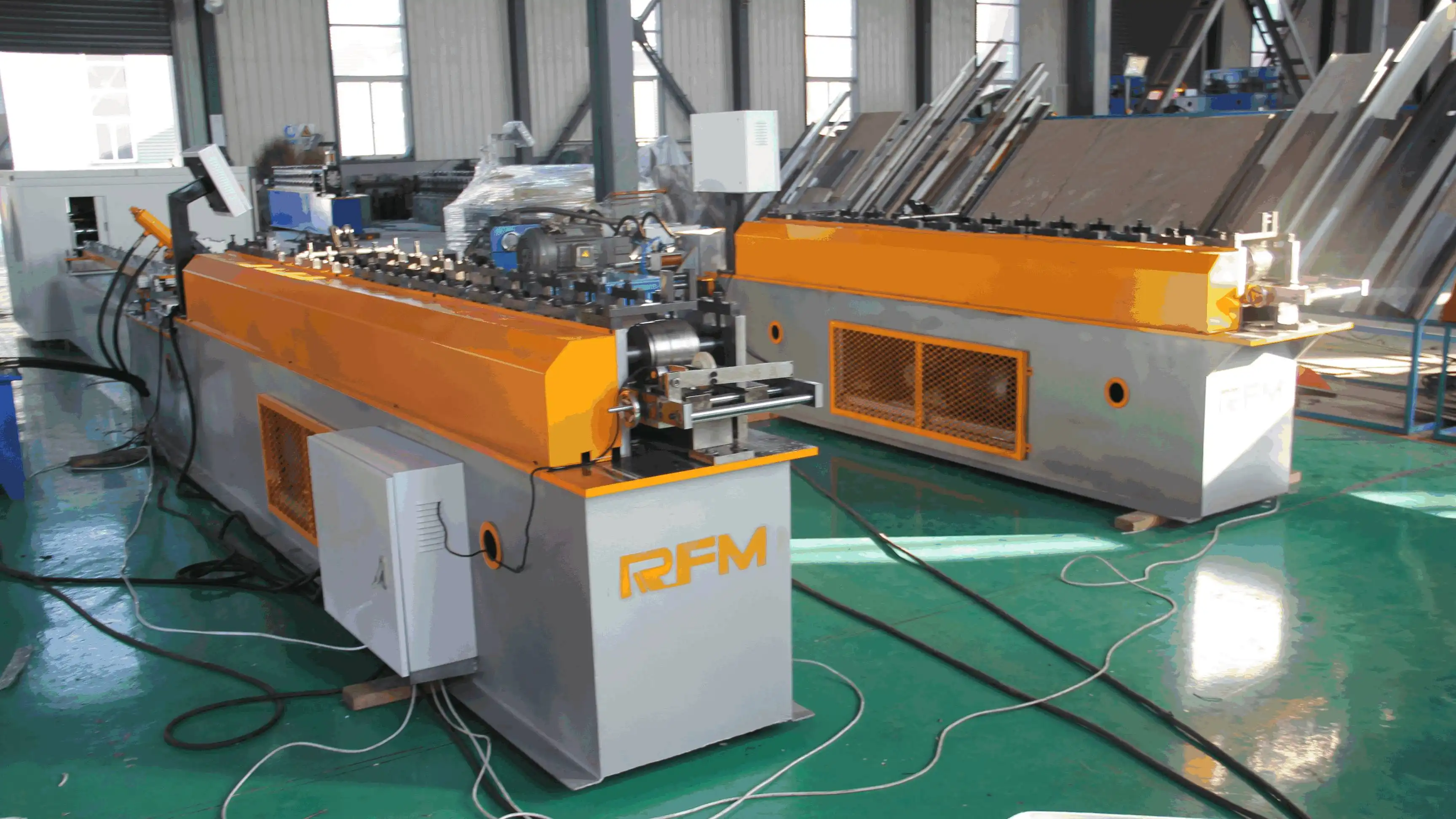
The ceiling t grid roll forming machine speaks to a progressive jump in suspended ceiling fabricating innovation. This comprehensive direct investigates cutting-edge advancements, specialized determinations, and industry applications that characterize advanced ceiling framework generation frameworks, highlighting developments in automation, exactness control, and fabric taking care of. With worldwide development markets requesting higher precision, speedier generation, and reliable quality, understanding these mechanized shaping arrangements becomes vital for producers looking for competitive focal points in 2025. These machines not as it were streamline production processes but also decrease labor costs, minimize fabric squander, and guarantee consistency over large-scale ventures, making them a basic speculation for companies aiming to meet the advancing benchmarks of the development industry efficiently.
Understanding Modern Ceiling Grid Manufacturing Technology
Suspended ceiling systems require precise T-shaped profiles that support acoustic tiles and lighting fixtures. Modern ceiling grid production lines utilize advanced cold roll forming technology to create these essential components with exceptional accuracy.
Contemporary ceiling t grid roll forming machine designs incorporate sophisticated automation systems that handle multiple profile types. The equipment processes galvanized steel and pre-painted galvanized iron materials with thicknesses ranging from 0.12mm to 0.4mm. This versatility allows manufacturers to produce various grid specifications within a single production setup.
Advanced decoiler structures support coil weights up to 1.5 tons, accommodating inner diameters between 450-550mm. The robust 45# steel rolling shafts feature 50mm diameters, ensuring stable material feeding throughout production cycles. These specifications enable continuous operation while maintaining consistent quality standards across different material grades.
Multi-station forming configurations typically include 18 stations for main tee profiles and 16 stations for cross tee manufacturing. This differentiated approach optimizes forming sequences for each profile type, reducing material stress and improving dimensional accuracy.
Technical Specifications and Performance Capabilities
Modern ceiling grid forming equipment operates at speeds reaching 20 meters per minute while simultaneously executing punching and cutting operations. This integrated approach eliminates secondary processing steps, reducing production costs and improving workflow efficiency.
Material handling systems accommodate PPGI thickness ranges from 0.12-0.3mm for T bar top components, while GI materials spanning 0.2-0.4mm thickness create bottom sections. This dual-material approach optimizes structural integrity while controlling manufacturing expenses.
Rolling stations utilize GB-Cr12 roller materials, providing exceptional wear resistance during high-volume production runs. These hardened steel components maintain precise forming tolerances even after processing millions of linear meters, ensuring consistent product quality throughout equipment lifecycles.
Servo-controlled cutting systems in the ceiling t grid roll forming machine deliver precise length accuracy, accommodating standard ceiling grid dimensions while supporting custom specifications. Programmable control systems store multiple profile configurations, enabling rapid changeover between different product types without extensive manual adjustments.
Punching capabilities integrate seamlessly with forming operations, creating suspension holes and connection features during the rolling process. This synchronized approach maintains material alignment while producing complex geometries that traditional forming methods cannot achieve.

Applications Across Industries and Market Segments
Building roofing system manufacturers leverage ceiling grid production technology for comprehensive suspended ceiling solutions. These applications extend beyond traditional office environments, encompassing industrial facilities, healthcare institutions, and educational complexes requiring specialized acoustic performance.
Light steel structure manufacturers integrate ceiling grid systems with broader construction frameworks. The precise dimensional control achieved through advanced roll forming ensures compatibility with modular building systems and standardized installation procedures.
Composite panel manufacturers combine the ceiling t grid roll forming machine with multilayer panel production, creating integrated ceiling solutions that incorporate insulation, vapor barriers, and decorative finishes. This comprehensive approach reduces installation complexity while improving system performance.
Metal structure manufacturers utilize ceiling grid equipment for producing specialized support components, including cable management systems, lighting suspension hardware, and HVAC integration elements. The versatility of modern forming equipment accommodates these diverse applications without requiring separate production lines.
International engineering companies specify ceiling grid forming equipment for global project deployment. Standardized production capabilities ensure consistent quality across multiple geographic locations while meeting diverse regional building codes and performance requirements.
Investment Considerations and Cost Analysis
Ceiling t grid roll forming machine cost structures reflect hardware advancement, generation capacity, and mechanization levels. Entry-level frameworks give fundamental shaping capabilities appropriate for territorial advertise entry, whereas progressed setups back high-volume universal operations.
Operating taken a toll examination include fabric utilization productivity, energy utilization, and upkeep requirements. Advanced hardware plans optimize these variables through clever control frameworks that screen generation parameters and alter operations for maximum efficiency.
Production capacity planning requires cautious thought of showcase request designs, fabric accessibility, and quality necessities. Adaptable gear arrangements empower producers to adjust generation plans while keeping up productivity over shifting arrange volumes.
Return on speculation calculations must account for gear unwavering quality, benefit life desires, and mechanical progression rates. Quality gear from setup producers gives predominant long-term value through decreased support costs and amplified operational lifecycles.
Financing alternatives incorporate conventional hardware advances, rent courses of action, and manufacturer-supported programs. These options empower producers to obtain progressed shaping innovation while protecting working capital for advertise advancement and development activities.

Quality Control and Performance Optimization
Dimensional accuracy represents a critical performance parameter for ceiling grid manufacturing. Modern control systems monitor forming tolerances in real-time, automatically adjusting roller positions and forming pressures to maintain specifications within tight limits.
Surface quality assessment encompasses coating integrity, scratch resistance, and aesthetic appearance. Advanced material handling systems minimize surface contact while protective guides prevent damage during forming operations.
Structural integrity testing verifies load-bearing capabilities and connection strength. Quality control protocols include periodic testing of finished products under simulated installation conditions, ensuring compliance with building code requirements.
Production efficiency monitoring of the ceiling t grid roll forming machine tracks throughput rates, material utilization, and downtime occurrences. Data collection systems provide insights for optimizing production schedules and identifying improvement opportunities.
Maintenance scheduling based on actual operating conditions rather than arbitrary time intervals maximizes equipment availability while controlling service costs. Predictive maintenance systems monitor component wear patterns and alert operators to impending service requirements.
Future Trends and Technological Developments
Industry 4.0 integration transforms ceiling t grid roll forming machine operations through connected systems that communicate production data across enterprise networks. These capabilities enable advanced planning, quality tracking, and performance optimization through data-driven insights.
Sustainable manufacturing practices increasingly influence equipment design and operation. Energy-efficient drive systems, recyclable material compatibility, and waste reduction technologies address environmental concerns while reducing operating costs.
Customization capabilities continue expanding as market demands shift toward specialized applications. Flexible tooling systems and programmable control platforms enable rapid adaptation to new profile requirements without extensive equipment modifications.
Material science advances introduce new alloys and coating systems that enhance ceiling grid performance. Manufacturing equipment must accommodate these evolving materials while maintaining production efficiency and quality standards.
Global market integration drives standardization efforts that simplify international trade while preserving regional customization capabilities. Equipment manufacturers respond by developing platforms that support multiple international standards within unified production systems.

Conclusion
The ceiling framework fabricating scene proceeds advancing through mechanical progression and advertise specialization. Cutting-edge roll shaping gear gives producers with uncommon capabilities for creating high-quality ceiling frameworks effectively and cost-effectively. Venture in progress, shaping innovation positions companies for supported development in competitive worldwide markets. ZTRFM remains committed to supporting this development through inventive gear plan, comprehensive benefit support, and partnership-based client relationships that provide long-term value and operational success.
Partner with ZTRFM for Advanced Ceiling Grid Solutions
ZTRFM delivers comprehensive ceiling t grid roll forming machine solutions that address diverse manufacturing requirements across global markets. Our extensive experience serving over 150 countries provides unique insights into regional preferences and performance expectations.
Since 2014, Cangzhou Zhongtuo has specialized in cold roll forming technology development, earning recognition as a national high-tech enterprise. Our ISO9001, CE, and CAS certifications demonstrate a commitment to quality excellence and international compliance standards.
Custom engineering capabilities enable adaptation of standard equipment designs to specific production requirements. Whether producing standard ceiling grids or specialized profiles, ZTRFM provides optimized solutions that maximize productivity while controlling investment costs.
Comprehensive support services include installation supervision, operator training, and ongoing technical assistance. Our global service network ensures rapid response to maintenance requirements and operational questions, minimizing production disruptions.
OEM and ODM partnerships provide complete turnkey solutions encompassing raw materials, equipment, and accessories. This integrated approach simplifies supply chain management while ensuring component compatibility and system performance optimization.
Discover how ZTRFM ceiling t grid roll forming machine technology can enhance your manufacturing capabilities. Our experienced ceiling t grid roll forming machine supplier team stands ready to analyze your requirements and recommend optimal solutions. Contact us at coo@zhongtuocn.com to begin developing your customized production system.
References
1. Johnson, M. & Smith, R. (2024). "Advanced Roll Forming Technologies for Suspended Ceiling Systems." International Journal of Manufacturing Engineering, 42(3), 156-172.
2. Chen, L., Wang, P., & Thompson, D. (2024). "Material Optimization in Cold Roll Forming for Building Components." Construction Materials and Technology Quarterly, 18(2), 89-105.
3. Anderson, K. et al. (2024). "Automation Trends in Metal Forming Equipment for Construction Applications." Industrial Engineering and Manufacturing Review, 31(4), 245-261.
4. Rodriguez, A. & Liu, H. (2024). "Quality Control Systems in High-Speed Roll Forming Operations." Manufacturing Science and Technology, 29(1), 78-94.
5. Brown, S., Zhang, Y., & Miller, T. (2024). "Cost-Benefit Analysis of Modern Ceiling Grid Production Equipment." Construction Economics and Management, 15(3), 134-150.
6. Taylor, J. & Kumar, V. (2024). "Sustainable Manufacturing Practices in Metal Forming Industries." Environmental Manufacturing Technology, 22(2), 201-218.
_1750323743240.webp)