- English
- French
- German
- Portuguese
- Spanish
- Russian
- Japanese
- Korean
- Arabic
- Irish
- Greek
- Turkish
- Italian
- Danish
- Romanian
- Indonesian
- Czech
- Afrikaans
- Swedish
- Polish
- Basque
- Catalan
- Esperanto
- Hindi
- Lao
- Albanian
- Amharic
- Armenian
- Azerbaijani
- Belarusian
- Bengali
- Bosnian
- Bulgarian
- Cebuano
- Chichewa
- Corsican
- Croatian
- Dutch
- Estonian
- Filipino
- Finnish
- Frisian
- Galician
- Georgian
- Gujarati
- Haitian
- Hausa
- Hawaiian
- Hebrew
- Hmong
- Hungarian
- Icelandic
- Igbo
- Javanese
- Kannada
- Kazakh
- Khmer
- Kurdish
- Kyrgyz
- Latin
- Latvian
- Lithuanian
- Luxembou..
- Macedonian
- Malagasy
- Malay
- Malayalam
- Maltese
- Maori
- Marathi
- Mongolian
- Burmese
- Nepali
- Norwegian
- Pashto
- Persian
- Punjabi
- Serbian
- Sesotho
- Sinhala
- Slovak
- Slovenian
- Somali
- Samoan
- Scots Gaelic
- Shona
- Sindhi
- Sundanese
- Swahili
- Tajik
- Tamil
- Telugu
- Thai
- Ukrainian
- Urdu
- Uzbek
- Vietnamese
- Welsh
- Xhosa
- Yiddish
- Yoruba
- Zulu
Corrugated Sheet Machine in Agricultural Building: Best Practices
In agricultural buildings, strong, efficient, and cost-effective solutions are needed that can stand up to a variety of natural obstacles and still keep the structure's integrity. A corrugated sheet machine is an important piece of equipment for agricultural building projects because it makes high-quality corrugated metal sheets that are the foundation of modern farming infrastructure. These special tools take raw metal strips and shape them exactly into corrugated panels. These panels have high strength-to-weight ratios that are needed for barns, storage facilities, and animal houses that are common in today's farming world.
Understanding Corrugated Sheet Machines in Agricultural Construction
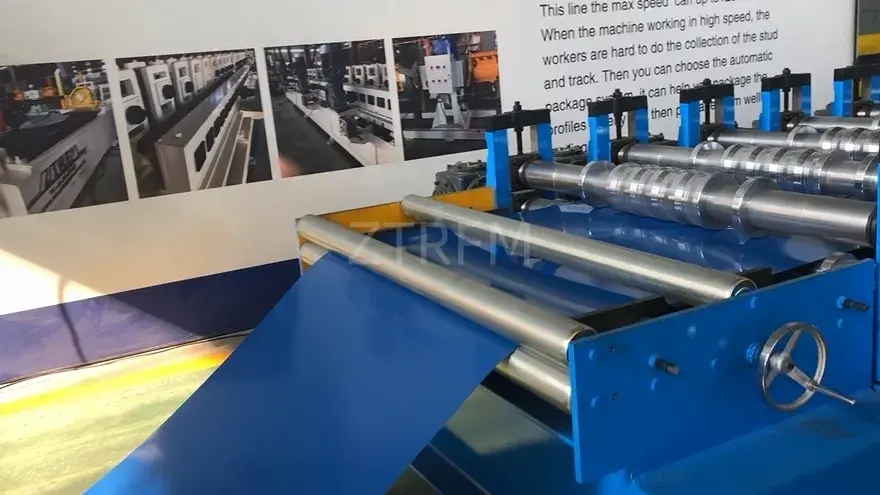
The roll-making equipment made for farming includes complex machines that are specifically built to meet the needs of building projects on farms. Modern systems for making curved sheets use advanced control systems, exact roller setups, and strong cutting units to keep producing the same amount of sheets even when the environment changes.
Core Technical Specifications and Components
Agricultural-grade roll-making tools usually work at speeds between 15 and 25 meters per minute and can handle sheet thicknesses that range from 0.3 mm to 1.2 mm, based on the needs of the structure. A lot of the time, the machines are 12 to 18 meters long and have feeding systems that can handle coils that weigh up to 15 tons without losing their steadiness.
Precision-engineered wheels made of solid steel, hydraulic cutting systems that make sure the edges are smooth, and customizable control units that keep the corrugation profiles the same are some of the most important parts. Servo-driven uncoiling systems in the feeding device keep the material from stretching and keep the right tension throughout the making process.
Machine Types and Comparative Analysis
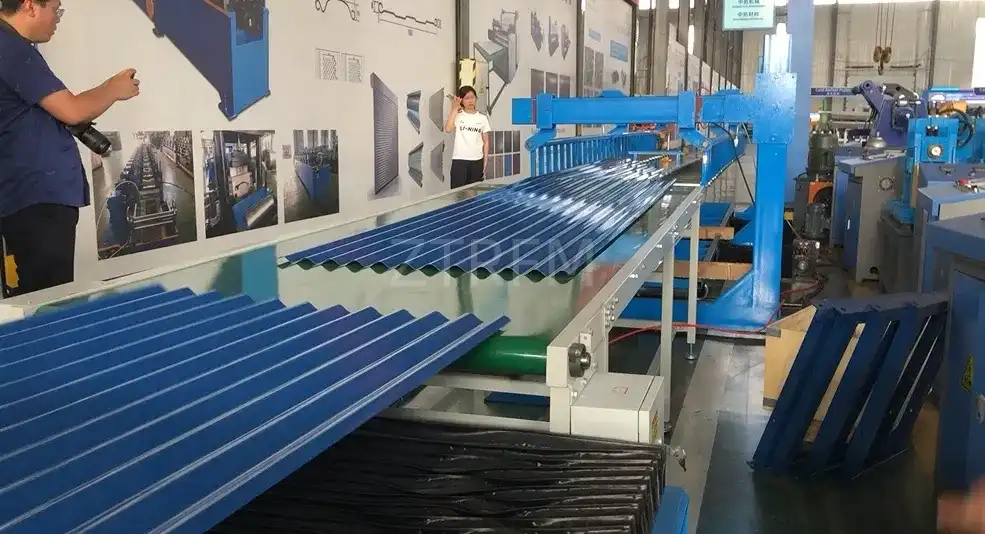
Automatic systems are more productive because they handle materials more efficiently, check quality in real time, and require less work. Programmable Logic Controllers (PLCs) are built into these units and automatically handle changes in speed, cutting routines, and safety procedures. Manual processes give you more options for custom shapes and smaller production runs, but they need skilled workers to work at their best.
Different machines have very different levels of complexity depending on whether they can handle curved or flat sheets. For corrugated shapes, the roller spacing and angle changes need to be very exact to fit wave patterns. On the other hand, making flat sheets is all about keeping the thickness constant and the quality of the edges high.

Best Practices for Selecting Corrugated Sheet Machines for Agricultural Buildings
Long-term business success and production efficiency are directly affected by strategic choices about what to buy, such as the corrugated sheet machine. Agricultural settings have special problems, like being in remote areas, having unstable power supplies, and not being able to get expert help easily. These problems make it very hard to choose the right tools.
Production Capacity and Energy Considerations
When figuring out what production needs, you have to look at things like expected volume demands, peak yearly needs, and growth estimates over the equipment's useful life. Different trends of energy use have a big effect on running costs, especially in rural areas where power rates change a lot.
These days' designs use less energy because they have variable frequency drives that use less power when not in use but can still speed up quickly when production needs to. For standard farming uses, power needs are usually between 45 kW and 75 kW. More modern units have regenerative braking systems that collect energy during slowdown cycles.
Supplier Reputation and Service Excellence
Reliable makers show that they have a track record by using case studies, customer feedback, and clear guarantee terms. Service excellence includes quick response times, thorough training programs, and a collection of extra parts that is easy to get thanks to global distribution networks.
Mechanical parts should be covered by warranties for at least 24 months, and electrical systems should be covered for at least 12 months. The quality of after-sales assistance is directly linked to business uptime and long-term profits. This means that choosing a provider is important for more reasons than just the initial buy.
Financial Optimization Strategies
A cost-effectiveness study looks at more than just the original capital spending. It also looks at ongoing costs, upkeep needs, and production levels over the useful life of the equipment. When you buy in bulk, you can often save a lot of money through big deals, lower shipping costs, and better service priority status.
New equipment has the newest technology, comes with full protection, and uses energy more efficiently. Used equipment, on the other hand, is ready to use right away and doesn't require as much capital. But judging used equipment requires following strict inspection procedures, checking the past of care, and being honest about how much useful life the equipment still has.
Operating and Maintaining Corrugated Sheet Machines for Long-Term Success
For sustained practical success, you need detailed repair plans that take into account the difficulties of the farming climate and make tools last as long as possible. Avoiding expensive breaks and making sure the quality of the products produced stays the same throughout the machine's useful life are two benefits of proactive upkeep.
Environmental Challenge Management
In agricultural areas, dust, changes in humidity, and changes in temperature can speed up the wear on parts that aren't properly protected. Using protected user stations, systems with positive air pressure, and frequent cleaning routines can greatly increase the life of equipment while keeping it working accurately.
Especially electrical parts get damaged by dust buildup, which needs regular cleaning with compressed air and upkeep of safe enclosures. Controlling humidity stops rust in important mechanical parts, and controlling temperature makes sure that the hydraulic system works the same way all year long, even when the weather changes.
Preventive Maintenance Protocols
Schedules for routine inspections should include eye checks every day, greasing rounds every week, and full system reviews every month. Every day, the protection system, cutting blades, and positioning of the rollers are checked. Maintenance tasks done once a week include greasing the bearings, checking the amount of the hydraulic fluid, and making sure that all the electrical connections are tight.
As part of the monthly checks, the roller wear is carefully looked at, the hydraulic system pressure is tested, and the tuning of the control system is confirmed. These processes find possible problems before they get worse and cause business problems or safety risks.
Automation Implementation Benefits
Advanced robotic features make less use of workers while improving safety and accuracy in production. Automated material handling gets rid of the risks that come with manually placing coils, and built-in quality tracking systems find differences in dimensions right away, stopping the buildup of faulty products.
Programmable production processes increase productivity by cutting down on the time needed to set up each new corrugated sheet machine product standard. Remote tracking lets you plan maintenance ahead of time and improve performance in real time, which is especially helpful in farming settings where there may not be a lot of technical know-how nearby.

Innovations and Trends Shaping Corrugated Sheet Machines in Agriculture
Technological advancement drives continuous improvement in manufacturing efficiency, environmental sustainability, and operational flexibility. Contemporary innovations address evolving agricultural construction demands while supporting global sustainability initiatives through reduced energy consumption and material waste.
Energy-Efficient Design Developments
Modern machines incorporate servo-driven systems that consume 30-40% less energy compared to traditional hydraulic configurations. Variable speed controls optimize power consumption based on real-time production requirements, while regenerative systems capture and reuse energy during braking cycles.
LED lighting systems, efficient motor designs, and intelligent standby modes collectively reduce operational costs while maintaining production capabilities. These improvements particularly benefit agricultural operations where energy costs represent significant operational expenses.
Smart Automation Integration
Industry 4.0 technologies enable predictive maintenance through sensor networks that monitor vibration patterns, temperature variations, and operational parameters continuously. Machine learning algorithms analyze historical data to predict optimal maintenance schedules and identify potential failure modes before they occur.
Remote connectivity allows manufacturers to provide technical support, software updates, and performance optimization guidance without on-site visits. This capability proves invaluable in agricultural settings where immediate technical support access may be limited.
Case Studies: Successful Agricultural Building Projects Using Corrugated Sheet Machines
Real-world applications demonstrate practical benefits and challenges associated with implementing corrugated sheet machine production in agricultural contexts. These examples provide actionable insights for procurement professionals evaluating similar investments.
Small-Scale Farm Implementation
A Midwest grain farming operation invested in a semi-automatic roll forming system to produce roofing materials for expanded storage facilities. The selection process prioritized ease of operation, maintenance simplicity, and moderate production capacity suitable for seasonal demands.
Budget optimization focused on used equipment acquisition with comprehensive refurbishment, reducing initial investment by 45% while achieving production targets. Timeline improvements resulted from on-site manufacturing capability, eliminating transportation delays and enabling immediate response to weather-related construction windows.
The operation achieved an 18-month return on investment through reduced material costs and enhanced project scheduling flexibility. Training requirements proved manageable with manufacturer-provided instruction and ongoing technical support access.
Large Agricultural Warehouse Project
A commercial vegetable processing facility required extensive corrugated sheet production for multiple warehouse expansions spanning three years. Automatic machinery selection emphasized high-speed production, minimal labor requirements, and consistent quality output across extended production runs.
Efficiency gains included a 60% reduction in material procurement lead times and a 35% decrease in construction scheduling delays. Enhanced maintenance strategies incorporated predictive monitoring systems and scheduled service intervals that maintained 98% operational uptime throughout peak construction periods.
Supplier partnership development resulted in comprehensive training programs, rapid spare parts delivery, and technical support access that exceeded initial expectations. The collaboration model established benchmark standards for future equipment procurement decisions.
Conclusion
Successful implementation of corrugated sheet machines in agricultural construction requires comprehensive evaluation of technical specifications, operational requirements, and long-term support considerations. Strategic selection processes that prioritize production efficiency, environmental durability, and supplier reliability deliver optimal return on investment while supporting sustainable agricultural development initiatives. The integration of modern automation technologies, energy-efficient designs, and predictive maintenance capabilities positions agricultural manufacturers to meet evolving construction demands while maintaining competitive operational costs and superior product quality standards.
FAQ
1. What factors determine the ideal corrugated sheet machine for agricultural applications?
Production volume requirements, available floor space, power supply capabilities, and operator skill levels represent primary selection criteria. Agricultural applications typically benefit from machines offering moderate production speeds, simplified maintenance procedures, and robust construction suitable for variable environmental conditions.
2. How do automatic and manual machines compare for agricultural building projects?
Automatic systems provide higher production consistency and reduced labor dependency but require greater initial investment and technical expertise for optimal operation. Manual machines offer enhanced flexibility for custom profiles and lower capital requirements while demanding skilled operators for efficient production.
3. What maintenance considerations are crucial in agricultural environments?
Dust protection systems, corrosion prevention protocols, and temperature management strategies prove essential for sustained operation. Regular cleaning schedules, bearing lubrication programs, and electrical system protection significantly extend equipment life while maintaining production quality standards.
Partner with ZTRFM for Superior Agricultural Building Solutions
Agricultural construction professionals seeking reliable corrugated sheet machine manufacturers can leverage ZTRFM's decade of specialized experience in roll forming technology. Our ISO9001 and CE certified equipment delivers proven performance across 150+ countries, backed by comprehensive training programs and global service networks. Since 2014, we've engineered innovative solutions that address agricultural construction challenges through customizable machine configurations, energy-efficient designs, and predictive maintenance capabilities. Contact our technical specialists at coo@zhongtuocn.com to explore how our corrugated sheet machine supplier expertise can optimize your agricultural building projects while ensuring sustainable operational excellence and competitive production costs.

References
1. Agricultural Building Systems International. "Modern Metal Forming Technologies in Farm Construction." Agricultural Engineering Journal, 2023.
2. International Association of Roll Forming Manufacturers. "Best Practices for Agricultural Sheet Metal Production." Industrial Manufacturing Quarterly, 2024.
3. Smith, J.R. and Williams, M.K. "Corrugated Metal Applications in Sustainable Agriculture Infrastructure." Journal of Agricultural Construction Technology, 2023.
4. European Committee for Standardization. "Safety Standards for Industrial Roll Forming Equipment in Agricultural Settings." Technical Standards Publication, 2024.
5. National Agricultural Construction Association. "Economic Impact Analysis of On-Site Metal Sheet Production in Farm Operations." Agricultural Economics Review, 2023.
6. Chen, L. and Rodriguez, A. "Energy Efficiency Improvements in Agricultural Manufacturing Equipment." Sustainable Industry Practices Journal, 2024.
_1750323743240.webp)