- English
- French
- German
- Portuguese
- Spanish
- Russian
- Japanese
- Korean
- Arabic
- Irish
- Greek
- Turkish
- Italian
- Danish
- Romanian
- Indonesian
- Czech
- Afrikaans
- Swedish
- Polish
- Basque
- Catalan
- Esperanto
- Hindi
- Lao
- Albanian
- Amharic
- Armenian
- Azerbaijani
- Belarusian
- Bengali
- Bosnian
- Bulgarian
- Cebuano
- Chichewa
- Corsican
- Croatian
- Dutch
- Estonian
- Filipino
- Finnish
- Frisian
- Galician
- Georgian
- Gujarati
- Haitian
- Hausa
- Hawaiian
- Hebrew
- Hmong
- Hungarian
- Icelandic
- Igbo
- Javanese
- Kannada
- Kazakh
- Khmer
- Kurdish
- Kyrgyz
- Latin
- Latvian
- Lithuanian
- Luxembou..
- Macedonian
- Malagasy
- Malay
- Malayalam
- Maltese
- Maori
- Marathi
- Mongolian
- Burmese
- Nepali
- Norwegian
- Pashto
- Persian
- Punjabi
- Serbian
- Sesotho
- Sinhala
- Slovak
- Slovenian
- Somali
- Samoan
- Scots Gaelic
- Shona
- Sindhi
- Sundanese
- Swahili
- Tajik
- Tamil
- Telugu
- Thai
- Ukrainian
- Urdu
- Uzbek
- Vietnamese
- Welsh
- Xhosa
- Yiddish
- Yoruba
- Zulu
What is a Trapezoidal Roll Forming Machine and How Does It Work? A Complete Guide
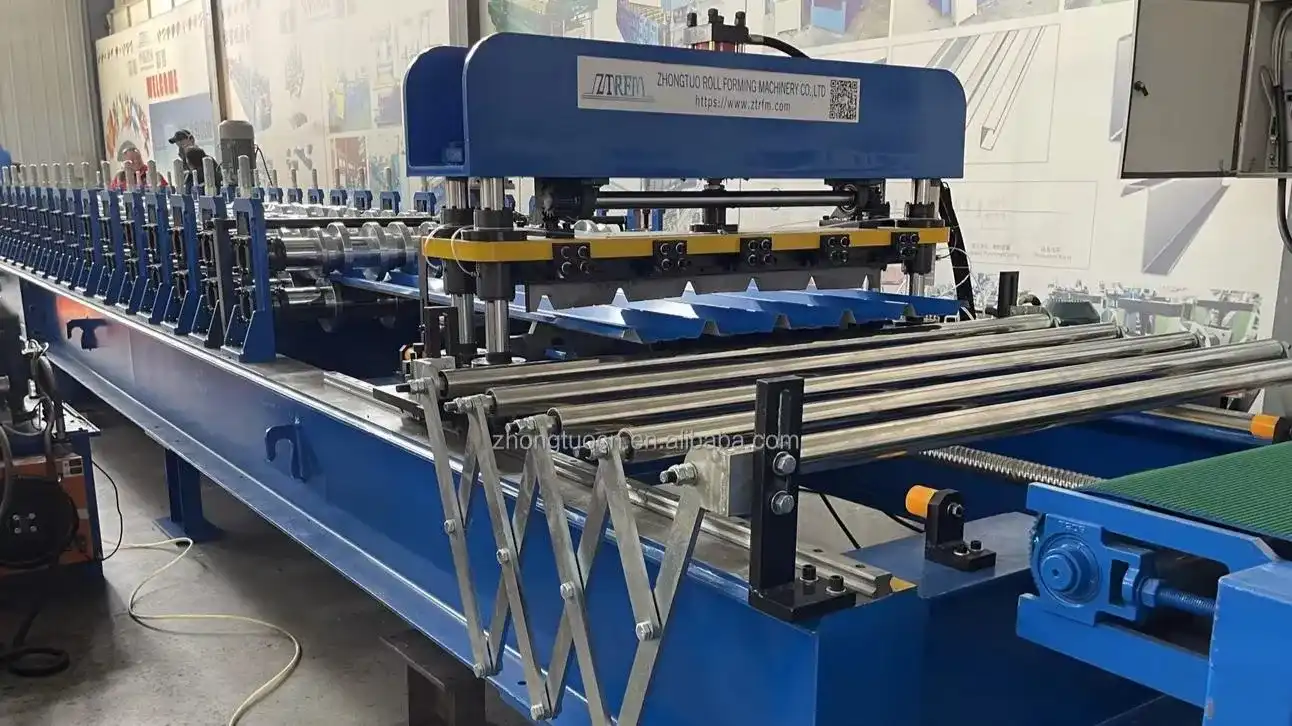
A trapezoidal roll forming machine is a custom piece of industrial gear made to repeatedly shape flat metal sheets into exactly shaped trapezoidal profiles using a cutting-edge method. Several roller stations are used in this advanced cold roll forming technology to slowly bend and shape metal coils into structural panels with a unique trapezoidal wave pattern. These tools are needed to make high-quality roofing panels, wall cladding, and structural parts that are used in the automotive, building, and industrial industries. They are faster, more consistent, and use less material than traditional ways of forming.
Understanding the Basics of Trapezoidal Roll Forming Machines
Modern roll forming equipment is a big step forward in the technology used to work with metal. It lets makers make complex shapes very quickly and with great accuracy. Flat metal strips are fed through several making stations, where each station gradually bends the material without affecting its structural integrity. This is how these machines work.
Core Components and Mechanical Design
The roller stations are the most important part of any roll-making machine. Each station has perfectly made rollers that slowly bend the metal sheet into the trapezoidal shape that is needed. The progressive forming method keeps the material's qualities during the forming process while minimizing stress buildup.
The filling system controls the flow of the material and keeps the tension constant, so there are no wrinkles or distortions during production. Modern servo-driven systems let makers precisely control speed, which lets them increase production rates while keeping quality standards high. The cutting units have hydraulic or servo-driven systems that make clean, precise cuts without deforming the material.
Control systems have changed over time from simple ones that were run by hand to more complex ones that use CNC technology and work well in current factory settings. These systems keep an eye on important factors like creating pressure, material thickness, and production speed. They then change processes automatically to keep them running at their best.
Material Handling and Precision Control
Modern tools can work with different types of materials, like 24 and 22 Tru-GaugeTM steel and 032′′ aluminum, which gives makers the freedom to meet the needs of a wide range of projects. It is much more efficient to be able to process different sizes without having to go through a lot of switching steps.
Panels can be made in lengths ranging from 3 feet to 20 feet 10 inches, including those made with a trapezoidal roll forming machine, and some special configurations can make panels even longer, up to 20 feet 11 inches. This gives them the ability to be used in both normal building projects and unique ones that need longer panel lengths.
Advantages and Applications of Trapezoidal Roll Forming Machines
Roll making technology is always chosen by industrial makers because it works better and can be used in a lot of different situations. The continuous forming process can make a lot of things very quickly while still keeping high-quality standards that are hard to reach with other methods of creation.
Operational Benefits and Efficiency Gains
Roll forming has a lot of benefits over standard stamping or brake forming because the process is ongoing. When compared to other making methods, this one can produce things at very high speeds while using a lot less energy per unit. Since warmth isn't needed for cold forming, it uses less energy and doesn't cause problems with thermal warping.
Another important benefit of a trapezoidal roll forming machine is that the progressive making process makes sure that the shapes are the same throughout the whole production run. The constant process naturally cuts down on material waste because makers can get the most out of the materials they use without having to trim them, as they are usually needed in other forming methods.
With automation integration skills, machines can be easily added to modern production lines. This cuts down on the need for workers and improves safety by lowering the amount of manual handling. Because the forming process is reliable, it is easy to keep an eye on quality control and set up automatic checking systems.
Industrial Applications and Market Sectors
The main market for trapezoidal roll forming equipment is the construction industry, which uses these tools to make structural parts, wall cladding, and roofing panels. The unique triangular shape gives the structure a lot of strength and lets the panels span up to 6 feet without any extra support. This makes them perfect for use on both roofs and vertical walls.
Roll making technology is being used more and more in the auto industry to make body panels, structural supports, and trim parts. Modern machines are very accurate and can be used over and over again. They can meet the high-quality standards of car users and make enough products to make the business profitable.
Roll forming machines are used in the appliance industry to make refrigerator panels, washing machine cabinets, and HVAC ducts. Roll making makes it possible to get a smooth surface finish, which means that extra finishing steps are not needed in many situations. This lowers the overall cost of production.

How to Choose the Right Trapezoidal Roll Forming Machine for Your Needs?
Careful consideration of output needs, material specs, and operational goals is needed to choose the right roll forming tools. Because modern production needs are so complicated, choosing tools needs to be done in a way that takes into account both current needs and potential for growth in the future.
Capacity and Performance Evaluation
Equipment selection decisions are based on how much of a product needs to be made. Manufacturers need to look at both current demand and expected growth to make sure that their products can meet future needs without becoming outdated too soon. Different applications have very different speed needs. For example, some processes put more emphasis on speed over volume, while others put more emphasis on accuracy over speed.
The ability to move materials must match the uses they are meant for, especially when it comes to width ranges and material types. When working with lighter metal materials, machines made for heavy-gauge steel might not work as well, and machines made for thin materials might not be able to form heavier thicknesses properly.
As companies try to cut costs and reduce damage to the earth, thinking about how much energy they use has become more important. Modern machines have drive systems that use less energy and improved making processes that keep performance standards while reducing the amount of power needed.
Manufacturer Evaluation and Supplier Selection
Different global makers use different methods, including trapezoidal roll forming machines, to roll forming technology, and each has its own benefits based on the needs of the product. European companies usually put a lot of emphasis on precise engineering and advanced technology. Other companies, on the other hand, focus on low-cost solutions that can be used in common situations.
Cangzhou Zhongtuo is a great example of how roll-making technology has changed over time because it combines advanced engineering with a wide range of services. The company has become an expert in developing and making cold roll forming tools that meet international quality standards and offer great value since it became a national high-tech business in 2014.
Service and support skills are often just as important for long-term operating success as how well technology works. Customers can get the most out of their tools while minimizing downtime when the manufacturer offers thorough training programs, spare parts that are easy to find, and fast technical support.
Operating and Maintaining Your Trapezoidal Roll Forming Machine
For roll forming processes to be successful, they need to be set up correctly, run consistently, and have preventative repair programs in place. Because modern equipment is so complicated, it needs trained operators and organized upkeep methods to work at its best for as long as it lasts.
Setup and Operational Procedures
When the machine is first set up, the rollers need to be precisely adjusted to get the profile shape that is wanted while keeping the right forming forces. Roller alignment has a big effect on the quality of the product and the life of the tool, so it's important to pay close attention to the setting steps. To keep production from having problems with moving materials, material feeding systems need to be properly lined and tensioned.
For each type of material and thickness, operational factors like forming speed, hydraulic pressures, and cutting time need to be fine-tuned. Modern control systems make it easy to store and remember parameters, which lets you quickly switch between goods while keeping quality standards the same.
Safety standards include both rules for personal protective equipment and safety rules that are specific to machines. Powerful hydraulic systems and moving parts are used in roll-making tools, so safety rules must be respected and followed.
Maintenance Programs and Performance Optimization
Regular oil plans for a trapezoidal roll forming machine keep all machine systems running smoothly and stop wear from happening before it's time. For accurate control, hydraulic system upkeep includes changing the filters, analyzing the fluid, and checking the seals. This keeps the system from breaking down and costs a lot of money.
Roller cleaning and repair programs keep the quality of the form while also making the tools last longer. Cleaning the rollers regularly gets rid of dirt and dust that can damage the surface, and refurbishing them every so often keeps the dimensions accurate and the quality of the finish.
Performance tracking tools let problems be found early on, before they affect production. Modern machines have sensors that keep an eye on important factors and let workers know when something needs their attention. They also keep historical data for analyzing trends.

Future Trends and Innovations in Trapezoidal Roll Forming Technology
The roll-making business is always changing as new technologies are added that make it more productive, flexible, and long-lasting. Connecting things to the internet lets you watch them from afar and do preventative maintenance that cuts down on downtime and improves performance.
Technological Advancements and Smart Manufacturing
IoT-enabled control systems let you watch production in real time and collect data, which helps with efforts to keep making things better. Manufacturers can offer better help and faster service response times by using remote diagnostics.
Using more advanced drive systems and better forming processes to save energy lowers running costs and helps meet sustainability goals. Variable frequency drives and servo control systems let you precisely control things while using as little energy as possible.
Improvements to automation, such as robotic material handling and automatic quality checking systems, cut down on the need for workers while making things more consistent. These technologies are especially helpful for factories that make a lot of things because the cost of workers has a big effect on the general cost of production.
Market Evolution and Strategic Considerations
Roll-making technology, including a trapezoidal roll forming machine, can be used for more things as new materials are developed. Modern high-strength steels make it possible for profiles to be lighter while still having the same level of structural strength. Coated materials offer better protection against corrosion and more design choices.
Manufacturers are choosing equipment based on its ability to be customized more and more as they try to make their goods stand out in competitive markets. Competitive benefits come from flexible forming systems that can make quick changes to products without requiring long switching processes.
Sustainability concerns guide the creation of equipment that saves energy and makes the best use of materials. Manufacturers are judging equipment based on its total lifetime costs, which include how much energy it uses, how much upkeep it needs, and how much it will cost to dispose of at the end of its useful life.
Conclusion
When it comes to making, trapezoidal roll forming machines are very advanced. They offer high precision, efficiency, and adaptability in a wide range of industrial settings. These tools are great at making high-quality structural panels, roofing parts, and specialty profiles that meet strict performance standards while making the best use of materials and lowering production costs. For roll making to work, the right tools must be chosen, it must be used correctly, and the process must be maintained and improved on a regular basis. As new technologies and changing market needs continue to change the industry, companies that invest in good equipment and strong support networks will be set up for long-term success in highly competitive industrial settings.

FAQ
Q1: What materials can trapezoidal roll forming machines process?
Modern tools can work with coated steel, aluminum, stainless steel, and metals that have already been sprayed. Most machines can handle thicknesses between 0.3mm and 3.0mm, and some are made for special types of materials and gauge sizes.
Q2: How long does machine setup take for different products?
Setup times vary depending on how complicated the setup is and how complex the machine is. Automatic changeover systems on more advanced tools can switch between goods in 15 to 30 minutes, while manual systems may need up to two hours to do the same job.
Q3: What maintenance schedule should be followed?
As part of daily upkeep, oil checks and cleaning are done. Every week, hydraulic systems and roller states are checked. As directed by the maker, monthly maintenance includes thorough checks of the whole system and repair of any worn-out parts.
Q4: Can existing machines be upgraded with new technology?
A lot of tools can have their cutting systems, control systems, or automation improved. Retrofitting is possible depending on how old the machine is, how well it's maintained, and whether the maker supports updated parts.
Partner with ZTRFM for Advanced Roll Forming Solutions
When it comes to trapezoidal roll forming machines, ZTRFM has the most up-to-date technology, and their engineering team and world service skills back it up. Our ISO9001, CE, and CAS-certified equipment is used by makers in more than 150 countries. We offer flexible options that meet the needs of each production run and guarantee reliable performance. Our experienced engineering team works closely with customers to come up with the best combinations, whether they need to make a lot of things or need specialized making solutions. Get in touch with our purchasing agents at coo@zhongtuocn.com to talk about your roll forming needs and find out how ZTRFM's cutting-edge machinery can improve your production processes through better quality, greater speed, and full support services.

References
1. American Institute of Steel Construction. "Cold-Formed Steel Design Manual: Structural Applications of Roll Forming Technology." AISC Publications, 2023.
2. Halmos, George T. "Roll Forming Handbook: Advanced Techniques and Applications in Modern Manufacturing." CRC Press Industrial Engineering Series, 2022.
3. International Association of Cold Roll Forming Manufacturers. "Global Standards and Best Practices for Roll Forming Equipment Design." Technical Publication Series, 2023.
4. Journal of Manufacturing Processes. "Advances in Progressive Roll Forming: Technology Trends and Industrial Applications." Elsevier Manufacturing Research, Volume 45, 2023.
5. Metal Forming Magazine. "Precision Roll Forming: Equipment Selection and Process Optimization Strategies." Fabricators & Manufacturers Association International, 2023.
6. Society of Manufacturing Engineers. "Cold Roll Forming Technology: Engineering Principles and Industrial Implementation." SME Technical Papers Collection, 2022.
_1750323743240.webp)