- English
- French
- German
- Portuguese
- Spanish
- Russian
- Japanese
- Korean
- Arabic
- Irish
- Greek
- Turkish
- Italian
- Danish
- Romanian
- Indonesian
- Czech
- Afrikaans
- Swedish
- Polish
- Basque
- Catalan
- Esperanto
- Hindi
- Lao
- Albanian
- Amharic
- Armenian
- Azerbaijani
- Belarusian
- Bengali
- Bosnian
- Bulgarian
- Cebuano
- Chichewa
- Corsican
- Croatian
- Dutch
- Estonian
- Filipino
- Finnish
- Frisian
- Galician
- Georgian
- Gujarati
- Haitian
- Hausa
- Hawaiian
- Hebrew
- Hmong
- Hungarian
- Icelandic
- Igbo
- Javanese
- Kannada
- Kazakh
- Khmer
- Kurdish
- Kyrgyz
- Latin
- Latvian
- Lithuanian
- Luxembou..
- Macedonian
- Malagasy
- Malay
- Malayalam
- Maltese
- Maori
- Marathi
- Mongolian
- Burmese
- Nepali
- Norwegian
- Pashto
- Persian
- Punjabi
- Serbian
- Sesotho
- Sinhala
- Slovak
- Slovenian
- Somali
- Samoan
- Scots Gaelic
- Shona
- Sindhi
- Sundanese
- Swahili
- Tajik
- Tamil
- Telugu
- Thai
- Ukrainian
- Urdu
- Uzbek
- Vietnamese
- Welsh
- Xhosa
- Yiddish
- Yoruba
- Zulu
How do I choose the right ceiling t grid roll forming machine for my construction project?
The best ceiling t grid roll forming machine for you will depend on your project, the amount of work you need to do, and your budget. To get the best performance and return on investment, you should look at how fast the machine is, how much it can be automated, and how well the manufacturer backs up their products. PPGI and galvanized steel are the materials you need. The ideal machine should be able to handle them, give you consistent high-quality output, last a long time, and come with full technical support.
Understanding Your Project Needs and Decision Scenarios
You need to carefully think about the size and needs of your construction project before you can choose the right tools for making suspended ceiling grids. Before you choose a machine, you should think about how much you want to make, what materials you can and can't use, and any factory rules that could affect the machine you pick.
Defining Production Capacity Requirements
How you choose what tools to use will depend on how much you can make. Based on needs in the market and due dates for projects, you need to figure out how much work you need to do each day. Most ceiling t grid roll forming machines can make cross tees and main tees at speeds of 0 to 20 meters per minute. They can cut and punch, too. Based on how complicated the profiles are and how often they need to be changed, this production rate can make anywhere from 1,200 to 1,500 linear meters of T-grid profiles in eight hours. When you plan your capacity, you should think about when you might need to grow and when production will be at its peak. Most of the time, factories need 20–30% more space than they actually need in order to keep up with growth and keep delivery schedules during maintenance periods.
Material Specifications and Quality Standards
The equipment you choose and the quality of the end product are both affected by how well you can move the materials. New T-grid forming machines can work with PPGI (pre-painted galvanized iron) and GI (galvanized iron) materials. These machines can handle different thicknesses. For structural integrity, the top material needs 0.12-0.3mm PPGI, and the bottom material needs 0.2-0.4mm GI. In the building industry, quality standards demand that measurements be accurate and that the outside finishes are always the same. The machine you pick has to be able to keep the profile accurate within ±0.5 mm and protect the coating while it's being formed.
Key Features and Specifications of Ceiling T Grid Roll Forming Machines
Knowing about important machine parts and how they should ceiling t grid roll forming machine work will help you buy things that will help you reach your quality and operational goals.
Essential Machine Components and Design Elements
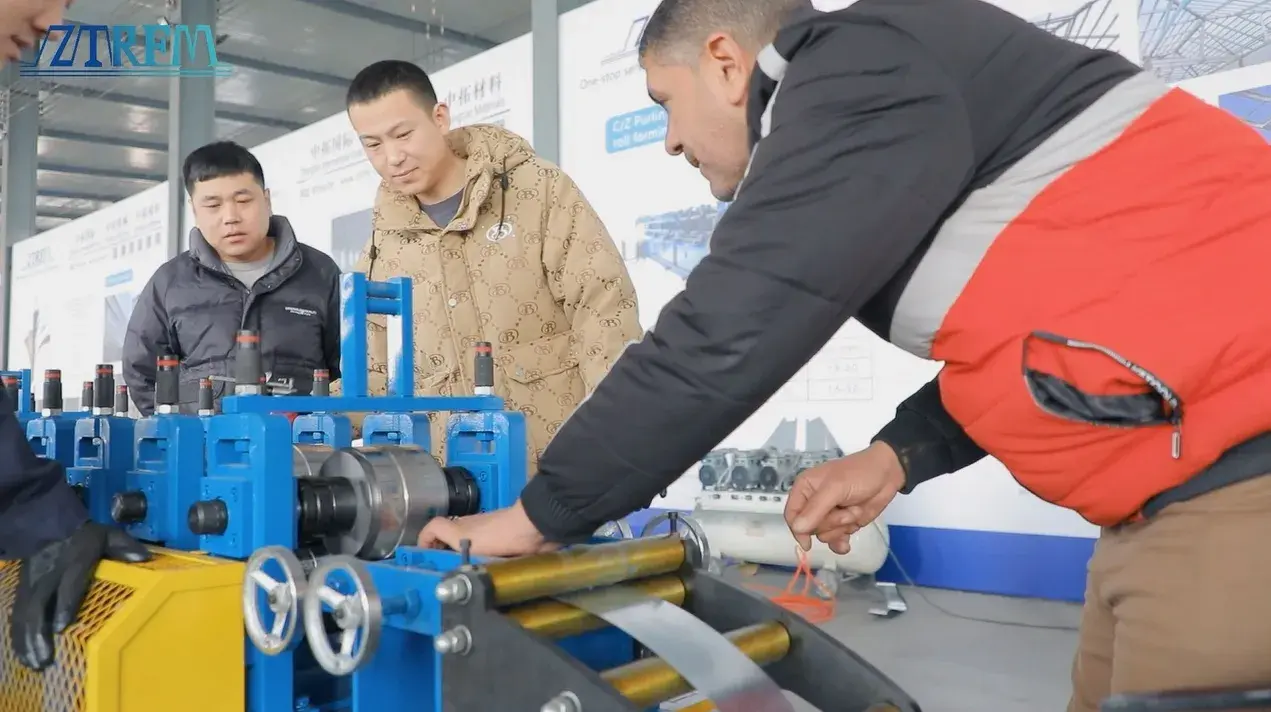
The engineering parts of modern T-grid forming equipment decide how well it works and how reliable it is. The decoiler structure is the first thing in your line of work. This thing can hold up to 1.5 tons of weight and fit coils that are 450 to 550 mm in diameter. The rolling shaft is made of 45# steel and has a diameter of 50 mm. This makes it strong enough to work continuously under a variety of loads. The raw materials are really shaped into exact T-grid shapes by the rolling stations. A lot of work goes into making them. To make a main tee, you need 18 forming stations. To make a cross tee, you need 16 stations. For each station, GB-Cr12 roller material was chosen because it is strong and doesn't wear down quickly during cycles of high production.
Automation and Control Systems
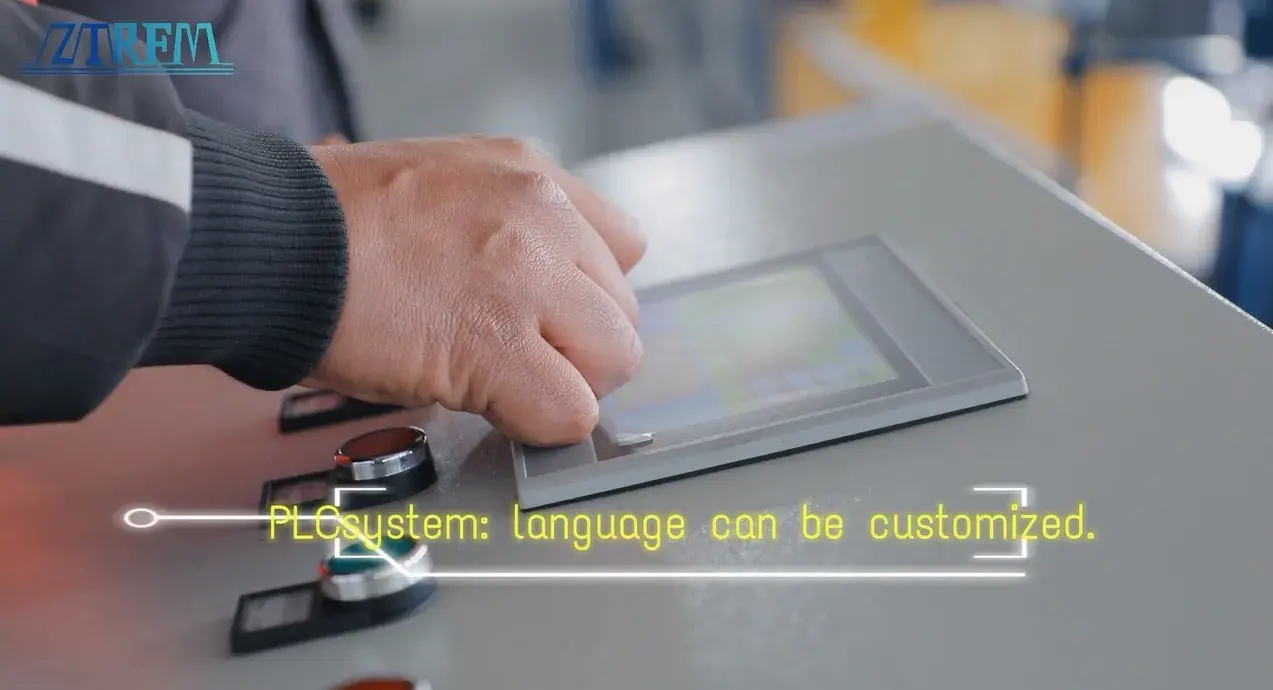
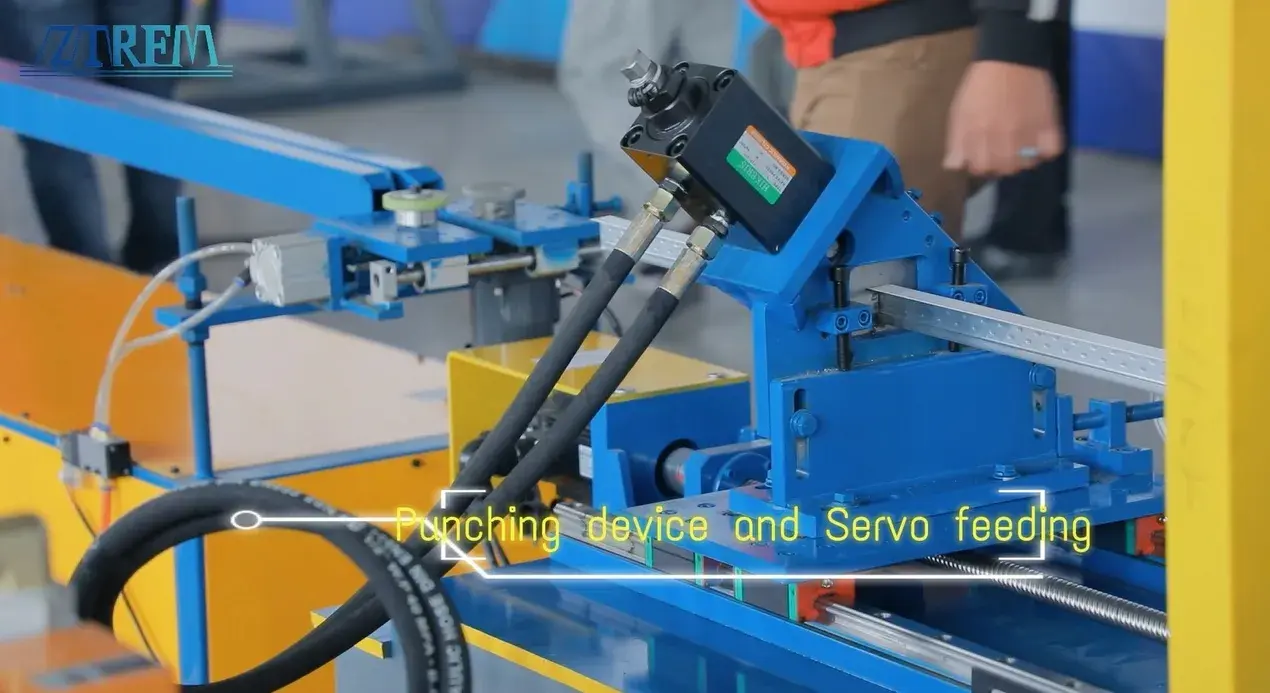
The more advanced control systems on professional-grade gear set it apart from basic options. With a PLC-based control platform, you can accurately measure length, set up automatic cutting sequences, and keep an eye on quality. Even though these systems need less work from the operator, the output quality and measurement accuracy stay the same. When forming, punching, and cutting are all done at the same time, there is no need for manual handling, and the production cycle time is cut down. Servo-driven parts make sure that all of the machine's functions work together smoothly, which increases efficiency and lowers material waste.
Performance Metrics and Operational Efficiency
The rate of production is a key performance indicator that shows how well you're doing and how much it costs to run your business. While maintaining standards for surface quality and dimension accuracy, good ceiling t grid roll forming machine systems can maintain steady speeds between 0 and 20 meters per minute. As production goes up, worries about how to use energy more efficiently grow. These days, machines have drives that can change speeds and better forming sequences that use less power but keep the quality of the output. These efficiency gains usually mean that running costs are 15-20% lower than with older designs.
Comparing Different Types and Brands of Ceiling T Grid Roll Forming Machines
It's important to know the differences between machine types and what each manufacturer has to offer in order to pick the right tools for the job.
Automated vs Semi-Automated vs Manual Systems
It costs a lot of money to buy automated systems, ceiling t grid roll forming machine, but they are the most reliable and quick way to make things. These machines have computerized cutting systems that need little to no help from the operator. They also have built-in material handling and automatic length control. A ceiling t grid roll forming machine that is automated works best in places where speed and consistency are very important for a lot of work. Semi-automated systems have some of the benefits of automation with low costs to get started. There are times when these configurations have automatic cutting and shaping features, but they still need to be loaded with materials and moved by hand. Facilities that make medium-sized amounts of goods and want to be more efficient but don't want to deal with the complexity of full automation can use options that are only partially automated. A manual system costs the least to set up, but it may not be able to make as much because it needs more work. They're good for smaller jobs or specialized tasks that need to be flexible more than they need to be big.
Manufacturer Evaluation Criteria
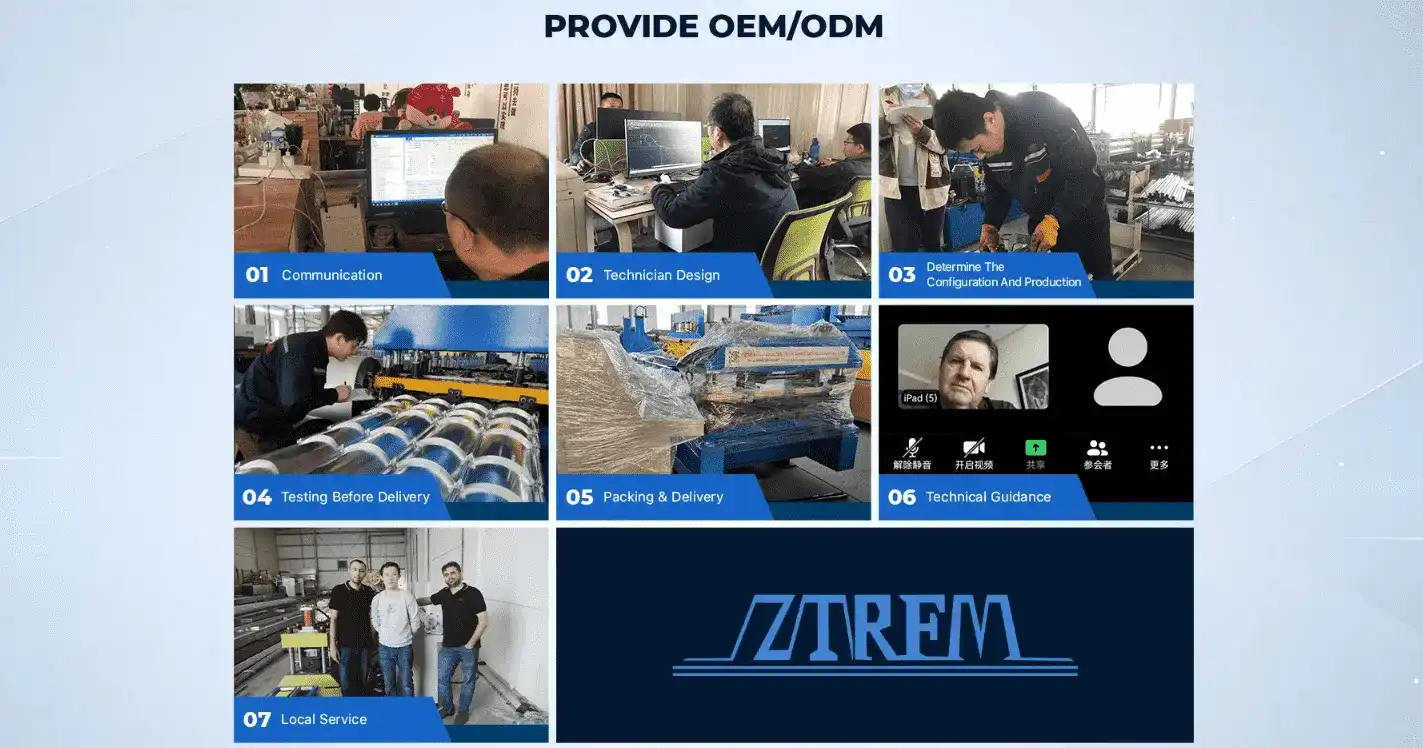
The company you choose has a big impact on how well your equipment works and how well your business does in the long run. Cangzhou Zhongtuo, a well-known company that was founded in 2014, has ISO9001, CE, and CAS certifications, which show that they know a lot about cold roll forming technology. They have worked with more than 150 countries in the past, which shows that you can trust them and that their products meet quality standards around the world. Skills in technical support are a big part of the hiring process because they affect how well tools work and how much work gets done. Even if they charge more at first, companies that offer good training, quick technical support, and easy access to spare parts are worth it in the long run. With OEM and ODM, you can make changes to fit the needs of a specific project. When manufacturers give designers some freedom, they can change the specs of their tools to fit the needs of certain groups of people or production limits that standard setups can't handle.
Procurement Considerations: From Purchase to Installation and Support
There is more to a successful equipment procurement process than just deciding to buy. The total cost of ownership is also affected by the need for delivery, setup, training, and ongoing support.
Supplier Credibility and Compliance Documentation
As part of evaluating a supplier, you should look at their technical certifications, manufacturing skills, and financial stability. If something has an ISO label, it means it meets quality management standards around the world. It meets European safety standards if it has a CE mark on it. These certifications give you peace of mind that the equipment is safe and will work as it should. A financial stability assessment makes sure that the supplier will be able to keep supporting the equipment for as long as it lasts. This protects your investment. When a company has been around for a while and has a good reputation, it's easier to get spare parts and technical help.
Logistics and Installation Planning
Timelines and start-up ceiling t grid roll forming machine costs are affected by how well you plan for the delivery and installation of equipment. Ceiling t grid roll forming machine standard configurations can be made in 30 business days and shipped in a single 20-foot container. When you decide when to deliver, you should think about how to get the site ready and when the installation team can come. Installation services make sure that the gear is set up correctly so that it works at its best right away. The company that made the equipment sends installation teams that know how to set it up and can find problems before they stop production. Most installation packages include training for the operators as well as test runs to make sure the system works as it should.
Post-Purchase Support and Maintenance Planning
Planning for ongoing technical support and maintenance has a direct effect on long-term productivity and equipment uptime. Support packages that cover a lot of ground let you do things like keep track of spare parts, plan preventative maintenance, and do diagnostics from afar to lower the risk of downtime. As you plan your maintenance, it's important to think about both regular service and possible part replacements. Providers of equipment make proactive maintenance strategies possible by providing detailed maintenance schedules and parts lists. These strategies stop equipment from breaking down without warning and make it last longer.
Practical Tips for Maximizing Your Ceiling T Grid Roll Forming Machine Investment
There are strategic ways to run your business and preventative maintenance methods that will make your equipment last longer and work better so that you get the most out of its performance and return on investment.
Operational Optimization Strategies
Using the right methods to move and set up materials is the first step to making production more efficient. Consistently preparing the coil and aligning the materials correctly cuts down on variations in the shape and amount of waste produced. Calibration of forming stations on a regular basis keeps dimensions accurate and stops quality problems that could make customers unhappy. It takes a lot of time to switch between profile types, which slows down overall work. Cut the time it takes to change over by 30 to 40 percent by making standard changeover protocols and teaching operators how to set up quickly and efficiently. This lets you make more money without having to buy more equipment.
Preventive Maintenance Best Practices
Maintenance plans keep your equipment in good shape so that it keeps working well for as long as it's ever been used. Moving parts don't wear out too quickly when they are oiled on a regular basis, and alignment checks make sure that the forming is done correctly and that the quality of the product is high. Checking parts according to protocols lets you find wear patterns or possible failures early on, before they stop production. Setting replacement schedules for things that get worn out quickly, like cutting blades and forming rollers, keeps the quality of the work consistent and avoids unplanned downtime.
Conclusion
Your long-term operational goals, production needs, ceiling t grid roll forming machine, and quality standards should all be taken into account when you are looking for the right ceiling t grid roll forming machine. When making a choice, you should think about things like capacity, technical specs, the manufacturer's abilities, and the total cost of ownership. It's important to find a balance between the initial cost of the equipment and its operational efficiency, dependability, and the support services that will keep the business running and making money. Your ability to compete in the suspended ceiling market will depend on how much you spend on good forming equipment. It will also help your business grow and keep customers happy.
FAQ
1. What are the most important selection criteria for a ceiling T grid roll forming machine?
The most critical selection criteria include production capacity requirements, material handling specifications, forming accuracy capabilities, and automation level. You should prioritize equipment that accommodates your material thickness range (0.12-0.3mm PPGI and 0.2-0.4mm GI), provides consistent dimensional accuracy, and offers the production speed necessary to meet your project timelines.
2. How do I evaluate the return on investment between automated and manual machines?
ROI evaluation should consider labor costs, production efficiency, quality consistency, and maintenance requirements. Automated systems typically provide higher productivity and better quality consistency, but require larger initial investments. Manual systems have lower upfront costs but higher ongoing labor expenses. Calculate the payback period based on your production volume and labor cost differentials to determine the most cost-effective option.
3. What warranty and support services should I expect from equipment suppliers?
Batteries, electronics, and software for controlling things should all come with a full warranty that lasts at least one year. Help with installation, training for operators, technical documentation, easy access to spare parts, and quick technical support should all be part of support services. Manufacturers with global service networks are better able to support international operations in the long term.
Get Expert Guidance on Your Ceiling T Grid Machine Purchase from ZTRFM
Talk to a professional before you buy anything. They can give you advice that fits the needs of your project and your budget. ZTRFM has been making things and shipping them all over the world for more than ten years and can offer full ceiling t grid roll forming machine solutions. You can meet with our technical team one-on-one to get advice on how to set up your business's equipment in the best way. Send us an email at zhongtuorollforming@gmail.com to talk about your project and take a look at our certified T grid forming tools.
References
1. Smith, Robert J. "Industrial Roll Forming Technology: Principles and Applications in Metal Construction." Manufacturing Engineering Journal, 2023.
2. Chen, Linda M. "Quality Control Standards for Suspended Ceiling Systems in Commercial Construction." Construction Materials Quarterly, 2023.
3. Williams, David K. "Automation in Metal Forming: ROI Analysis for Construction Manufacturing." Industrial Equipment Review, 2023.
4. Thompson, Sarah L. "Material Specifications and Performance Standards for Galvanized Steel Grid Systems." Building Systems Engineering, 2022.
5. Martinez, Carlos E. "Maintenance Strategies for Cold Roll Forming Equipment in High-Volume Production." Manufacturing Maintenance Today, 2023.
6. Johnson, Michael P. "Procurement Best Practices for Industrial Forming Equipment: A Guide for Construction Manufacturers." Equipment Purchasing Professional, 2023.
_1750323743240.webp)