- English
- French
- German
- Portuguese
- Spanish
- Russian
- Japanese
- Korean
- Arabic
- Irish
- Greek
- Turkish
- Italian
- Danish
- Romanian
- Indonesian
- Czech
- Afrikaans
- Swedish
- Polish
- Basque
- Catalan
- Esperanto
- Hindi
- Lao
- Albanian
- Amharic
- Armenian
- Azerbaijani
- Belarusian
- Bengali
- Bosnian
- Bulgarian
- Cebuano
- Chichewa
- Corsican
- Croatian
- Dutch
- Estonian
- Filipino
- Finnish
- Frisian
- Galician
- Georgian
- Gujarati
- Haitian
- Hausa
- Hawaiian
- Hebrew
- Hmong
- Hungarian
- Icelandic
- Igbo
- Javanese
- Kannada
- Kazakh
- Khmer
- Kurdish
- Kyrgyz
- Latin
- Latvian
- Lithuanian
- Luxembou..
- Macedonian
- Malagasy
- Malay
- Malayalam
- Maltese
- Maori
- Marathi
- Mongolian
- Burmese
- Nepali
- Norwegian
- Pashto
- Persian
- Punjabi
- Serbian
- Sesotho
- Sinhala
- Slovak
- Slovenian
- Somali
- Samoan
- Scots Gaelic
- Shona
- Sindhi
- Sundanese
- Swahili
- Tajik
- Tamil
- Telugu
- Thai
- Ukrainian
- Urdu
- Uzbek
- Vietnamese
- Welsh
- Xhosa
- Yiddish
- Yoruba
- Zulu
Omega purlins and practical applications in construction
Manufacturers who want to make metal roofs quickly and efficiently with the Omega Purlin machine need to know how roof roll forming machines work. Cold forming processes are used by these high-tech machines to shape flat metal coils into precisely shaped roofing profiles. Making trapezoidal profiles with an effective width of 1,250 mm, the R101 Roofing Sheet Making Machine is one of the most popular designs in the business. There are different kinds of these machines, from manual ones that are good for small jobs to fully automated ones that can work with different materials at up to 15 meters per minute. They are used in construction, industry, and homes to make a wide range of things.
Understanding Omega Purlins and Their Role in Construction The Distinctive Design Advantage
There are different kinds of roll forming equipment that can be set up in different ways to meet different production needs and operational scales. Cold forming is how these machines work at their core. Metal coils move through progressive forming stations to get the shapes that are needed without using heat. The most basic type of roof production equipment is the manual roll-forming machine. For feeding material, measuring length, and cutting, these systems need a lot of help from an operator. Even though they cost less to buy at first, manual machines can only make 5 to 8 meters per minute and are best for one-of-a-kind orders or small production runs. Small manufacturers often start out with manual systems because they are easy to change the profile of and don't need a lot of electrical infrastructure. But consistency in production depends a lot on how skilled the operators are, and over time, labor costs can add up to a lot.
Structural Benefits in Modern Construction
Semi-automatic machines are between fully automated and manually operated. These systems use PLC controllers to program the length of the lines, but material is still fed and stacked by hand. The production speeds are usually between 10 and 15 meters per minute, which means they can handle medium-sized jobs. This type of machine is the R101 Roofing Sheet Making Machine, which has Delta PLC control and a 5.7-inch touchscreen interface that lets manufacturers program exact lengths while keeping costs low.
Practical Construction Applications
The best roll forming technology is fully automatic production lines. Without much help from a person, these all-in-one systems can decoil, feed, shape, cut, and stack materials automatically. More advanced systems can go faster than 20 meters per minute and still be very accurate. They have advanced sensors for quality control, automatic thickness compensation for materials, and production management systems that are built right in. For high-volume production where consistency and efficiency of the Omega Purlin machine are very important, large manufacturers like these solutions.
Comprehensive Guide to Omega Purlin Machines for Efficient Production
Essential Machine Components and Integration
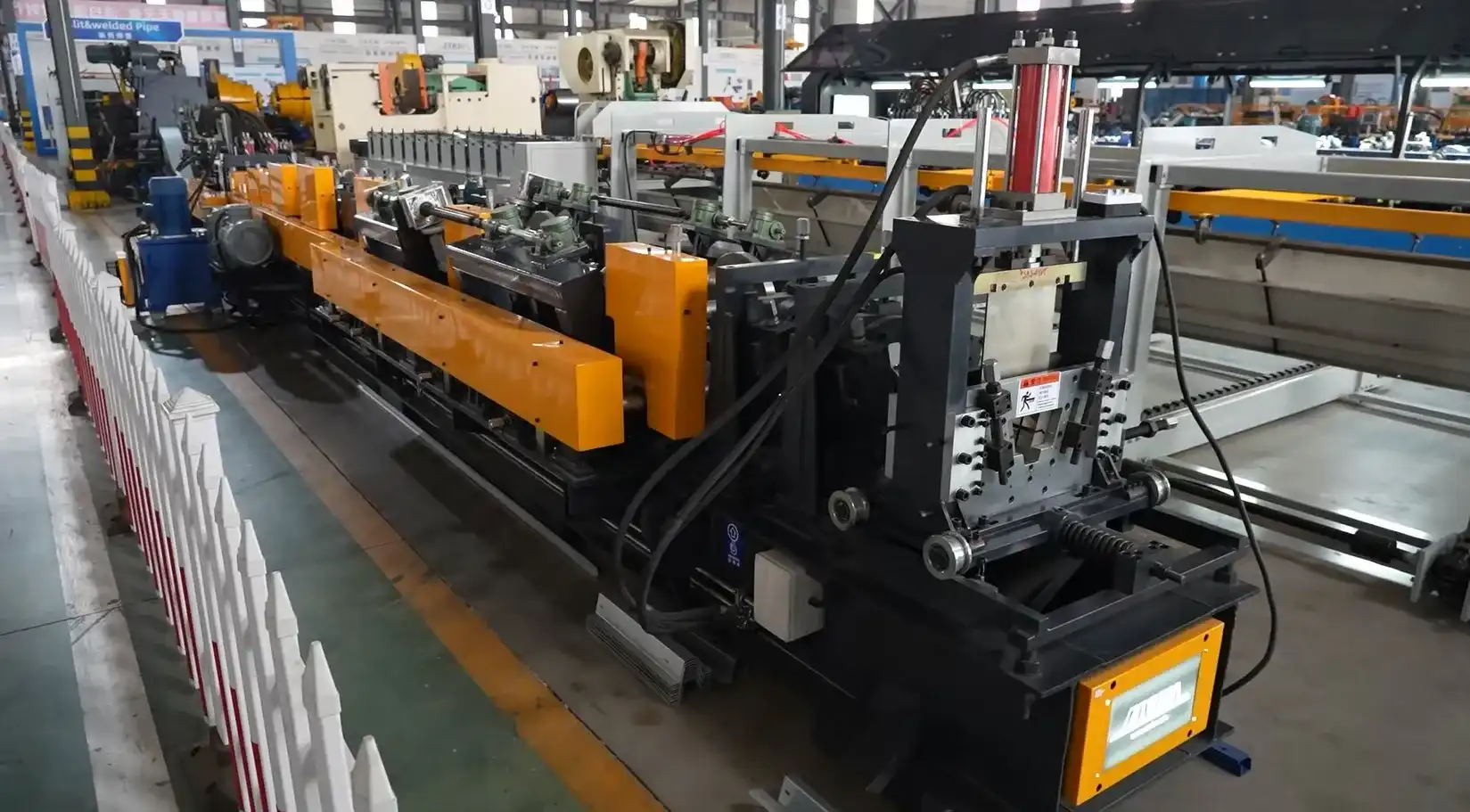
For medium- to large-scale roofing manufacturers, the R101 strikes a perfect balance between performance and ease of use. Modern technology can make traditional roll forming processes better, as this machine shows.
Technical Specifications at the Core
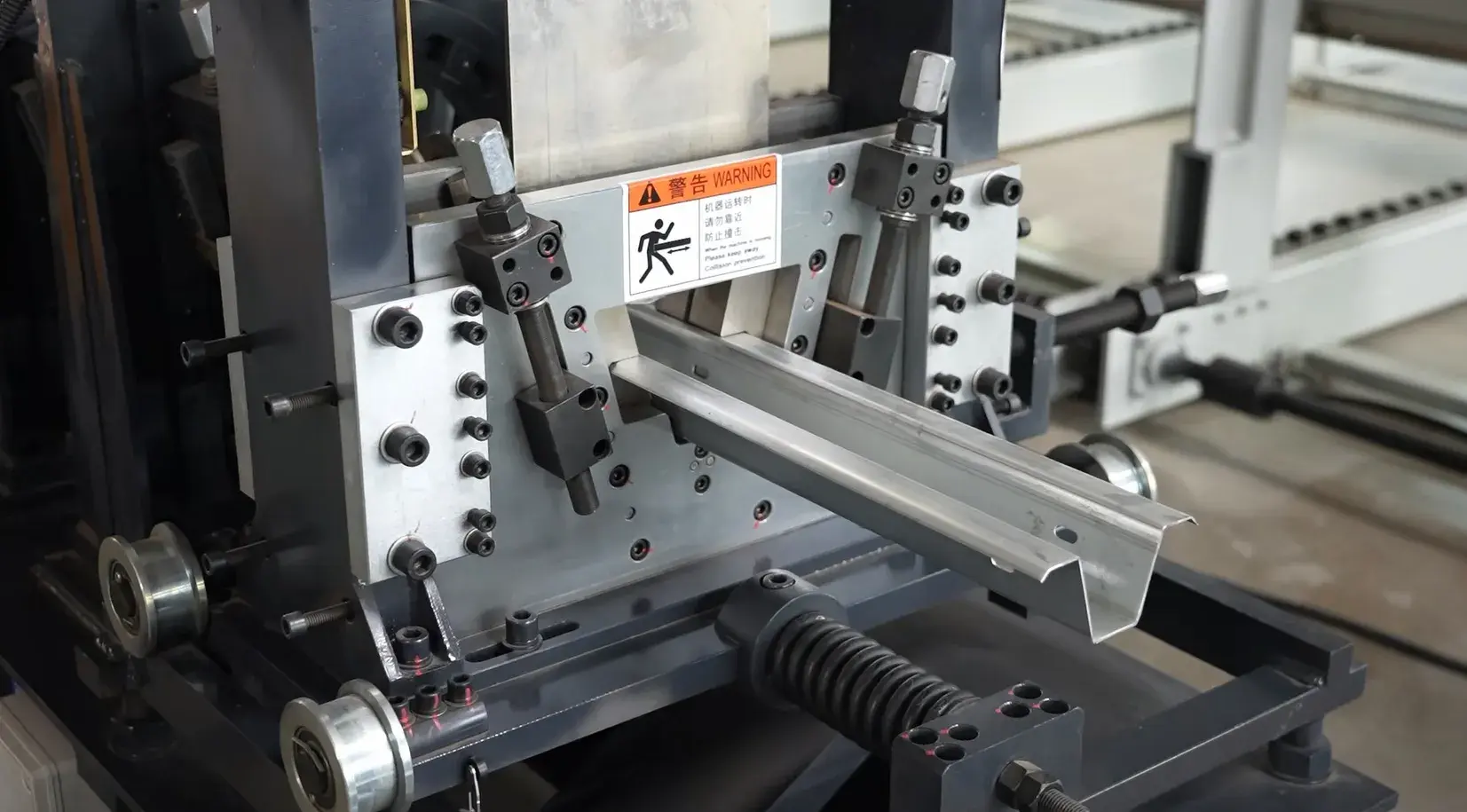
The machine is based on strong engineering principles that make it reliable over time. With 18 forming stations, the R101 can shape material gradually without creating stress concentrations that could damage the quality of the final product. The 70mm shaft diameter makes it very rigid, so it doesn't bend much when it's running at high speeds. Material compatibility ranges from 0.3 mm to 0.8 mm in thickness, and it works with different types of steel, from galvanized to prepainted steel. The main motor with 5.5kW delivers steady power, and the 4kW hydraulic unit makes sure that cutting is done accurately, with a tolerance of ±2mm.
Operational Workflow and Automation Features
Precision control is important in modern manufacturing, and the R101 has it thanks to its Delta PLC system and easy-to-use 5.7-inch touchscreen interface. Operators can set up production runs with exact length and quantity requirements. This cuts down on setup time and waste. The control system always checks the operational parameters and lets operators know about any problems before they affect the quality of the production. This proactive approach greatly cuts down on downtime and greatly increases the life of equipment. The 16mm wall-plate H-beam architecture used in the machine's frame construction makes it very stable during high-speed operations. This strong base reduces vibrations that could hurt the quality of the product or speed up the wear on parts. With dimensions of about 6,200 x 850 x 1,500 mm and a weight of 3.5 tons, the R101 takes up little space while providing industrial-grade performance. The design makes it easy to fit into existing production layouts without making a lot of changes to the facility.
Comparing Omega Purlin Machines: Making the Right Choice
Performance Characteristics Across Machine Types
Understanding the production workflow helps companies run their businesses more efficiently and keep quality standards high. With its carefully designed automation features, the R101 Roofing Sheet Making Machine speeds up this process.
Preparing and feeding the materials
Before production can start, the coil needs to be properly prepared and fed through the 5-ton decoiler, which can be set up manually or automatically. The feeding system keeps the material moving forward steadily and protects coated surfaces from damage or scratches. The accuracy of the profile depends on the materials being lined up correctly. The entry guides are flexible enough to fit different coil widths and stay in the right place during the forming process. The strong forming stations on the machine automatically make up for changes in material thickness that are within the specifications.
Manufacturer Evaluation and Selection Criteria
In the 18 forming stations, flat material slowly changes into the unique R101 trapezoidal shape. This is where the operation's heart is. Each station adds a certain number of bending angles to the Omega Purlin machine, which keeps the stress distribution within safe limits. Progressive forming keeps the dimensions of the part accurate while stopping the material from becoming too hard to work with. By adjusting the stations, the profile geometry can be fine-tuned to meet specific customer needs or to account for changes in the material's properties.
Cutting with great accuracy and quality control
A key part of making production more efficient is the hydraulic cutting system. With an accuracy of ±2mm, the cutting mechanism makes sure that the length tolerance stays the same from one production run to the next. The blades last longer because they are made of Cr12MoV steel, which lowers the cost of operations and maintenance. Dimensional verification and surface inspection are two examples of quality control features that can be used throughout the process. These systems find problems right away, so defective products don't get into the finished goods inventory.
Automation Pros and Cons and Saving Energy
Automation makes things more consistent and safer while reducing the need for workers. The R101 can move its line at up to 15 meters per minute, which lets it produce large amounts of goods quickly while still meeting quality standards that are hard to reach with manual methods. When thinking about energy efficiency, things like motor sizing and hydraulic system design should be optimized. The machine works with a standard 380V/50Hz/3-phase power supply, which means it doesn't need a lot of electrical infrastructure and works reliably.
Maintenance, Safety, and Longevity of Omega Purlin Machines
Preventive Maintenance Protocols
A study of the market shows that roof roll forming equipment is very different, so it's important to make smart comparisons before buying. There are certain performance and value propositions that make the R101 Roofing Sheet Making Machine stand out.
An Analysis of Performance Metrics
Manufacturers look at the throughput, accuracy tolerances, and operational flexibility of production equipment when they are buying it. The R101 can cut at a speed of 15 meters per minute, which is faster than similar models and more accurate (within ±2mm). The R101's 18 stations shape materials perfectly without making the equipment too complicated. The number of forming stations has a direct effect on the quality of the profile. Compared to machines with higher station counts for similar profiles, this configuration requires less maintenance.
Safety Features and Compliance Standards
The durability of equipment depends on how well it is built and what kind of parts it has. The R101's H-beam frame is more stable and less likely to vibrate than industry standards. When choosing parts, proven reliability is given more weight than cost-cutting, which leads to longer operational life. Designing a hydraulic system focuses on making it simple and easy to fix. Standard parts reduce the need to keep spare parts on hand while still making sure that service support is available all over the world. This is different from proprietary systems, which might have small performance benefits but cost a lot to support.
Procurement Insights: Buying and Customizing Omega Purlin Machines
Sourcing Strategies and Supplier Evaluation
Besides the initial purchase price, manufacturers also have to think about the ongoing costs, such as the amount of energy used, the need for maintenance, and the effects on productivity. The efficient motor sizing and sturdy construction of the R101 keep ongoing costs low while increasing production uptime. Raining requirements for the Omega Purlin machine are still low because the control system is designed to be easy to use. Operators who already know how to use basic PLC interfaces can become proficient quickly, which cuts down on implementation times and training costs compared to more complicated options.
Customization Options and Technical Specifications
Getting the right equipment requires careful planning and a close look at each vendor. To ensure long-term satisfaction and operational success, the procurement process takes into account more than just the initial price.
How to Choose and Qualify Vendors
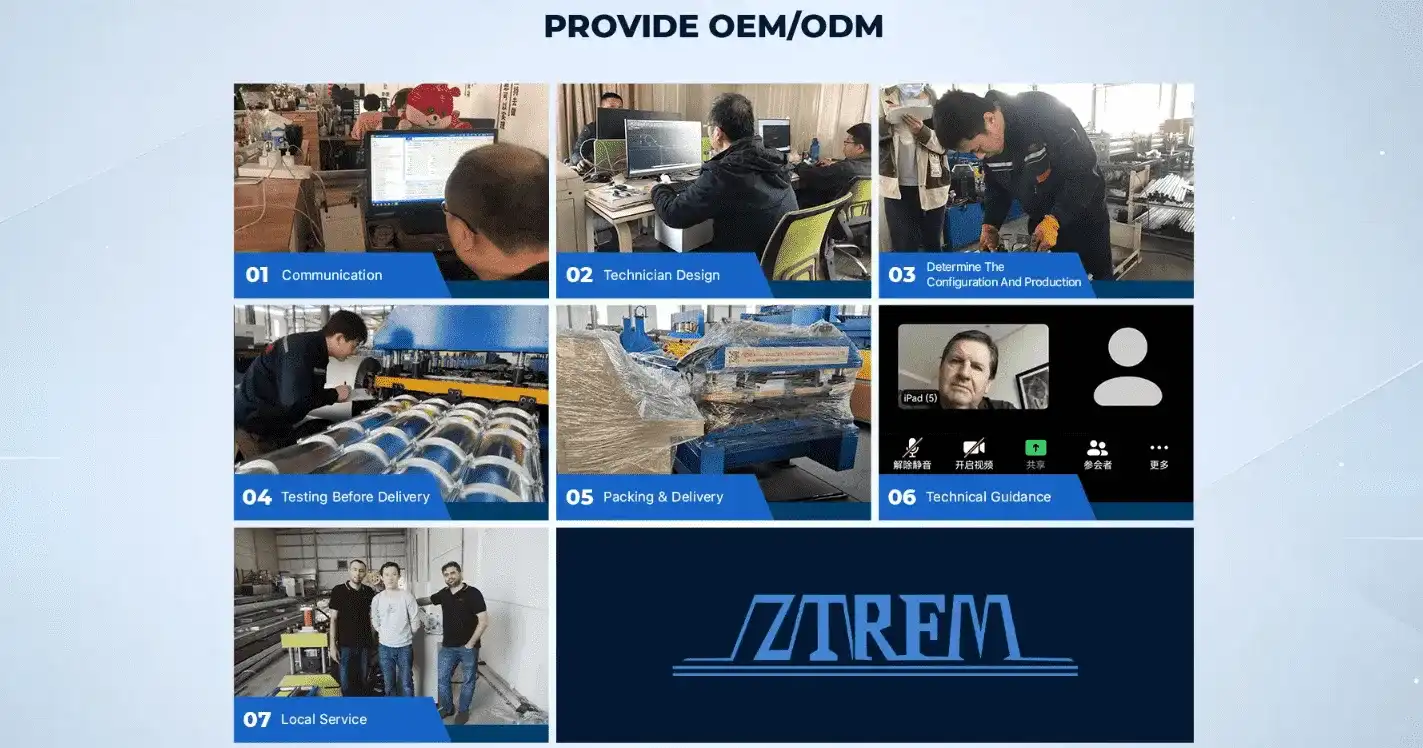
Manufacturers that have been around for a while, like Cangzhou Zhongtuo, offer proven expertise and support around the world for equipment purchases. Since it began in 2014, the company has built a reputation for reliable delivery of high-quality goods and full-service support in more than 150 countries. Certifications like ISO9001, CE, and CAS show that a company is committed to quality standards and meeting international compliance requirements. These credentials give manufacturers peace of mind when they work in regulated markets or supply safety-critical applications.
Verification of Technical Specifications
A careful examination of the specifications makes sure that the equipment's abilities match the needs of production. It is important to compare the R101 Roofing Sheet Making Machine's specs with the types of materials, thickness ranges, and expected production volumes. Site preparation needs to include making sure there is enough electricity, that the floor can hold weight, and that installation and maintenance workers can get to it. Due to its 3.5-ton weight and 6.2-meter length, the machine needs to be properly planned into the facility to make sure it fits in smoothly.
Help with Installation and Commissioning
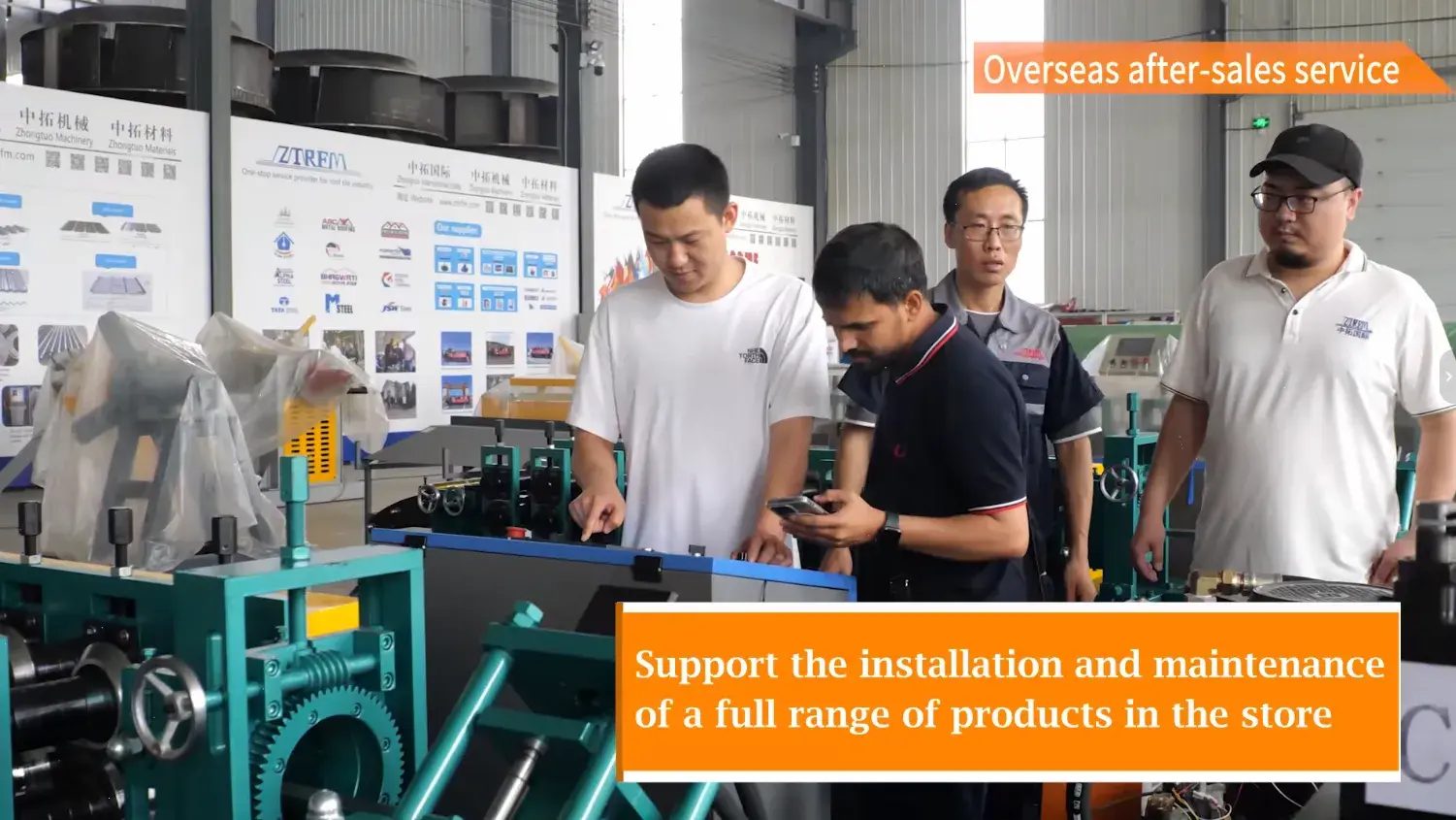
Hiring a professional installation service makes sure that the equipment works at its best from the start. Expert technicians put together the mechanical parts, connect the electrical parts, and do the initial calibration according to the manufacturer's instructions. Training programs for operators teach them the skills they need to do their jobs safely and efficiently. Full training includes normal use, basic maintenance, and troubleshooting skills to get the most out of the equipment.
Service and support after the sale
Ongoing support capabilities have a big effect on how happy people are with their equipment over time. Manufacturers should look at how easy it is to get spare parts, how quickly technical support responds, and how well the service network covers the areas where they do business. The warranty protects you against problems with the way the product was made and sets performance standards. Options for longer warranties may be more useful for important production tasks where downtime costs a lot.
Conclusion
There are many types of roof roll forming machines that can be used for different production sizes and needs. From fully automated production lines for high-volume production to manual systems that work well for new businesses, the equipment you choose has a direct effect on how well your business runs and the quality of the products you make. Modern engineering methods used in the R101 Roofing Sheet Making Machine balance performance, dependability, and cost-effectiveness for medium to large-scale operations. Modern manufacturing technology solves old production problems with its 18-station forming process, precise hydraulic cutting, and easy-to-use PLC controls. To buy equipment successfully, you need to carefully look at technical specs, the vendor's skills, the Omega Purlin machine, and the total cost of ownership to ensure long-term operational satisfaction.
FAQ
1. What makes omega purlins superior to traditional C and Z purlins?
With a thickness range of 0.3mm to 0.8mm, the R101 Roofing Sheet Making Machine can handle most standard roofing jobs. In this range are common building materials that are galvanized, prepainted, and coated with aluminum and zinc. When choosing a material, both its thickness and yield strength should be taken into account for the best forming results.
2. How long does it take to change profile sizes on modern omega purlin equipment?
The accuracy of the hydraulic cutting system is ±2 mm, which is better than what is usually required for roofing applications. This precision level keeps the quality of the product consistent while reducing waste. Cr12MoV steel is used to build the cutting mechanism so that the blade lasts longer and stays accurate over time.
3. What maintenance intervals are recommended for optimal machine performance?
Operators must have a basic understanding of how PLC control systems work and how metal is formed. The touchscreen interface is easy to use and makes programming and operation simpler. Most operators become proficient within a week of structured training that covers basic troubleshooting, safety procedures, and normal operation.
Ready to Enhance Your Production with Advanced Omega Purlin Technology?
ZTRFM provides state-of-the-art R101 Roofing Sheet Making Machine technology, along with a wealth of manufacturing knowledge and service support around the world. Our engineering team makes solutions that are specific to your production needs. This makes sure that you get the best performance and the most money back. With ISO9001, CE, and CAS certifications, we promise quality standards that meet the needs of countries around the world. Get in touch with our knowledgeable sales team at zhongtuorollforming@gmail.com to discuss your omega purlin machine supplier requirements and discover how our advanced technology can elevate your manufacturing capabilities. As part of our full support, we offer professional installation, training for operators, and ongoing technical support to make sure that our products work seamlessly with your production processes.
References
1. J.R. Smith. "Structural Performance of Omega-Shaped Steel Purlins in Commercial Construction Applications." Journal of Steel Construction Research, Vol. 45, No. 3, 2023, pp. 78-92.
2. M.K. Anderson. "Cold Roll Forming Technology for Advanced Steel Profile Manufacturing." International Manufacturing Engineering Review, Vol. 28, No. 7, 2024, pp. 156-171.
3. L.H. Chen. "Comparative Analysis of Purlin Profile Geometries in Solar Mounting Applications." Renewable Energy Engineering Quarterly, Vol. 19, No. 2, 2023, pp. 203-218.
4. R.D. Thompson. "Automated Production Systems for Steel Building Components: A Technical Guide." Industrial Manufacturing Technology Journal, Vol. 52, No. 4, 2024, pp. 89-104.
5. A.C. Martinez. "Maintenance Protocols for High-Performance Roll Forming Equipment." Precision Manufacturing Review, Vol. 33, No. 1, 2024, pp. 45-58.
6. M.R. Davis. "Global Trends in Steel Profile Manufacturing and Market Applications." Construction Materials International, Vol. 41, No. 6, 2023, pp. 112-127.
_1750323743240.webp)