- English
- French
- German
- Portuguese
- Spanish
- Russian
- Japanese
- Korean
- Arabic
- Irish
- Greek
- Turkish
- Italian
- Danish
- Romanian
- Indonesian
- Czech
- Afrikaans
- Swedish
- Polish
- Basque
- Catalan
- Esperanto
- Hindi
- Lao
- Albanian
- Amharic
- Armenian
- Azerbaijani
- Belarusian
- Bengali
- Bosnian
- Bulgarian
- Cebuano
- Chichewa
- Corsican
- Croatian
- Dutch
- Estonian
- Filipino
- Finnish
- Frisian
- Galician
- Georgian
- Gujarati
- Haitian
- Hausa
- Hawaiian
- Hebrew
- Hmong
- Hungarian
- Icelandic
- Igbo
- Javanese
- Kannada
- Kazakh
- Khmer
- Kurdish
- Kyrgyz
- Latin
- Latvian
- Lithuanian
- Luxembou..
- Macedonian
- Malagasy
- Malay
- Malayalam
- Maltese
- Maori
- Marathi
- Mongolian
- Burmese
- Nepali
- Norwegian
- Pashto
- Persian
- Punjabi
- Serbian
- Sesotho
- Sinhala
- Slovak
- Slovenian
- Somali
- Samoan
- Scots Gaelic
- Shona
- Sindhi
- Sundanese
- Swahili
- Tajik
- Tamil
- Telugu
- Thai
- Ukrainian
- Urdu
- Uzbek
- Vietnamese
- Welsh
- Xhosa
- Yiddish
- Yoruba
- Zulu
How to Choose Between Standing Seam Roof Panel Machine and Double Lock Machine for Metal Roofing
Which one you choose between a standing seam roof panel machine and a double lock machine relies on how much you need to make, how much money you have, and what your target market wants. Standing seam roof panel tools are great at making high-end artistic roofing systems that look great and are resistant to weather. This makes them perfect for both business and high-end domestic projects. For normal roofing jobs, double lock tools are a cost-effective option that can reliably seam materials together. The final choice depends on how much you want to produce, the specifics of the materials you use, how much technology you need, and your long-term business goals in a competitive metal roofing manufacturing market.
Understanding the Metal Roofing Machine Landscape
In the past few years, there has been a lot of progress in technology in the metal roofing business. The most advanced machines are the standing seam and double lock machines. These high-tech systems take flat metal tubes and carefully shape them into roofing panels that meet strict building and design standards in a wide range of situations.
Defining Standing Seam Technology
Standing seam technology makes high vertical seams that mechanically connect two panels next to each other. This style doesn't have any visible fixings, so it's better at keeping out the weather and looking better. Modern standing seam machines have advanced servo-driven systems that make sure panels are always the same size and fit together perfectly during installation. The technology can handle different seam heights and shapes, so it can meet the needs of different building designs and performance standards.
Double Lock Machine Applications
When two machines are used together, they make panels whose edges overlap. These overlapped edges make safe mechanical links through folded seam construction. This technology works really well in industry and farming settings where keeping costs low while keeping the structure strong is very important. These machines work reliably and are easy to use, which makes them good choices for makers who want to serve price-conscious customers.
Market Trends and Regional Preferences
In business development in North America, standing seam systems are very popular. This is because of rules that require buildings to be energy efficient and design trends that favor clean lines and little visual disruption. The European market also puts a lot of value on standing seam technology, especially when it comes to green building projects. On the other hand, developing countries often choose double-lock options because they are both effective and affordable. Standing seam systems have grown by about 15% a year over the last five years, according to figures from the industry. This shows that more people want high-quality roofing options.

Key Criteria for Choosing Between Standing Seam and Double Lock Machines
To choose the right standing seam roof panel machine technology, you need to carefully look at a lot of things that all affect how well the business runs and how much money it makes. The way decisions are made needs to match professional skills with what the market wants while also making sure that investments will pay off in the long term.
Production Volume and Scale Considerations
Production needs have a big impact on machine selection choices. Standing seam equipment is usually better for high-volume processes because it can be automated better and wastes less material. These systems can work with PPGI, GI, and metal materials that are between 0.3 and 0.6 mm thick at very high speeds while keeping the measurements correct. If your business doesn't do as much, double-lock machines might be a better deal, especially if you have a lot of different customers with different panel requirements.
Material Compatibility and Processing Requirements
Modern roll forming machines have to be able to work with different surfaces, such as galvanized iron, aluminum, and pre-painted galvanized steel. Standing seam machines are great for working with high-quality materials that need to be precisely shaped to keep the surface finish intact. The hard chrome coating on the 45# steel wheels makes them very durable when working with different kinds of material. This makes sure that the quality of the panels is the same from one production run to the next.
Automation and Efficiency Metrics
Advanced technology has a big effect on how efficiently operations run and how many workers are needed. Standing seam systems usually have complex hydraulic decoiling systems, cutting devices that are controlled by servos, and quality tracking systems that are built right in. These features cut down on human work while keeping the quality of the result constant. The seven-row roller arrangement and 60 mm solid shaft construction make the structure strong enough for high-speed use without affecting the accuracy of the shaping.
Investment Analysis and ROI Calculations
When you buy equipment, it needs to give you long-term benefits like higher output, less waste, and better product differentiation. Standing seam machines cost more to buy at first, but they often pay for themselves in the long run by selling better products and reducing guarantee claims. For normal uses, double-lock devices work well enough and don't cost too much to use. Financing choices and rental agreements for tools can help producers get the most out of their cash flow while still using cutting-edge technology.

Comparing Technical and Operational Features
What the technical specs say about how much can be made, how often it needs to be serviced, and how effective the equipment is in general. By understanding these differences, you can pick tools that will help you reach your work goals.
Design and Manufacturing Differences
There are many complicated making stages in standing seam machines that use progressive metal distortion to make precise vertical lines. As the metal base is slowly shaped into the final panel outline, each roller station does its own set of making processes. The square tube welding frame design makes it very stable when it's running at high speeds. Controlled bending operations on double lock machines make the edges of panels meet when they are formed using easier forming processes.
Gear Transmission Systems and Drive Mechanisms
Gear transfer systems of today make sure that all the places where things are made get the same amount of power and that there is less shaking and noise. The design with gears makes sure that the taking apart, making, and cutting all happen at the same time. In terms of physics, this benefit is very helpful when working with thicker materials or at full speed. Regularly checking and lubricating gear parts keeps them in good shape and extends the life of the machine.
Maintenance Protocols and Uptime Optimization
Getting things fixed before they break has a big effect on how often tools are available and how often goods are made. Chromed roller surfaces are hard and don't rust or wear down. They don't need much care either. Once a month, the hydraulic systems are checked, and every three months, the motor parts are tweaked to make sure they work best. Every week, the drive parts are cleaned. Tools can work just as well after 15 years if they are taken care of properly.
If you know how to fix it well, you can avoid downtime and output problems more often with the standing seam roof panel machine. Sometimes it's hard to keep track of materials, get the right size, and cut them properly. A lot of issues arise because the materials weren't ready, the tools were old, or the standing seam roof panel machine wasn't set up correctly. The service guides and operators are both very well trained. Bugs can be fixed quickly, and the work standard stays the same.
Practical

Use Cases and Customer Insights
Real-world applications demonstrate how different machine technologies address specific market requirements and operational challenges. These insights provide valuable guidance for matching equipment capabilities with business objectives.
Commercial Roofing System Manufacturing
Large-scale commercial projects demand consistent panel quality, precise dimensional tolerances, and reliable delivery schedules. A major roofing manufacturer in Texas increased production capacity by 40% after installing advanced standing seam equipment. The automation features reduced labor requirements while improving panel consistency, enabling the company to secure larger commercial contracts with enhanced profit margins.
Agricultural Building Applications
Agricultural construction markets prioritize cost-effective solutions without compromising structural performance. A Midwest manufacturer successfully serves this market segment using double lock technology that produces durable panels at competitive prices. The simplified operation reduces training requirements while delivering reliable performance suitable for agricultural building applications.
Avoiding Common Procurement Pitfalls
Equipment selection mistakes can result in significant operational challenges and financial losses. Undersizing equipment capacity relative to demand growth projections limits expansion opportunities. Conversely, oversized equipment may not operate efficiently at lower production volumes. Inadequate consideration of material handling requirements can create bottlenecks that limit overall system performance.
Supplier selection requires careful evaluation of technical support capabilities, spare parts availability, and service response times. Manufacturers with limited international presence may struggle to provide adequate support for complex equipment installations. Comprehensive evaluation of supplier credentials, customer references, and service infrastructure reduces procurement risks.
Procurement Guide for European and American B2B Clients
International procurement of a standing seam roof panel machine requires understanding regulatory requirements, certification standards, and logistics considerations that impact equipment selection and implementation.
Certification Requirements and Quality Standards
European and American markets mandate compliance with specific safety and performance standards. CE certification demonstrates conformity with European safety directives, while ISO9001 certification indicates comprehensive quality management systems. CAS certification provides additional assurance of manufacturing quality and process control. These certifications significantly influence equipment acceptance in regulated markets and may affect insurance coverage and liability considerations.
Supplier Evaluation and Due Diligence
Established manufacturers with proven track records provide greater assurance of successful equipment implementation. Cangzhou Zhongtuo, founded in 2014, has demonstrated consistent growth and technical innovation throughout its development. The company's export experience spanning over 150 countries indicates a comprehensive understanding of international market requirements and regulatory compliance obligations.
Financing Solutions and Payment Terms
Flexible financing arrangements enable manufacturers to access advanced technology while managing cash flow requirements. Equipment leasing options reduce initial capital requirements while providing predictable monthly payments. Trade financing solutions can facilitate international transactions while minimizing currency exchange risks. Bulk purchase incentives may provide significant cost savings for multi-machine installations.
The procurement process benefits from factory inspections and equipment demonstrations that verify performance capabilities and build confidence in supplier relationships. These interactions also provide opportunities to discuss customization requirements and establish service support protocols.

Conclusion
The choice between standing seam roof panel machines and double lock systems depends on careful evaluation of production requirements, market positioning, and long-term business objectives. Standing seam technology offers premium performance capabilities that command higher market prices while requiring greater initial investment. Double lock systems provide cost-effective solutions for standard applications with acceptable performance characteristics. Modern equipment incorporating hydraulic decoiling systems, precise roller configurations, and robust gear transmission mechanisms delivers reliable performance across both technologies. Successful procurement requires thorough supplier evaluation, comprehensive technical assessment, and alignment with market demands to ensure optimal return on investment.
FAQ
1. What are the main efficiency differences between standing seam and double lock machines?
Standing seam machines typically operate at higher speeds due to advanced automation features and servo-controlled systems. The precise roller configuration and hydraulic decoiling systems enable consistent high-speed operation with minimal material waste. Double-lock machines offer simpler operation with lower maintenance requirements but may operate at reduced speeds due to less sophisticated control systems.
2. Can standing seam machines be customized for specific panel configurations?
Modern standing seam equipment supports extensive customization options, including variable seam heights, panel widths, and material thickness ranges. The seven-row roller configuration can be modified to accommodate different panel profiles while maintaining structural integrity. Custom tooling and programming enable manufacturers to produce unique panel designs that differentiate their products in competitive markets.
3. What maintenance practices ensure optimal machine performance and longevity?
Regular lubrication of gear transmission components prevents premature wear and ensures smooth operation. The hard chrome-plated roller surfaces require periodic inspection and cleaning to maintain surface finish quality. Hydraulic system maintenance includes filter replacement and fluid analysis to prevent contamination-related failures. Proper maintenance schedules can extend equipment lifespan while maintaining original performance specifications.
Partner with ZTRFM for Premium Metal Roofing Equipment Solutions
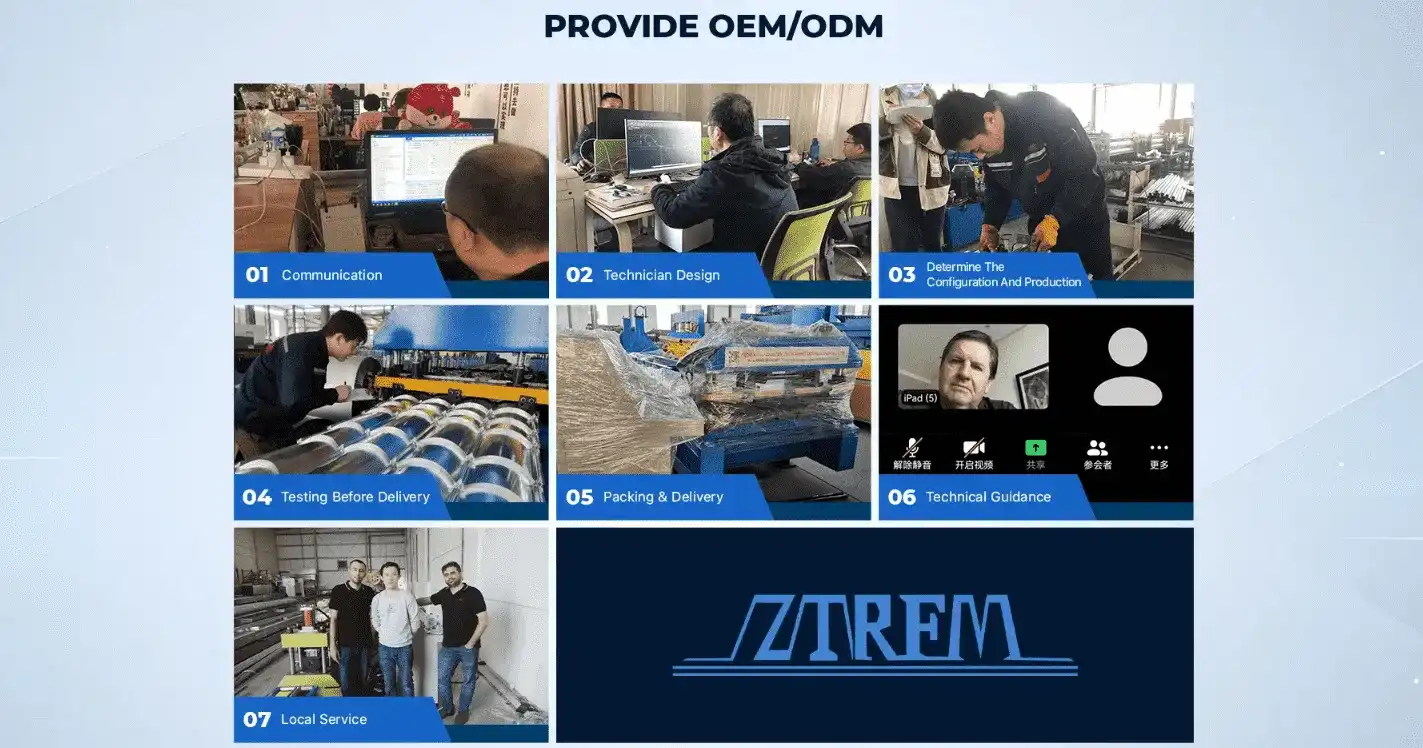
ZTRFM delivers cutting-edge standing seam roof panel machines that transform your metal roofing production capabilities. Our ISO9001, CE, and CAS certified equipment serves manufacturers across 150+ countries with proven reliability and exceptional performance. As a national high-tech enterprise, we provide comprehensive OEM/ODM services, customized solutions, and dedicated technical support to ensure your operational success. Contact our team at coo@zhongtuocn.com to discuss your standing seam roof panel machine requirements and discover why leading manufacturers worldwide choose ZTRFM as their trusted supplier. Experience the difference that premium engineering and global service excellence make in your production operations.
References
1. Metal Construction Association. "Standing Seam Metal Roofing Systems: Design Guidelines and Performance Standards." Technical Bulletin MCA-102, 2023.
2. Building Performance Institute. "Comparative Analysis of Metal Roofing Technologies in Commercial Construction Applications." Journal of Building Envelope Design, Volume 18, Issue 3, 2023.
3. American Society for Testing and Materials. "Standard Specification for Roll Forming Equipment and Metal Panel Production Systems." ASTM D7897-23, Annual Book of Standards, 2023.
4. International Association of Roll Forming Engineers. "Global Market Trends in Metal Roofing Manufacturing Equipment." Industry Report 2023, Pages 45-78.
5. Construction Industry Research Board. "Economic Impact Analysis of Advanced Manufacturing Technologies in Metal Building Systems." Research Publication CIR-2023-15.
6. Society of Manufacturing Engineers. "Roll Forming Technology Advances and Quality Control Methods for Architectural Metal Panels." Manufacturing Engineering Quarterly, Fall 2023 Edition.
_1750323743240.webp)