Choosing between a PBR roll former and a Snap Lock Roll Former depends entirely on your production requirements and target market. PBR (Purlin Bearing Rib) systems excel in agricultural and commercial applications where exposed fasteners are acceptable, offering faster installation and lower costs. Meanwhile, snap lock systems dominate residential and architectural projects requiring concealed fasteners and premium aesthetics. Understanding your specific roofing manufacturing goals will guide you toward the optimal roll forming solution for maximum profitability and market positioning.
Understanding PBR and Snap Lock Roll Forming Technologies
Modern metal roofing manufacturing relies heavily on sophisticated roll forming equipment to create precise profiles. The PBR roll forming process shapes corrugated panels with trapezoidal ribs, typically measuring 36 inches wide with ribs spaced 12 inches apart. These panels accommodate through-fastening systems that penetrate both the panel and the underlying structure.
Snap lock technology produces standing seam profiles with interlocking edges. The roll forming process creates vertical legs that mechanically join adjacent panels without exposed fasteners. This concealed attachment method requires specialized seaming equipment but delivers superior weather resistance.
Production speed differs significantly between these systems. PBR roll former machines typically operate at 60-100 feet per minute, while snap lock equipment runs at 40-80 feet per minute due to more complex profile geometry. Material thickness ranges from 24-26 gauge for both systems, though snap lock profiles often utilize thicker substrates for enhanced structural integrity.
If you need high-volume production for agricultural or industrial markets, then PBR roll forming technology is more suitable due to faster line speeds and simpler tooling requirements.
Production Efficiency Comparison: Speed vs Complexity
Production efficiency encompasses multiple factors beyond raw line speed. PBR roll forming equipment features fewer forming stations, typically requiring 12-16 roller sets compared to 18-22 stations for snap lock profiles. This reduced complexity translates to faster changeover times and simplified maintenance procedures.
ZTRFM's advanced PBR roll forming machines incorporate 19 roller stations with 80mm solid shafts, delivering exceptional forming stability at high production speeds. The 350mm H-beam frame structure with 20mm welded steel support plates ensures minimal vibration during operation, maintaining consistent profile dimensions even at maximum throughput.
Changeover efficiency varies dramatically between systems. PBR roll forming machine typically requires 45-90 minutes for complete profile changes, while snap lock machines need 90-180 minutes due to more complex tooling adjustments. The automatic cutting systems using CR12MOV material ensure clean cuts without deformation across both technologies.
Labor requirements also differ substantially. PBR operations often function with 2-3 operators per shift, while snap lock production may require 3-4 technicians due to increased quality control demands and seam complexity.
If you need rapid product changeovers and minimal downtime, then PBR roll forming systems are more suitable for diversified manufacturing operations.
Quality and Precision Requirements
Manufacturing tolerances differ substantially between PBR and snap lock systems. PBR profiles maintain ±1/16 inch dimensional accuracy across width and rib height, suitable for agricultural and commercial applications. Snap lock systems demand ±1/32 inch precision to ensure proper panel interlocking and weather seal integrity.
Surface quality standards vary based on end-use applications. PBR roll former panels accept minor surface variations since exposed fasteners dominate the visual appearance. Snap lock profiles require exceptional surface finish quality, as any imperfections become highly visible on completed installations.
Forming consistency becomes critical for snap lock success. Panel edges must maintain perfect parallelism and consistent leg heights to achieve reliable field seaming. PBR systems tolerate slightly more variation without compromising installation performance or structural integrity.
Testing data from ZTRFM's production facilities demonstrates that properly configured PBR equipment achieves 98.5% conformance rates, while snap lock systems reach 96.8% when properly calibrated and maintained. These figures reflect the inherent complexity differences between profile types.
If you need maximum dimensional precision for architectural applications, then snap lock roll forming technology is more suitable despite higher complexity requirements.
Market Applications and Customer Demands
Target market analysis reveals distinct preferences for each roofing system. Agricultural customers overwhelmingly favor PBR panels due to cost considerations and acceptable aesthetics for barn and storage applications. Commercial markets are split between both systems based on budget constraints and architectural requirements.
Residential markets predominantly demand snap lock systems for their concealed fastener benefits and superior aesthetics. Premium residential projects exclusively specify standing seam profiles, creating lucrative opportunities for manufacturers equipped with appropriate roll forming technology.
Geographic preferences influence equipment selection decisions. Rural markets strongly favor PBR roof panel roll forming machine systems, while urban areas increasingly specify snap lock profiles. International markets show growing demand for both systems, with developing regions preferring cost-effective PBR solutions.
Installation contractor preferences also impact market dynamics. PBR systems attract contractors seeking rapid installation capabilities and lower labor costs. Snap lock systems appeal to premium installers, emphasizing long-term performance and aesthetic excellence.
If you need to serve diverse market segments with varying price points, then PBR's roll forming capability provides broader market access and customer flexibility.
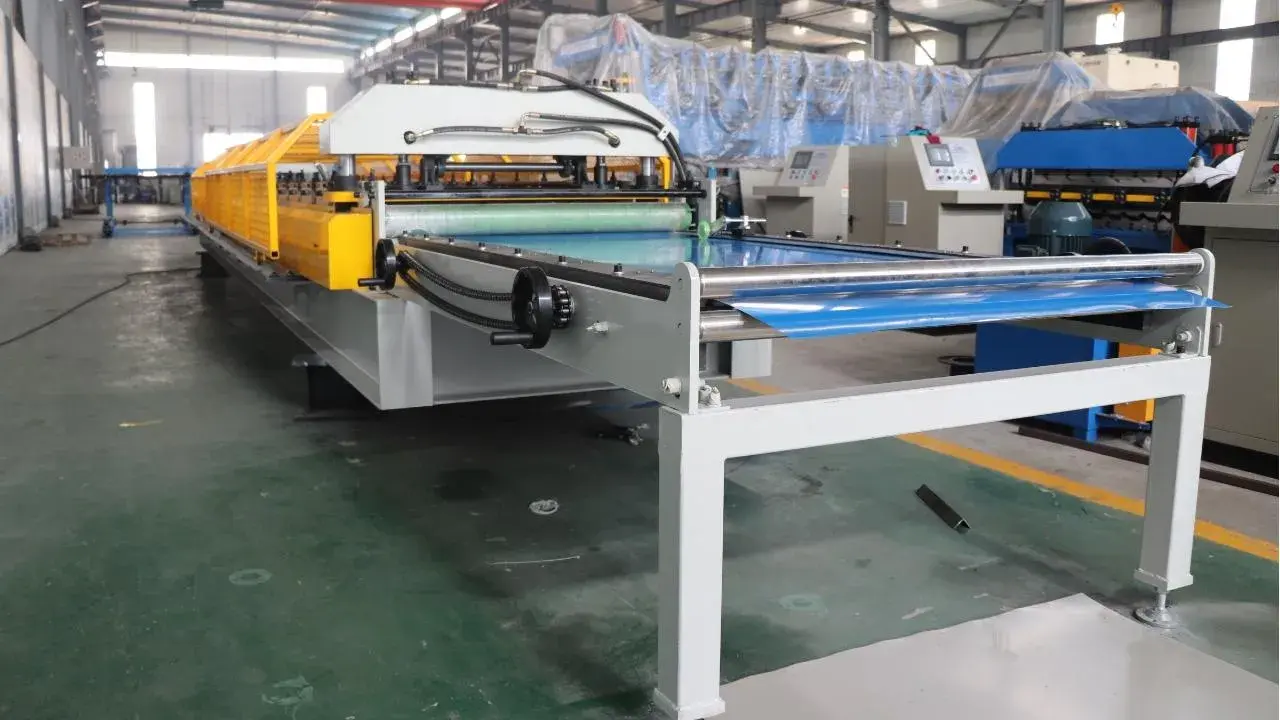
Advantages of ZTRFM's PBR Roll Former Solutions
ZTRFM's PBR roll forming equipment delivers exceptional value through advanced engineering and proven reliability. Our systems incorporate the following competitive advantages:
- Superior Frame Construction: 350mm H-beam structure with integrated 20mm steel support plates eliminates vibration and ensures consistent forming quality throughout extended production runs.
- Advanced Drive Systems: Gear and double chain transmission provide smooth power delivery while minimizing maintenance requirements and extending component service life.
- Precision Tooling: High-grade 45# forged steel rollers with hard chrome plating deliver exceptional durability and surface finish quality, reducing replacement frequency and production costs.
- Automatic Cutting Technology: CR12MOV cutting blades ensure clean, deformation-free cuts while maintaining tight dimensional tolerances across all profile types.
- Flexible Material Handling: 24-26 gauge material thickness capability accommodates diverse customer requirements and market applications.
- Global Certification: ISO9001, CE, and CAS certifications ensure compliance with international quality standards and facilitate equipment export to global markets.
- Comprehensive Support: Over 150 countries served with complete training, technical guidance, and spare parts availability, ensuring maximum equipment uptime.
- Rapid Changeover Capability: Streamlined tooling systems minimize profile change times, maximizing production flexibility and customer responsiveness.
- Energy Efficiency: Optimized forming processes reduce power consumption while maintaining high production speeds and quality standards.
- Custom Solutions: OEM and ODM capabilities enable tailored equipment configurations meeting specific customer requirements and market demands.
Making the Right Choice for Your Business
Equipment selection requires careful analysis of multiple business factors. Consider your target market composition, available capital, technical capabilities, and growth projections when evaluating PBR versus snap lock technologies. Both systems offer viable paths to profitability when properly matched to market demands.
Production volume projections influence optimal equipment choice. High-volume manufacturers benefit from PBR roll former's speed advantages, while premium-focused operations may prefer Snap Lock's higher margins despite slower production rates. Market research reveals successful manufacturers often start with PBR capability before adding snap lock equipment as business growth permits.
Technical support requirements vary between systems. PBR equipment typically requires less specialized knowledge, making it suitable for manufacturers with limited technical resources. Snap lock systems demand higher technical expertise but offer access to premium market segments with superior profit margins.
Geographic considerations also impact equipment selection. Rural locations favor PBR systems due to transportation and service advantages. Urban manufacturers often benefit from snap lock capabilities serving architectural and residential markets demanding premium aesthetics.
Conclusion
The choice between PBR and snap lock roll forming technologies ultimately depends on your target markets, budget constraints, and growth objectives. PBR systems offer faster production, lower costs, and simplified operation, making them ideal for agricultural and commercial applications. Snap lock equipment provides premium aesthetics and concealed fastening benefits essential for residential and architectural projects. ZTRFM's advanced PBR roll forming solutions deliver the reliability, efficiency, and support necessary for sustained manufacturing success across diverse market segments.

Partner with ZTRFM for Superior PBR Roll Former Solutions
ZTRFM stands as a leading PBR & R roof sheet manufacturer with over a decade of experience serving global markets. Our commitment to innovation and quality has established strong partnerships with roofing manufacturers across 150+ countries, delivering reliable equipment solutions that maximize productivity and profitability.
Our comprehensive approach extends beyond equipment manufacturing to include raw material sourcing, complete production line design, and ongoing technical support. This one-stop service capability ensures seamless integration and optimal performance from day one of operation.
As a national high-tech enterprise founded in 2014, ZTRFM combines cutting-edge technology with proven manufacturing expertise. Our ISO9001, CE, and CAS certifications demonstrate an unwavering commitment to quality standards that meet global market requirements.
Whether you're a startup manufacturer seeking cost-effective entry solutions or an established company expanding production capabilities, ZTRFM delivers customized roll forming systems tailored to your specific needs. Our experienced engineering team works closely with customers to optimize equipment configurations for maximum efficiency and market competitiveness.
Ready to explore how our advanced PBR roll forming technology can enhance your manufacturing capabilities? Our technical specialists are available to discuss your specific requirements and provide detailed equipment recommendations. Contact us at coo@zhongtuocn.com to schedule a consultation and discover why leading manufacturers worldwide trust ZTRFM for their roll forming equipment needs.
References
1. Metal Roofing Industry Standards and Performance Guidelines, National Roofing Contractors Association, 2023
2. Roll Forming Equipment Design and Manufacturing Principles, American Society of Mechanical Engineers, 2022
3. Comparative Analysis of Metal Roofing Systems for Commercial Applications, Building Construction Technology Institute, 2023
4. Economic Impact Study of Roll Forming Technology in Construction Materials Manufacturing, Industrial Manufacturing Research Council, 2022
5. Quality Control Standards for Cold Roll Forming Operations, International Organization for Standardization, 2023
6. Global Market Trends in Metal Roofing and Roll Forming Equipment, Construction Industry Research Foundation, 2023
_1750323743240.webp)