- English
- French
- German
- Portuguese
- Spanish
- Russian
- Japanese
- Korean
- Arabic
- Irish
- Greek
- Turkish
- Italian
- Danish
- Romanian
- Indonesian
- Czech
- Afrikaans
- Swedish
- Polish
- Basque
- Catalan
- Esperanto
- Hindi
- Lao
- Albanian
- Amharic
- Armenian
- Azerbaijani
- Belarusian
- Bengali
- Bosnian
- Bulgarian
- Cebuano
- Chichewa
- Corsican
- Croatian
- Dutch
- Estonian
- Filipino
- Finnish
- Frisian
- Galician
- Georgian
- Gujarati
- Haitian
- Hausa
- Hawaiian
- Hebrew
- Hmong
- Hungarian
- Icelandic
- Igbo
- Javanese
- Kannada
- Kazakh
- Khmer
- Kurdish
- Kyrgyz
- Latin
- Latvian
- Lithuanian
- Luxembou..
- Macedonian
- Malagasy
- Malay
- Malayalam
- Maltese
- Maori
- Marathi
- Mongolian
- Burmese
- Nepali
- Norwegian
- Pashto
- Persian
- Punjabi
- Serbian
- Sesotho
- Sinhala
- Slovak
- Slovenian
- Somali
- Samoan
- Scots Gaelic
- Shona
- Sindhi
- Sundanese
- Swahili
- Tajik
- Tamil
- Telugu
- Thai
- Ukrainian
- Urdu
- Uzbek
- Vietnamese
- Welsh
- Xhosa
- Yiddish
- Yoruba
- Zulu
What is a C to Z purlin roll forming machine?
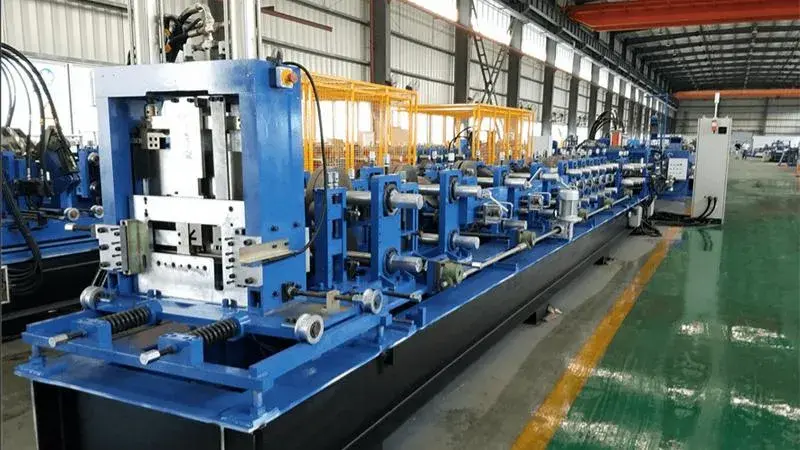
A C to Z purlin roll forming machine is a specialized industrial piece of equipment designed to transform flat steel coils into C, Z, and U-shaped structural profiles through continuous cold forming processes. This CZ purlin making machine combines uncoiling, leveling, roll forming, punching, and cutting operations into a single automated production line, eliminating the inefficiencies of traditional stamping methods. These machines address critical manufacturing challenges, including production bottlenecks, dimensional inconsistencies, and excessive labor requirements that plague conventional purlin fabrication methods.
Introduction to C to Z Purlin Roll Forming Machines
C to Z purlin roll forming machines are important pieces of manufacturing equipment designed to make different steel structural profiles that are used a lot in construction and industry. These highly advanced machines quickly and accurately turn steel coils into load-bearing parts that are essential to modern building structures.
Understanding Purlin Profiles and Their Applications
C purlins have a cross-section that looks like a channel and are very strong for roof and wall systems. Because of how they are made, they can spread loads more evenly, which makes them perfect for connecting main structural members. Z purlins are easy to spot because their flanges are offset from each other. They make interlocking connections that make the structure stronger while using less material. These profiles can be used in a lot of different types of construction. Pre-engineered buildings depend on these parts a lot because they are easy to put together and always meet quality standards. Industrial buildings are useful because their standard sizes make design calculations and installation easier.
Core Manufacturing Advantages
When compared to older ways of making things, modern equipment for forming purlins is much more productive. Conventional stamping methods need multiple setups and produce a lot of waste material. Continuous roll forming, on the other hand, keeps production rates steady while producing very little waste. Because these systems are automated, they don't need as much labor and can make sure that the profile dimensions are always the same and meet strict construction tolerances.
How Does a C to Z Purlin Roll Forming Machine Work?
Knowing how the machines that make purlins work gives you important information about how many they can make and how to make sure the quality is good. There are several steps in the manufacturing process that the CZ purlin making machine works together to turn raw steel coil into finished structural parts.
Steel Coil Processing and Material Handling
The production process starts with putting the steel coil on the hydraulic decoiling equipment. This keeps the material's tension constant while it is being formed. The thickness of the material usually falls between 1 and 3.5 mm, which allows it to meet a wide range of structural needs and load requirements. The uncoiling system has tension controls that can be adjusted to keep the material from warping and to make sure it feeds smoothly into the next processing station. Materials like galvanized and cold-rolled steel are the main ones used as raw materials. The coating requirements change depending on how the steel will be used. Before the steel goes into the forming stations, the material handling system has leveling mechanisms that get rid of coil set and surface irregularities.
Roll Forming Station Configuration
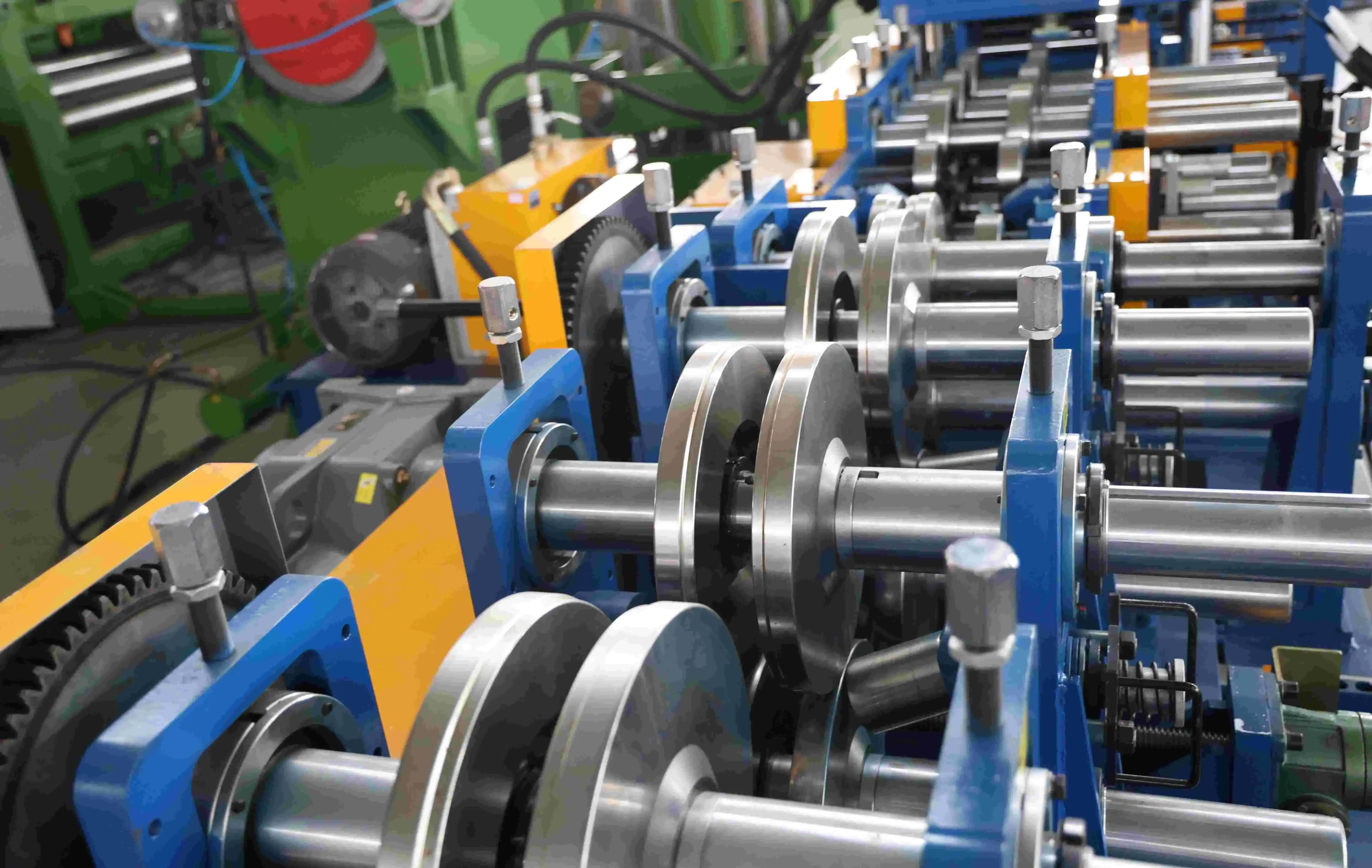
The C purlin making machine utilizes 12-16 forming stations constructed from high-grade 45# steel shafts that make the machine very durable, even when it is used nonstop. At each station, small amounts of bending are done to shape the flat steel strip into the desired profile shape without causing stress concentrations in the material. Chain transmission systems make sure that all of the forming stations get power and keep working at the same time at speeds between 8 and 15 meters per minute. The 400 H steel frame construction provides rigid support that doesn't bend under forming loads, so the dimensions stay accurate throughout the production run.
Hydraulic Cutting and Finishing Operations
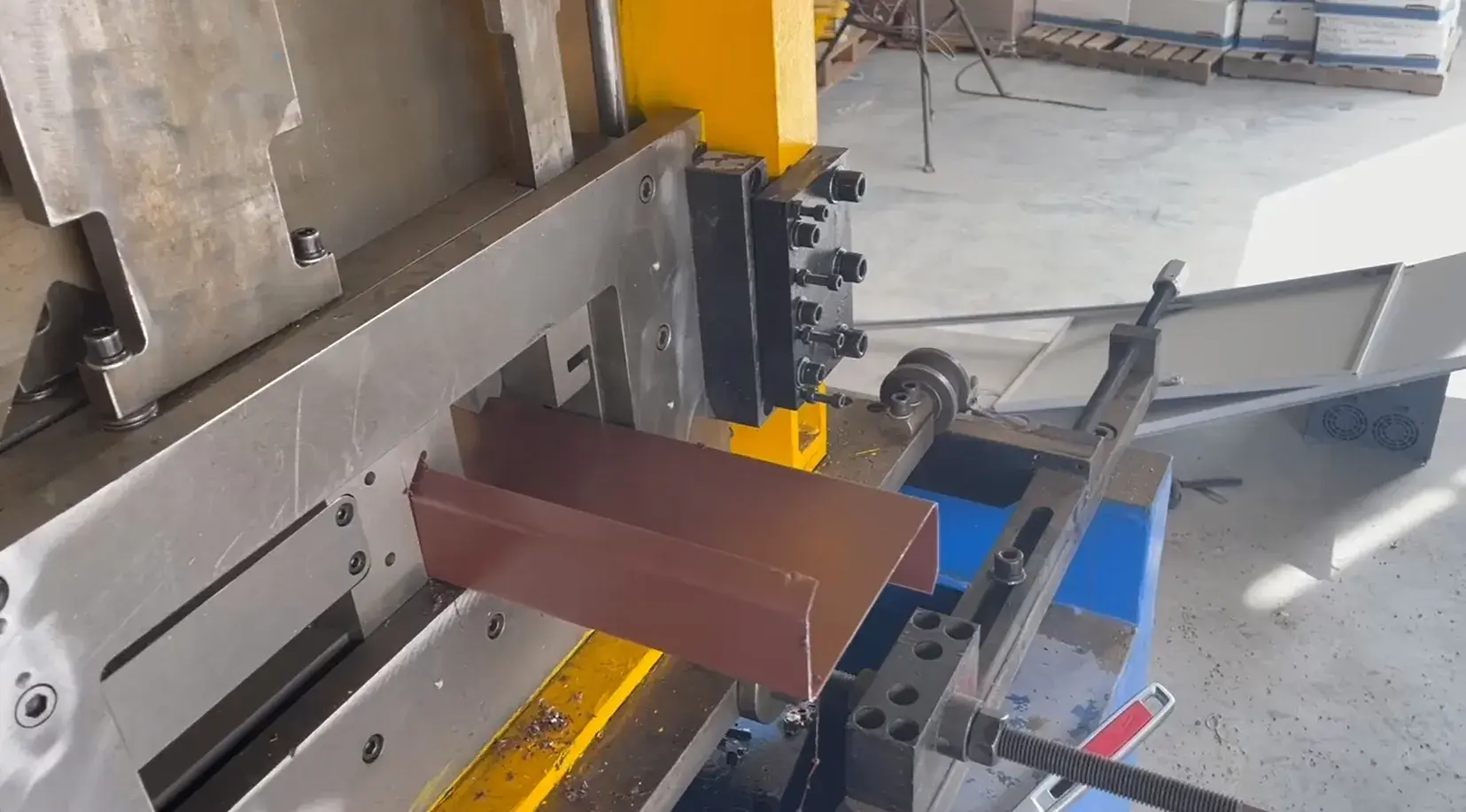
With Cr12 steel blades and precision hydraulic cutting systems, you can make clean, square cuts without any burrs or material distortion. Cutting power ranges from 5.5kw to 7.5kw, which is strong enough to separate materials cleanly through the thickest layers. Blade materials are quenched to hardness levels of 60–62°C, which ensures they last longer and make consistent cuts.
Types and Features of C to Z Purlin Roll Forming Machines
When choosing equipment, it's important to think carefully about the level of automation, the drive systems, and the production capacity that is needed. To meet the needs of different manufacturing processes, different machine configurations offer different levels of operational flexibility and production efficiency.
Automation Level Classifications
Manual adjustment machines require operator intervention for profile changes, involving spacer removal and stand repositioning that typically consumes 2-4 hours per changeover. These systems CZ purlin making machine work well for businesses that need stable product mixes and not a lot of different profile types. Through automated adjustment mechanisms, semi-automatic equipment shortens the time it takes to change over while still requiring an operator to keep an eye on important setup parameters. For medium-volume production settings, these machines strike a good balance between initial investment costs and operational flexibility. Fully automatic C purlin making machine systems have linear guides that are controlled by a PLC and can change profiles quickly, in just two to five minutes. CNC integration lets you make precise changes to parameters and store multiple profile configurations, which speeds up production and makes setup easier.
Drive System Considerations
Chain transmission systems reliably distribute power and don't need much upkeep, so they can be used in places where they are always running. The strong construction can handle different load conditions and keeps the forming speeds the same at all stations. Electric drive alternatives allow for precise speed control and better energy efficiency, which is especially useful for tasks that need to change speeds often or follow specific forming sequences. These systems work perfectly with automated control packages.
Advanced Feature Integration
Servo-driven punching systems are used in modern equipment to make precise hole patterns that meet the needs of structural connections. Programmable punching sequences can make holes of different sizes and spacing without having to change the dies by hand. Profile measurement systems give you feedback on dimensions in real time, which lets you make automatic changes that keep tolerances tight during production runs. These quality control features cut down on waste while making sure that product specifications are always met.
Maintenance, Troubleshooting, and Best Practices
Systematic maintenance programs keep machines running at their best and cut down on unplanned downtime that can throw off production schedules. Strategies for proactive maintenance deal with possible problems before they affect how things are made.
Preventive Maintenance Protocols
As part of daily maintenance, the lubrication system is checked, and important wear parts are looked at visually. Making sure that forming stations, drive mechanisms, and cutting systems are properly oiled keeps them from wearing out too quickly and keeps them running smoothly. Operators should keep an eye out for strange noises, vibrations, or changes in temperature that could mean problems are starting to form. As part of the weekly maintenance, alignment and calibration checks are added to make sure the accuracy of the forming. Making changes to the tension of the drive chain and checking the condition of the bearings stops mechanical breakdowns that could damage expensive forming rolls or lower the quality of the product. Electrical systems, hydraulic parts, CZ purlin making machine, and control systems are all thoroughly checked every month as part of maintenance. These in-depth tests find wear patterns and signs of component degradation before they get bad enough to break.
Common Troubleshooting Scenarios
Differences in profile dimensions are often caused by rolls not being aligned properly or forming stations wearing out too quickly. Systematic procedures for measuring and adjusting restore accuracy in dimensions while finding the causes of quality problems. Problems with cutting quality are usually caused by worn blades or gaps between the upper and lower cutting edges that aren't set correctly. Clean cutting performance is maintained by checking and replacing blades on a regular basis as directed by the manufacturer. Problems with the drive system can show up as changes in speed or too much noise while it's running. Most problems with drives can be fixed before they get worse and cause parts to break by adjusting the chain tension and checking the wear on the sprockets.
How to Choose and Procure the Right C to Z Purlin Roll Forming Machine
Buying equipment has a big effect on how much it costs to run and how much it can produce in the long run. Comprehensive evaluation criteria make sure that the best machine is chosen, one that meets the needs of manufacturing and meets business goals.
Production Capacity Assessment
To find the right machine capacity, you need to look at past and future production levels, taking into account times of high demand and expected market growth. The specifications for the C purlin making machine should allow for the highest expected throughput while still keeping up efficiency during times of lower volume. Machine size and power requirements are affected by the thickness requirements of the material. Equipment rated for thickness ranges of 1 to 3.5 mm is flexible enough to meet the needs of a wide range of projects while still maintaining structural integrity at full load.
Vendor Evaluation Criteria
When choosing a supplier, you need to think about their technical skills, their service support infrastructure, and how reliable they will be in the long term. Companies that have been around for a while and have ISO9001, CE, or CAS certifications show that they have quality management systems and follow safety rules, which lowers CZ purlin making machine operational risks. Global service networks make it possible to get technical help and spare parts quickly, so that there is as little downtime as possible during repairs or maintenance. Vendors who have delivered goods in more than one country know what needs to be done for international shipping and installation.
Financial Considerations and ROI Analysis
An analysis of an equipment investment should include the costs of buying the equipment, installing it, and the ongoing costs of running it, such as repairs, replacement parts, and energy use. Leasing or longer payment terms may be available as ways to finance something so that your business can keep its working capital for other investments. When figuring out the return on investment, you need to look at how the C purlin making machine implementation improves quality, cuts down on labor costs, and boosts productivity compared to current manufacturing methods.
Conclusion
C-to-Z purlin roll forming machines are very useful for making things that are needed in modern industry and construction. Through continuous automated processes, these high-tech systems turn raw steel into precise structural parts that are better in quality and productivity than traditional methods of fabrication. Knowing what a machine can do, what it needs to do its job, and how to choose it helps you make smart purchasing decisions that make your business more competitive and ensure long-term operational success.
FAQ
1. What materials can C to Z purlin roll forming machines process?
These machines can work with galvanized steel, cold-rolled steel, and different coated materials. With yield strengths between G250 and G550 MPa. For standard uses, the thickest material that can be used is usually between 1 and 3.5 mm. For heavy-duty uses, up to 4 mm of thickness can be used. Specifications for coatings should take into account how the coating will be used and how it will protect against corrosion.
2. How long does machine setup and commissioning require?
Initial setup and testing usually take 5 to 10 working days, but this depends on how complicated the machine is and how much work needs to be done to prepare the site. This time frame includes checking the foundation, connecting the electricity, calibrating the system, and training the operators. Comprehensive commissioning makes sure that the system works at its best and meets any specific needs of the site.
3. What warranty and support arrangements are standard?
Standard warranty coverage includes full protection for all mechanical and electrical parts for 12 months. With preventive maintenance programs, extended warranty options give you more coverage time. Technical support includes diagnostics done remotely, service on-site, and the ability to get all spare parts through global distribution networks.
4. Can one machine produce both C and Z profiles?
Yes, interchangeable CZ machines do have rotating forming station assemblies that can change the shape of the profile from C to Z. The 180-degree turnover mechanism lets the profile change quickly, making the best use of equipment for facilities that need to meet a wide range of project needs.
5. What foundation requirements do these machines have?
To keep the C purlin making machine from moving out of alignment due to vibrations, it needs to be set up on foundations made of reinforced concrete that are at least 150 mm deep. Even though most machines are self-contained on rigid bases and don't need deep anchor bolts, making sure the foundation is ready for use ensures accuracy and stability over time.
Partner with ZTRFM for Superior C Purlin Making Machine Solutions
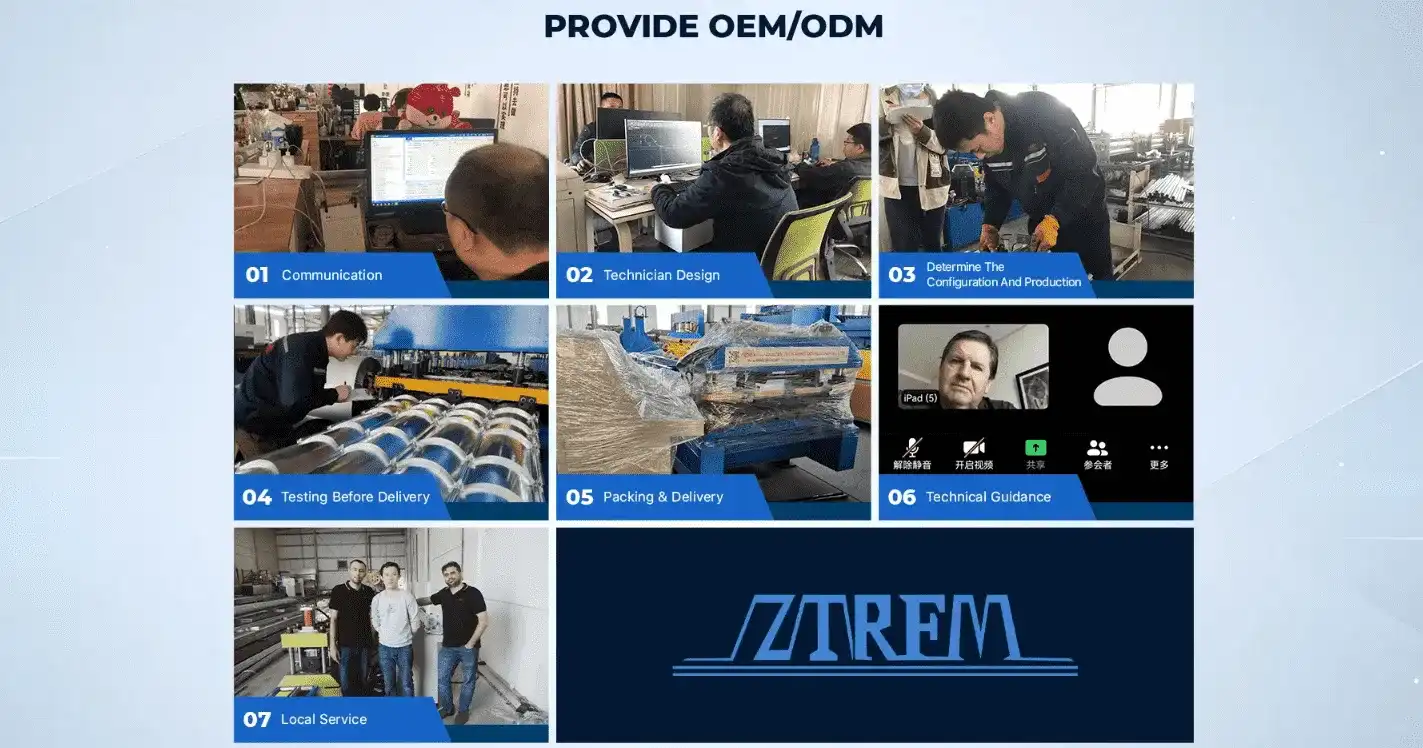
ZTRFM offers custom purlin forming services that go above and beyond what the industry requires by combining advanced engineering knowledge with a wide range of manufacturing skills. Our CZ Purlin making machine systems have a strong 400 H steel frame, well-designed forming stations, and high-tech hydraulic cutting systems that make sure the quality is always the same and the machines work reliably. As a top manufacturer of CPurlin-making machines with ISO9001, CE, and CAS certifications, we offer full turnkey solutions that include installation, training, and ongoing technical support in over 150 countries around the world. Get in touch with our technical experts at zhongtuorollforming@gmail.com to discuss your specific requirements and discover how our cutting-edge purlin forming technology can help you make more things while also giving you a better return on investment (ROI).
References
1. American Institute of Steel Construction. "Cold-Formed Steel Design Manual." Chicago: AISC Publications, 2018.
2. Davies, J.M. "Recent Research Advances in Cold-Formed Steel Structures." Journal of Constructional Steel Research, Vol. 55, 2020.
3. International Association of Roll Forming Manufacturers. "Guidelines for Roll Forming Equipment Selection and Operation." Detroit: IARFM Technical Publications, 2019.
4. Schafer, Benjamin W. "Cold-Formed Steel Structures Around the World." Steel Construction Today & Tomorrow, Vol. 28, 2021.
5. Yu, Wei-Wen and LaBoube, Roger A. "Cold-Formed Steel Design: Fourth Edition." New York: John Wiley & Sons, 2017.
6. Zhang, Liang and Chen, Wei. "Advances in Cold Roll Forming Technology for Structural Applications." Manufacturing Engineering Review, Vol. 42, 2022.
_1750323743240.webp)