- English
- French
- German
- Portuguese
- Spanish
- Russian
- Japanese
- Korean
- Arabic
- Irish
- Greek
- Turkish
- Italian
- Danish
- Romanian
- Indonesian
- Czech
- Afrikaans
- Swedish
- Polish
- Basque
- Catalan
- Esperanto
- Hindi
- Lao
- Albanian
- Amharic
- Armenian
- Azerbaijani
- Belarusian
- Bengali
- Bosnian
- Bulgarian
- Cebuano
- Chichewa
- Corsican
- Croatian
- Dutch
- Estonian
- Filipino
- Finnish
- Frisian
- Galician
- Georgian
- Gujarati
- Haitian
- Hausa
- Hawaiian
- Hebrew
- Hmong
- Hungarian
- Icelandic
- Igbo
- Javanese
- Kannada
- Kazakh
- Khmer
- Kurdish
- Kyrgyz
- Latin
- Latvian
- Lithuanian
- Luxembou..
- Macedonian
- Malagasy
- Malay
- Malayalam
- Maltese
- Maori
- Marathi
- Mongolian
- Burmese
- Nepali
- Norwegian
- Pashto
- Persian
- Punjabi
- Serbian
- Sesotho
- Sinhala
- Slovak
- Slovenian
- Somali
- Samoan
- Scots Gaelic
- Shona
- Sindhi
- Sundanese
- Swahili
- Tajik
- Tamil
- Telugu
- Thai
- Ukrainian
- Urdu
- Uzbek
- Vietnamese
- Welsh
- Xhosa
- Yiddish
- Yoruba
- Zulu
How Does a Tr4/ Tr5 Roof Sheet Machine Improve Accuracy?
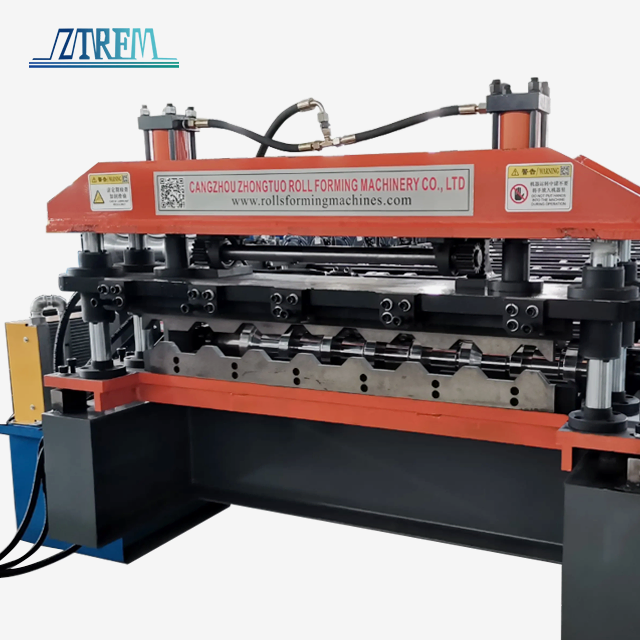
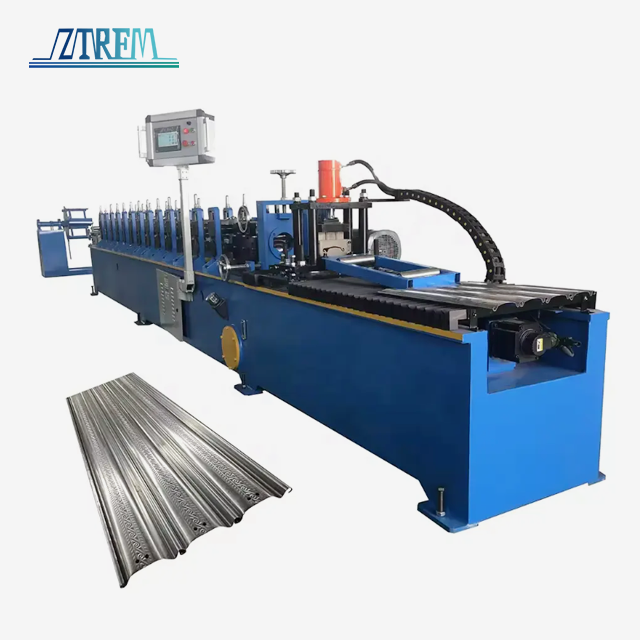
When manufacturers ask how a TR4/TR5 roof sheet machine improves accuracy, the answer lies in its systematic integration of precision engineering and automation. These trapezoidal profile-forming systems employ PLC touchscreen controls, chrome-plated 45# steel rollers, and synchronised feeding mechanisms that eliminate dimensional drift. By maintaining consistent pressure across 13-15 forming stations and processing materials at controlled speeds between 15 and 25 metres per minute, these machines achieve cut-to-length tolerances within ±1 mm—a critical requirement for seamless on-site installation in modern roofing applications.
Understanding the Accuracy Challenges in Roof Sheet Production
Manufacturing roof sheets presents persistent challenges that affect project timelines and profitability. Material deformation during production is a major issue, especially with 0.3 mm–1.0 mm galvanised or pre-painted steel coils. Manual adjustments can lead to errors, and inconsistent feeding speed or hydraulic pressure degrades profile geometry.
Traditional tools make it difficult to maintain rib height and pitch across production runs. Any deviation from the trapezoidal forms prevents the side-lap interlocking mechanism from working during installation. Water can enter, triggering guarantee claims. Due to these faults, producers must utilise 8–12% more waste in uncontrolled areas.
Impact on Large-Scale Projects
B2B buyers seek reliability. One set of incorrect profiles can delay pre-engineered construction projects of thousands of square metres. Construction businesses need sheets with correct, effective cover widths, generally 980mm for TR4 profiles and 1000mm for TR5 profiles, to conclude projects without midway alterations. Besides lost resources, the financial repercussions include wasted labour, greater transportation costs, and brand harm in competitive markets.

Key Features of TR4/TR5 Roof Sheet Machines That Enhance Accuracy
Modern trapezoidal profile tools develop solutions for every shaping phase to solve historical issues. Base structure stiffness comes first. Heavy-duty chassis no longer flex under pressure. This stability is crucial when working with materials at 25 m/min.
Advanced Control Architecture
The system's brain, the PLC tablet platform, digitally measures length and counts things. Modern Omron, Siemens, or Delta controllers allow parameter changes without mechanical recalibration. Operators enter objective dimensions, and the system automatically calculates roller synchronisation speeds, hydraulic cutting time, and material tension.
The integration of sensors is another advance. Laser measuring systems compare real-time data to fixed standards to check profile shape along the production line. Feedback loops immediately adjust discrepancies above 0.5 mm for business applications. Dynamic error management prevents coil run defects.
Material-Friendly Roller Design
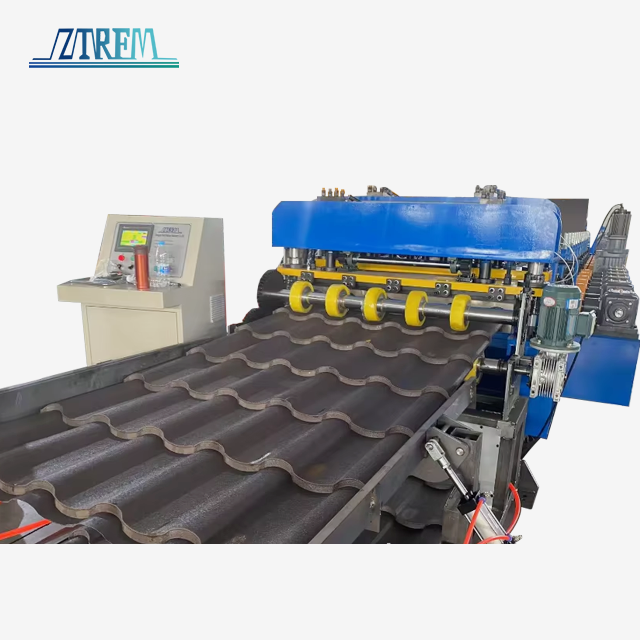
Each forming station progressively shapes the trapezoidal profile, distributing stress evenly across the material's cross-section. This step-by-step process prevents abrupt bending that could damage coatings or thin the steel. The finished TR4 or TR5 profiles maintain consistent rib geometry for reliable side-lap interlocking during roof installation.
Each forming station slightly alters the finished shape, dispersing stress evenly over the material's cross-section. This step-by-step procedure prevents abrupt bending that stresses and thins materials, such as when using a TR4/TR5 roof sheet machine. The rectangular sheets can continuously support their weight. They can be employed in windy coastal locations or snowy northern regions.

How TR4/TR5 Machines Improve Accuracy: Step-by-Step Process Analysis?
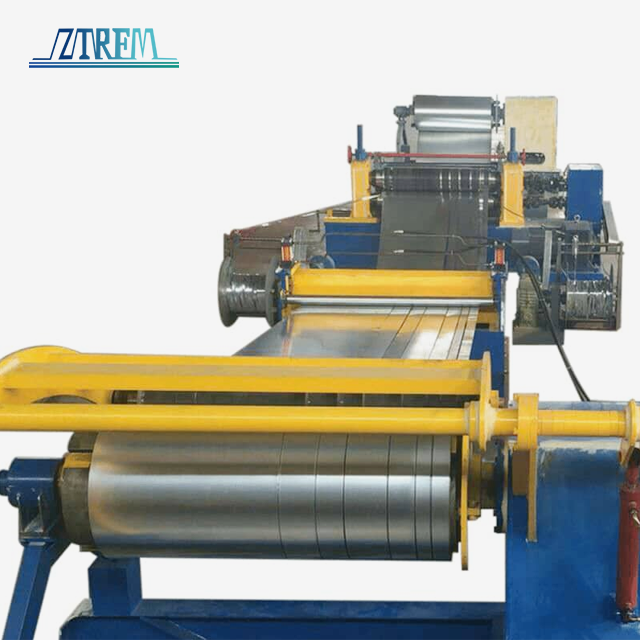
Understanding the stages of operation explains why TR4/TR5 roof sheet machines outperform conventional roll forming equipment. Decoiling begins with manual or hydraulic unwinders releasing material smoothly. Consistent initial tension prevents ripples and edge warping during subsequent forming of trapezoidal profiles.
Precision Material Feeding
Motorised feeding rollers with variable frequency motors maintain linear motion as coil diameter varies. By halting the jerky action that changes length, the decoiler compensates for losing material and rotational inertia. Before the initial forming station, alignment guides accurately situate the coil's axis, providing a reference throughout the operation.
The trapezoidal shape is formed by multiple pairs of rollers slowly deforming flat material. Engineering formulas determine station spacing and roller designs to reduce springback, which causes readings to move once pressure is released. Premium machines may be tuned for materials with varied output strengths by changing station spacing.
Real-Time Quality Verification
Automated tracking goes beyond length counting. Modern systems monitor hydraulic pressure during cutting to detect worn blades before burrs or missing shears. Temperature monitors that detect friction spots indicate misaligned rollers or insufficient oil. These predictive maintenance technologies maintain accuracy over weeks- or months-long manufacturing cycles.
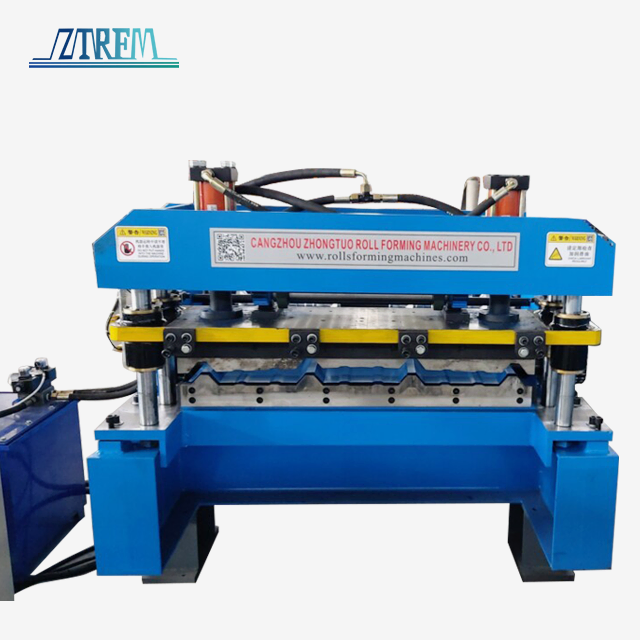
The 4kW hydraulic cutting shear operates orthogonally to the material travel direction, achieving cut angle deviations within 0.02 degrees. Clean cuts eliminate secondary trimming operations that can cause handling damage. Cr12MoV steel blades remain sharp after over one million cycles, ensuring stable cut quality for tight stacking and efficient logistics.

Business Benefits of Choosing TR4/TR5 Roof Sheet Machines for Procurement
Investment study reveals considerable benefits beyond first purchases. Reducing scrap immediately enhances material utilisation. This often pays for itself in 18–24 months for medium-volume manufacturers processing 500–800 tonnes per year. Workers are more productive because precision eliminates redoing work, which speeds up order fulfilment and pleases consumers.
Dimensional homogeneity provides long-term benefits that purchasers may not realise. Big business project installers believe that a roof is 30–40% faster when TR4/TR5 roof sheet machine profiles fit together without field adjustments. In fast-paced building markets, this efficiency reduces on-site labour costs and project schedules, providing producers an edge.
Operational Efficiency Gains
Cutting setup time is important for firms that handle many orders. Older machines require manual roller adjustments, which take two to four hours every profile change. Cassette-change or dual-layer systems provide 15–30-minute swaps. This versatility facilitates just-in-time production, which decreases supply costs and speeds up movement.
Energy economy and precision engineering go together. Low forming resistance from optimised roller shapes helps 5.5–7.5 kW main motors fulfil output targets that previously required 11 kW systems. In locations with high power bills, energy savings add up to a significant percentage of the total cost of ownership over several years.

Selecting the Right TR4/TR5 Roof Sheet Machine for Your Business Needs
The programme needs to determine the TR4, TR5, or TR6 profile to use. With four major ribs, the TR4 arrangement maximises material consumption for roofing homes and farms with 980 mm covering lengths and standard design modules. TR5 profiles have a greater section modulus, making them preferable for wind-resistant business structures with longer unsupported spans.
After-Sales Support Considerations
Technical support considerably impacts long-term accuracy. When suppliers provide comprehensive operator training, including calibration, maintenance, and troubleshooting, in-house teams can maintain precision without outside aid. Software upgrades that meet new material standards or character changes keep equipment useful as market demands evolve.
When assessing a vendor, consider parts supply. Wear components like cutting blades, bearing kits, and hydraulic seals should be readily available and take less than two weeks to order. Regional stocking centres keep production operating smoothly, whereas international supplies for frequent replacements make manufacturing continuity planning less dependable.
You should consider more than the purchase price in a cost-benefit analysis. Examine predicted efficiency benefits, operational expenses, and maintenance needs, such as for the Tr4/Tr5 roof sheet machine. Superior precision equipment costs more, but it sometimes saves manufacturing costs per unit by decreasing waste, quickening output, and lengthening service intervals. Calculating the net present value over 10–15 years offers you the financial knowledge you need to make wise purchase decisions.

Conclusion
The TR4/TR5 roof sheet machines are more precise because they employ integrated engineering to include all manufacturing parameters. These instruments enable accuracy, from chrome-finished rollers that maintain the surface to PLC systems that ensure everything operates smoothly. Manufacturers have an advantage due to less trash, faster manufacturing, and consistent quality that fosters consumer trust. As the roofing industry requires tighter limitations and greater performance requirements, investing in proven technology is wise and important for long-term company success.
FAQ
1. Can TR4/TR5 Machines Process Different Material Types?
These tools operate with galvanised steel, galvalume, and pre-painted finishes 0.3–1 mm thick. Chrome rollers prevent scratches on fine surfaces, protecting high-end PVDF or SMP-coated materials' warranties. Different material yield strengths can be addressed by tension variations without redesigning.
2. What Training Do Operators Need?
You must know how to utilise a tablet interface and load resources to conduct basic operations. Two- to three-day training programmes cover this. One week of advanced calibration and maintenance training equips staff to make routine adjustments and fix issues.
3. How Do These Machines Handle Voltage Fluctuations?
PLCs and variable frequency drives require reliable three-phase power (380V/50Hz or 440V/60Hz). In unstable power grids, voltage stabilisers protect sensitive parts from spikes or brownouts that might harm motors or create programming errors. Growing markets benefit from this safety.
4. Are Customisation Options Available?
You may choose profile dimensions, rib configurations, and supplementary equipment like stackers and edge trimmers after purchasing. OEM and ODM agreements can be tailored to design or regional building codes. This meets local criteria while maintaining basic accuracy.
Partner with ZTRFM for Precision Roll Forming Solutions
ZTRFM has led trapezoidal profile production since 2014. This ISO9001 and CE-certified equipment supports manufacturers in 150+ countries. We consult, build, and maintain TR4/TR5 roof sheet machines. Our PLC touchscreen controls, hydraulic cutting systems, and gold-finished precision rollers provide ±1mm accuracy for your projects. Tell our technical team about your production demands, material specs, and capacity objectives at zhongtuorollforming@gmail.com.

References
1. Smith, J. & Anderson, K. (2021). Cold Roll Forming Technology: Principles and Industrial Applications. Manufacturing Press International.
2. Chen, L. (2020). "Precision Control Systems in Metal Forming Equipment," Journal of Industrial Engineering, 45(3), 127-144.
3. Thompson, R. (2022). Trapezoidal Profile Design for Structural Roofing Systems. Construction Technology Publishers.
4. Williams, M. & Garcia, P. (2019). "Material Behavior in Multi-Station Roll Forming Processes," International Metalworking Review, 38(2), 215-230.
5. European Committee for Standardization (2021). EN 10143: Continuously Hot-Dip Coated Steel Sheet - Tolerances on Dimensions and Shape. Brussels: CEN Publications.
6. National Roofing Contractors Association (2023). Metal Roofing Installation and Performance Standards. Rosemont: NRCA Technical Services.