- English
- French
- German
- Portuguese
- Spanish
- Russian
- Japanese
- Korean
- Arabic
- Irish
- Greek
- Turkish
- Italian
- Danish
- Romanian
- Indonesian
- Czech
- Afrikaans
- Swedish
- Polish
- Basque
- Catalan
- Esperanto
- Hindi
- Lao
- Albanian
- Amharic
- Armenian
- Azerbaijani
- Belarusian
- Bengali
- Bosnian
- Bulgarian
- Cebuano
- Chichewa
- Corsican
- Croatian
- Dutch
- Estonian
- Filipino
- Finnish
- Frisian
- Galician
- Georgian
- Gujarati
- Haitian
- Hausa
- Hawaiian
- Hebrew
- Hmong
- Hungarian
- Icelandic
- Igbo
- Javanese
- Kannada
- Kazakh
- Khmer
- Kurdish
- Kyrgyz
- Latin
- Latvian
- Lithuanian
- Luxembou..
- Macedonian
- Malagasy
- Malay
- Malayalam
- Maltese
- Maori
- Marathi
- Mongolian
- Burmese
- Nepali
- Norwegian
- Pashto
- Persian
- Punjabi
- Serbian
- Sesotho
- Sinhala
- Slovak
- Slovenian
- Somali
- Samoan
- Scots Gaelic
- Shona
- Sindhi
- Sundanese
- Swahili
- Tajik
- Tamil
- Telugu
- Thai
- Ukrainian
- Urdu
- Uzbek
- Vietnamese
- Welsh
- Xhosa
- Yiddish
- Yoruba
- Zulu
Top-Rated Ceiling T Grid Roll Forming Machine Manufacturer
When searching for a reliable ceiling t grid roll forming machine manufacturer, quality and precision matter more than anything else. We understand the challenges that building roofing system manufacturers and light steel structure companies face when looking to optimize production efficiency. A top-rated manufacturer delivers not just equipment but a complete solution with proven reliability, backed by ISO9001 and CE certifications, global after-sales support across 150+ countries, and consistent innovation. At Cangzhou Zhongtuo (ZTRFM), we've been engineering cold roll forming solutions since 2014, helping businesses transform their ceiling grid production with equipment that addresses real industry pain points like unstable forming, difficult maintenance, and insufficient output.
Understanding Ceiling T Grid Roll Forming Machines
What Is a Ceiling T Grid Roll Forming Machine?
A ceiling t grid roll forming machine is a specialized piece of industrial equipment used to make structural framework parts for suspended ceiling systems. This machine continuously deforms galvanized steel (GI) and pre-painted galvanized steel (PPGI) strips into exact T-shaped profiles, including Main Tees, Cross Tees, and Wall Angles, which are needed for installing modular ceilings. The process takes the place of human bending methods that lead to uneven grids. It also makes sure that the modular limits needed for installing soundproof tiles in homes and businesses are strictly followed.
Core Components and Operating Technology
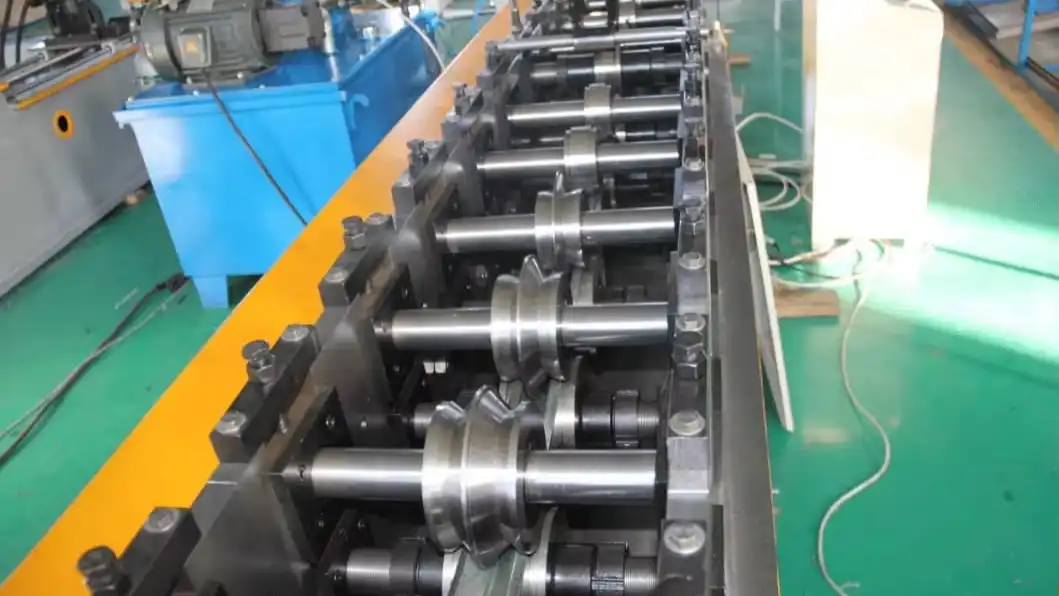
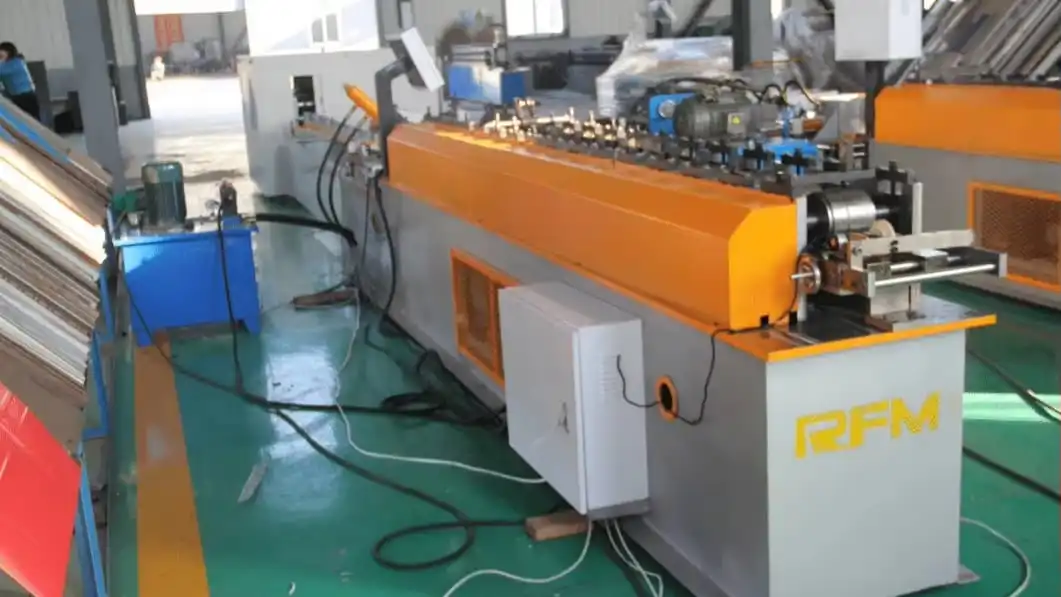
Modern tools for making T-grids work in a carefully coordinated order. The decoiler can handle 1.5 tons of weight and coil inner widths of 450 to 550 mm. It sends raw materials to the making stations. Our machines have 18 stations for making main tees and 16 stations for making cross tees. The rollers are made of GB-Cr12 material, which is strong and accurate. The 45# steel rolling shaft with a 50mm diameter keeps the material moving smoothly through each stage of the making process.
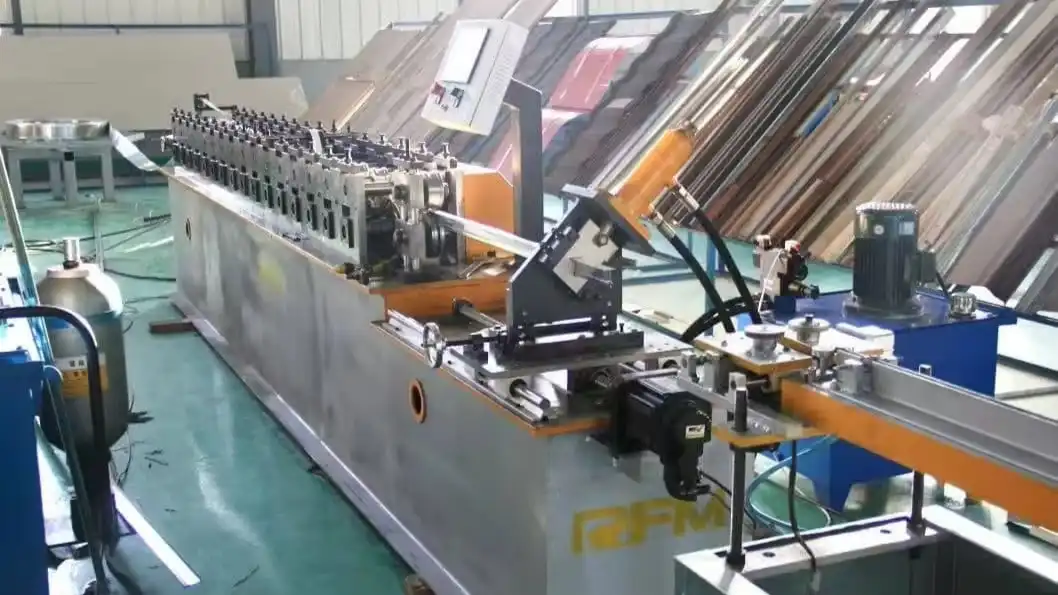
Everything is coordinated by the computer system, from feeding to roll forming, measuring length, punching, cutting, and getting the product. This automation handles the huge amounts of work that are needed for building projects while keeping the accuracy of the geometry. Work speeds run from 0 to 20 meters per minute, and they are timed to work with punching and cutting to avoid slowdowns in production.
Technical Specifications That Define Quality
Compatibility between material thicknesses is very important for getting good results. As per ASTM C635 standards for suspended ceiling parts, our tools can handle 0.12- 0.3 mm PPGI for T-bar top material and 0.2- 0.4 mm GI for T-bar bottom material. The Cr12 roller material is heated until it reaches an HRC hardness of 58–62. This keeps pre-painted surfaces from getting scratches and keeps the shape the same over thousands of production runs.
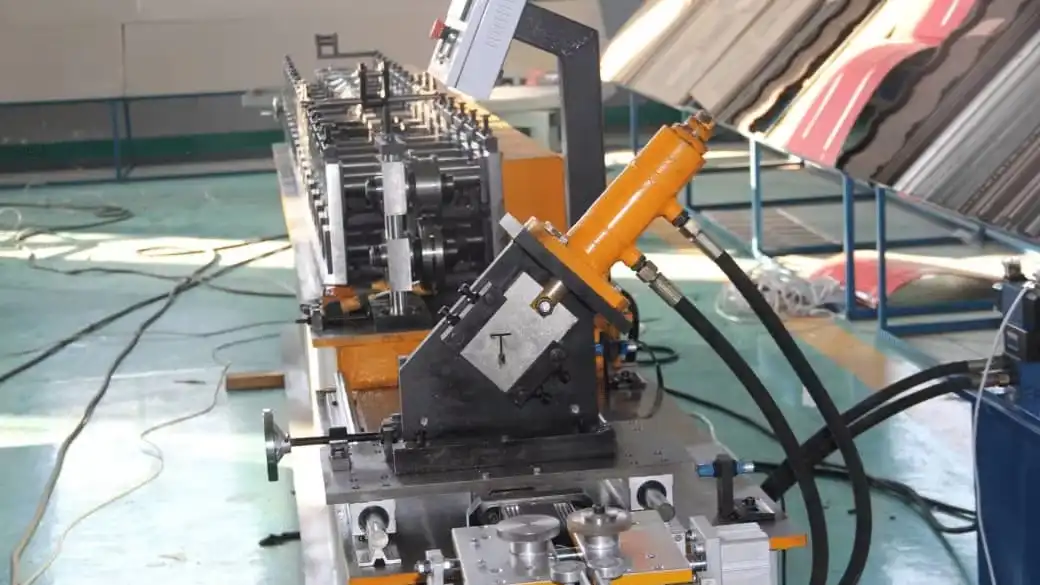
When making parts that need to fit into movable ceiling frames, accuracy is important. With a length range of ±0.5mm for 3600mm pieces, panels fit together perfectly, with no holes or misalignment. This level of accuracy comes from servo-driven cutting tools and PLC control systems that watch and change processes in real time to account for changes in the surroundings or the properties of the material.
Real-World Applications Across Industries
Companies that make building roofing systems can make their products in a way that fits their needs, and they can quickly switch between Main Tee and dismiss Cross Tee designs. Manufacturers of light steel structures like that can work quickly while also having cutting stations for connection holes. Composite sandwich panel makers use these machines as part of larger production lines. The T grid equipment's dependability has a direct effect on how efficiently the whole facility works.
International engineering firms and EPC workers need standard tools that can be used anywhere in the world. Our machines meet these needs by working with international electricity standards (380V-50HZ-3P with customization choices), being able to be shipped in 20GP containers, and having detailed instructions that help installation teams all over the world.
Comparing Ceiling T Grid Roll Forming Machines: Making the Right Choice
Traditional Methods Versus Automated Forming
In the past, ceiling grids were made by manually twisting, using stamping tools, and performing different punching operations. These methods had some problems, like uneven shape sizes, surface damage from being handled over and over, slow production rates, and high labor costs. With automated ceiling T grid roll forming machines, these problems are taken care of by moving the material continuously through progressive forming stations without having to be handled in between.
When you look at finished goods, you can see the difference in quality. When grids are made by hand, they often have differences in the web height, flange width, and general straightness, which can make fitting difficult and look bad. According to feedback from our customers in the business ceiling installation sectors, automated equipment makes profiles with consistent cross-sectional geometry, straight edges, and a uniform surface finish. This cuts installation time by up to 40%.
Manual Versus Automatic Equipment Configurations
People who work with manual ceiling grid machines have to measure and mark where to cut, start the cutting process by hand, and take out the finished pieces by hand. Small producers or new businesses that can't afford to spend a lot of money on their first investments and can only produce less than 10,000 square meters per month should use these systems. The lower cost of tools ($6,500 to $15,000) makes it appealing to businesses that want to test the market before expanding.
Automatic setups include measuring length with an encoder, cutting processes controlled by a PLC, and stacking of products by pneumatic or hydraulic means. These improvements make production 60–80% more efficient while lowering the level of skill needed by operators. Medium-sized businesses that make between 20,000 and 80,000 linear meters a month find that automatic systems offer the best mix between features and cost ($18,001 to $32,200), especially when labor costs and quality standards are the main factors influencing their purchasing choices.
Energy Efficiency and Operational Cost Impact
Energy-efficient types have variable frequency drives (VFDs) that change the speed of the motor based on production needs. This uses 25–35% less electricity than motors with a set speed. This means that each machine working a single shift will save between $800 and $1,200 a year. Machines working multiple shifts will save even more.
High-speed types that go 30 to 45 meters per minute greatly increase output, but they need to be carefully checked to see what they can do downstream. If your packing and bundling processes can't keep up with the faster production, you'll lose the speed edge. Before choosing high-speed setups, we suggest figuring out the full potential of the production line. This will make sure that the flow of work is balanced and that no equipment is wasted.
Price Analysis and Hidden Cost Considerations
Standard ceiling grid making equipment costs between $6,500 for simple manual models and $42,500 for high-tech automatic lines that can punch, connect clips, and make two profiles at once. The price depends on a number of things, such as the number of roller stations, the complexity of the hydraulic system, the sophistication of the control system, and any extra equipment that is included, like decoilers and run-out tables.
First-time buyers are often shocked by hidden costs. Depending on the port of arrival, shipping costs for 3.2-ton goods usually go up by an extra $1,200 to $2,800. Installation and commissioning services are not required, but they can save you a lot of money by avoiding mistakes during startup. They usually cost between $2,500 and $5,000, which includes trip costs. Training is another cost—proper user and repair training takes three to five days and makes sure that the equipment works at its best quickly and doesn't get damaged by bad operation.
Why Choose a Top-Rated Manufacturer for Your Ceiling T Grid Roll Forming Machine?
Quality Assurance Through Certifications
Manufacturers with a good reputation use ISO9001 quality control systems to keep track of every step of the production process, from testing the raw materials to the end product. This methodical approach makes sure that the equipment always works the same way and gives service problems a way to be tracked. CE approval shows that a product meets European safety standards. This is especially important for electrical parts and hydraulic systems that must protect the operator.
In addition to licenses, quality security shows up in the choice of parts. Premium makers only use electrical parts made by Siemens, Mitsubishi, or Delta. For rollers and shafts, they use heat-treated tool steel, and for important parts, they use precision machining. Before we send out any ceiling t grid roll forming machines, we test them for 48 hours straight in constant operation. This way, we can find and fix any problems that might happen in the field during important work times.
Customization Capabilities and Solution Design
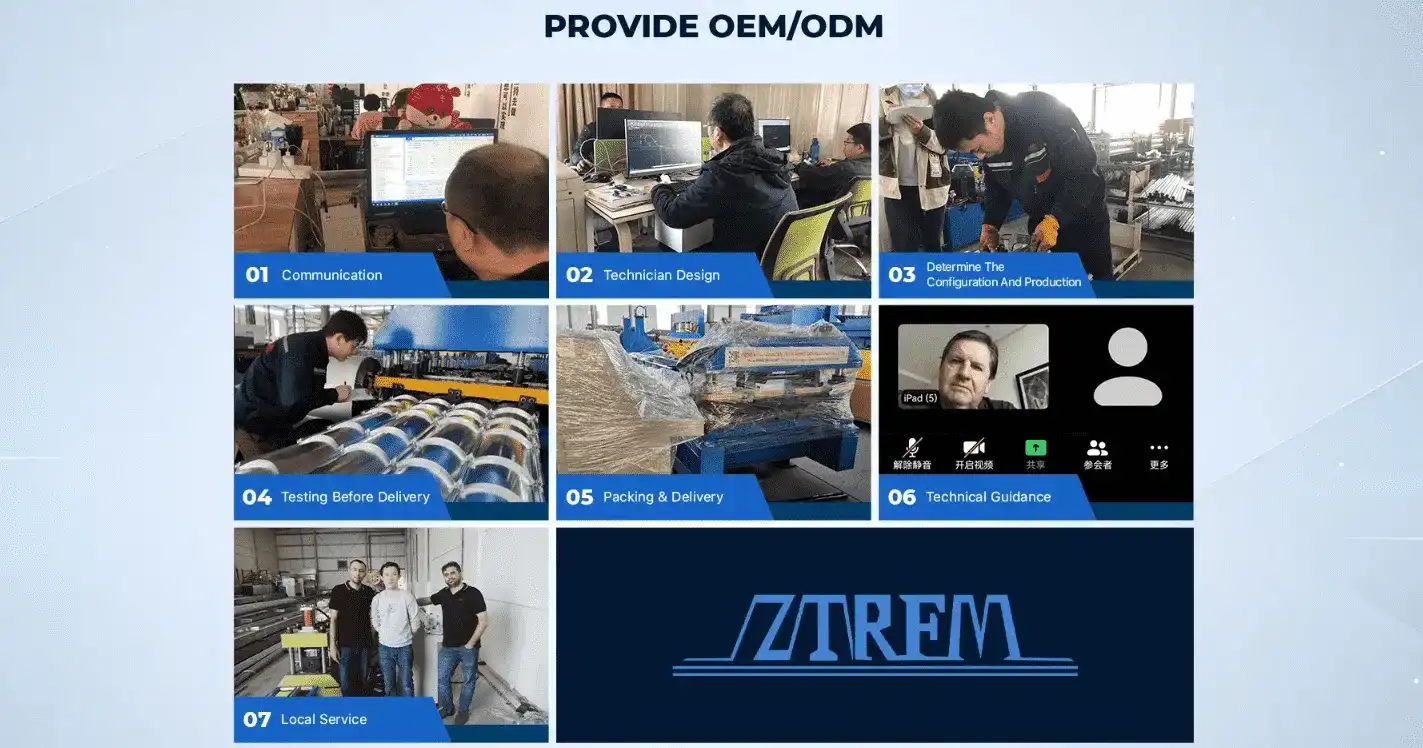
Manufacturers of building roofing systems often have to make changes to meet the needs of different regions' ceiling grid standards or special material requirements. During the specification phase, top makers give engineering consultations where they look over profile sketches, talk about material properties, and suggest the best forming processes. Collaboration like this keeps equipment powers and output needs from not matching up.
Customization goes beyond changing the size of a picture. We've made customized decoiler systems for sites that don't have a lot of room, changed control interfaces so that they can be used by people who speak more than one language, and added upstream punching stations for clients who want to combine multiple processes into one. These changes turn standard equipment into custom solutions that solve certain operating problems while keeping the dependability of tried-and-true base designs.
After-Sales Support and Long-Term Partnership Value
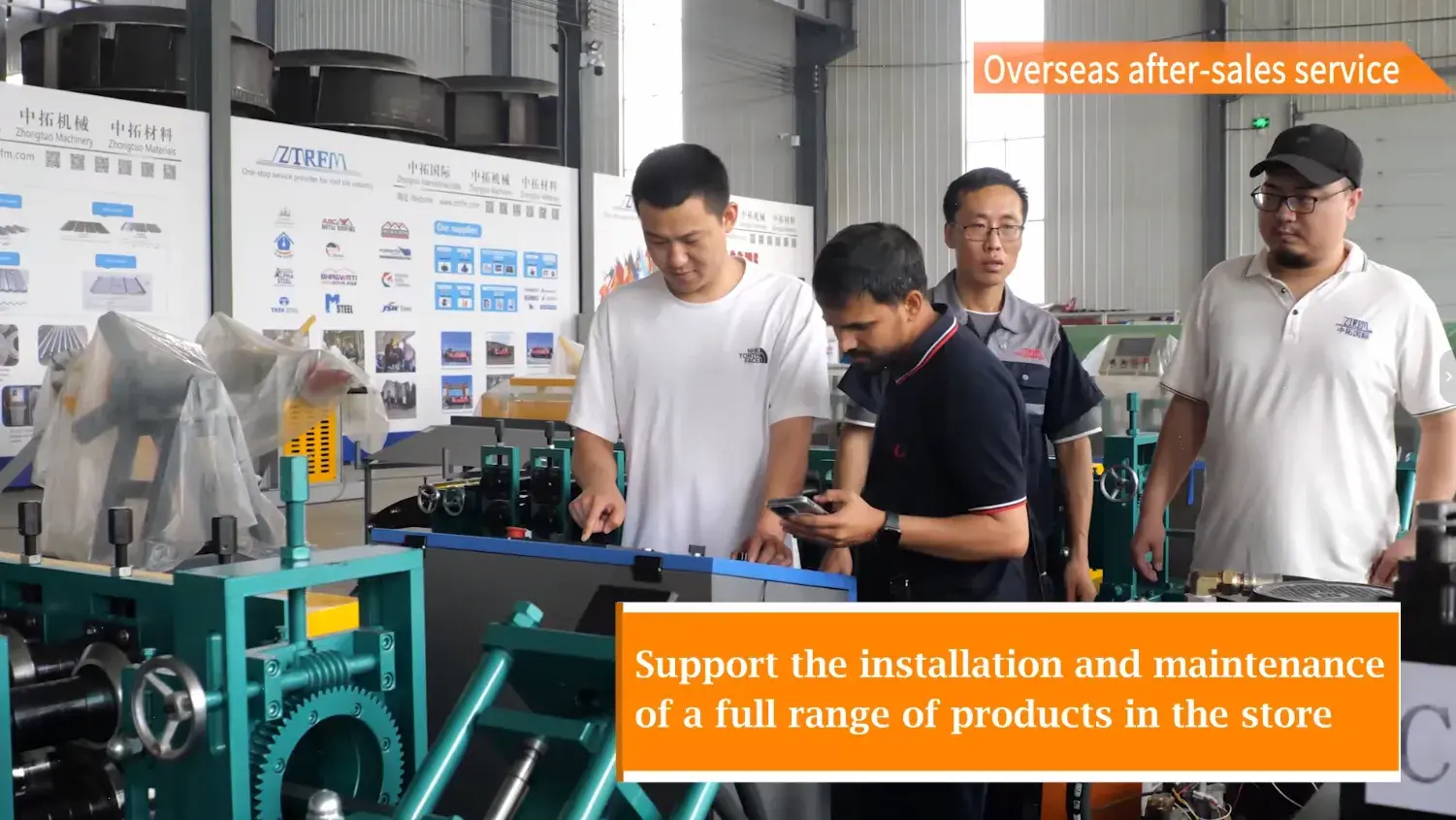
When dates are coming up and fines for late deliveries are looming, equipment reliability is more important than ever. Manufacturers who offer full after-sales support offer technical support by email and phone (our team responds within 4 hours to questions sent to zhongtuorollforming@gmail.com), keep spare parts in stock for quick replacement, and offer remote diagnostics to fix control system problems without having to pay for expensive site visits.
The terms of the warranty show that the maker is sure that the equipment will last. We offer 12-month warranties that cover both the materials and the work, and we offer lifetime technology help to make sure that tools keep working after the warranties end. We're making this promise because we know that buying tools is the start of long-term connections, not just one-time deals.
Verified Performance Through Client Experience
When you look at case studies from real setups, you can see how well the equipment works in real working settings. After adding our automatic ceiling grid line, a building materials company in Ohio went from making 2,800 linear meters of materials every day to making 4,500 linear meters every day. They got their money back in 19 months through higher sales and lower labor costs. An EPC worker in Texas talked about how reliable the machine was, saying that it had only needed one unplanned repair event in 18 months of use.
Testimonials from satisfied customers show things that product descriptions can't: how well the installation was helped, how clear the instructions were, how well the training worked, and how quickly the technical support team responded. Manufacturers who show verified reviews and allow facility tours show openness, which builds buyer trust and tells the difference between sellers who are really good at what they do and those who are just making promises.
Maintenance Tips and Troubleshooting for Ceiling T Grid Roll Forming Machines
Routine Maintenance Schedules
As part of daily upkeep, the roller alignment must be checked visually, lubrication points must be checked, and metal trash must be removed from the cutting areas. This 15-minute process stops 70% of the usual problems with operations. Chain drives need to be oiled, hydraulic oil levels need to be checked once a week, and PLC cooling fans need to be cleaned. By stopping wear-related standard drift, these tasks make components last longer and keep product quality stable.
Every month, rollers need to be carefully checked for damage to the surface or wear patterns that show they are not aligned. Operators need to check the temperatures of the shaft bearings, fix any link bolts that are likely to come loose, and make sure that length measurement sensors are properly set up. Manufacturers usually suggest getting expert service every 2,000 hours of use for their ceiling t grid roll forming machines. This service should include checking the hydraulic system, making sure the electrical connections work, and measuring important measures carefully to find wear before it affects the quality of the product.
Common Issues and Step-by-Step Solutions
Most of the time, uneven roller pressure or material feed errors cause profiles to twist. Make sure the decoiler puts the material in the middle of the first forming station, that the roller pressure changes are tightened the same amount on both sides, and that the thickness of the material meets the machine's requirements. Changing these settings fixes 85% of twisting problems without having to repair any parts.
Cutting lengths that aren't always the same are usually caused by encoder calibration drift or PLC setting mistakes. Compare the real output to the planned length for several pieces to find offsets that are systematic rather than random. Systematic mistakes of ±2mm or more need the encoder to be recalibrated according to the manufacturer's instructions. Random changes could mean that the mechanical cutting mechanism is worn out. Before recalibration, check the sharpness of the blade and the response of the hydraulic cylinder.
Surface Scratching and Plating Damage
Scratches on the surface mean that the rollers are dirty, not well-oiled, or have chrome covering that is broken. Clean the rollers with the right chemicals, make sure that the lube is on the points where the materials touch, and look at the rollers under a microscope for plating chips or rough spots. Broken rollers need to be replaced or re-chromed so that the surface doesn't keep getting damaged, which makes the goods unusable for public use.
When to Contact Manufacturer Support
For hydraulic system failures, PLC error codes, and electrical component failures, you need to know a lot about the maker and have special troubleshooting tools. If you try to fix something without the right training, you could cause more damage and lose your warranty. If you keep having problems even after following the troubleshooting steps, if you see error messages that aren't explained clearly in the working guides, or if your safety systems go off without warning, you should contact technical support.
Parts replacement and online technical help are usually covered by warranties. Some makers also offer on-site service for problems that can't be fixed remotely. Knowing the guarantee terms before buying makes it clear when free support is available and when a service call costs money. This helps you correctly plan for maintenance costs over the life of the equipment.
Procurement and Buying Guide for Ceiling T Grid Roll Forming Machines
Evaluating Suppliers and Documentation
Checking the business's credentials, like business licenses, tax registration, and export licenses for foreign sales, is the first step in evaluating a supplier. Ask for examples from clients in similar industries and make sure to check not only how well the equipment works but also how quickly they respond to help requests after the sale. Manufacturers who have been in business for eight years or more and have had the same clients show steadiness and a wealth of knowledge that helps buyers through better product designs and a stronger support system.
Technical specs in great depth, electrical schematics, hydraulic diagrams, and repair manuals are all things that need to be documented. Local technicians can do regular maintenance and small fixes without help from the maker when there is full documentation. This cuts down on downtime and support costs. We offer full paperwork in English and translation services for clients who need guides in other languages for their ceiling t grid roll forming machine.
Logistics, Installation, and Training
Delivery times are usually between 30 and 45 working days after an order is confirmed. This includes time for making, testing, and getting ready for export. With extra fees, rush orders may cut wait times to 20 to 25 days. It takes 18 to 25 days to ship goods from Tianjin port to major US ports. If the goods need to be transported by road, it can take an extra 3 to 7 days, based on how far away the final destination is from the port facilities.
Best practices for installation include making sure the roots are level and meet the manufacturer's requirements, making sure there is enough electricity, and organizing the installation for a time when production isn't going on so that it doesn't affect how things are already running. Professional fitting keeps alignment problems from happening and makes sure that the hydraulic and electrical systems are properly connected. Training for production supervisors, operators, and maintenance staff should include basic troubleshooting, quality control, operation processes, and regular maintenance tasks. This will help build internal knowledge that will support long-term output.
New Equipment Versus Second-Hand Considerations
When you buy new equipment, you get a guarantee, access to the latest technology, and the chance to make it fit your exact production needs. The higher original investment ($6,500 to $42,500) provides dependability and maker support that lowers risk for companies that need to consistently produce goods.
Used equipment is 40–60% cheaper, but there are a lot of risks that come with it, like not knowing how well it was maintained in the past, the possibility of hidden damage, limited or no guarantee coverage, and the fact that control systems or electrical parts may become obsolete. It may be hard to find parts for older models, which will make the time it takes to fix them longer. We only suggest buying used equipment as a backup or when buyers don't have the money to buy new equipment and have the technical knowledge to carefully check the state of the used equipment.
Negotiation Strategies for International Buyers
The terms of payment have a big effect on processing prices and who takes on the risk. Standard terms include a 30% fee when the order is confirmed and the remaining 70% amount before shipment. Letters of credit protect both parties in bigger transactions. To negotiate longer payment terms or payments based on progress, you need good credit references, but it can help your cash flow while the job is being done.
When negotiating prices, you should look at the total value of the goods, not just how much they cost. Asking for quotes with and without different choices (like automatic vs. manual operation, included tool sets, training, and installation support) shows how much things cost and lets you negotiate. Making promises to buy a lot of different things or agreeing to be reference clients in certain markets can help you negotiate better deals and build relationships that are good for both sides.
Conclusion
When choosing the right ceiling t grid roll forming machine, you need to think about how much it will cost, how reliable the maker is, and what the technical capabilities are. We looked at how modern roll forming technology changes raw coil material into precise ceiling parts. We also compared equipment setups that work with different production levels and talked about buying things, from evaluating suppliers at the beginning to installing and training workers.
Quality makers set themselves apart by having licenses, being able to customize products, offering full support, and keeping client relationships open and honest. Proper care makes tools last longer, and knowing how to fix problems quickly keeps expensive downtime to a minimum. As you look at your facility's choices, keep in mind that equipment is only one part of the puzzle. The quality of the manufacturer relationship is what will determine long-term success. Your goals for making ceiling grids should be met with tools and help that work reliably year after year.
FAQ
1. What is the typical lifespan of a ceiling t grid roll forming machine?
Equipment from reputable makers that is well taken care of can work for 15 to 20 years. How long something lasts depends a lot on how well it is maintained, how much it is used, and how rough the material is. Machines that only work with PPGI wear out less quickly than machines that only work with steel. When the ceiling t grid roll forming machine is used a lot, important parts like rollers may need to be replaced or fixed up every 5 to 8 years. Frames and structural parts, on the other hand, usually last the whole life of the machine.
2. Can ceiling grid machines be customized for different grid sizes?
By changing the roller tools, customization can work with different Main Tee heights, flange lengths, and web thicknesses. For this change to take effect, new roller sets must be made to meet the desired profile measurements. This process usually takes 15 to 20 days. Some makers make quick-change roller cassettes that let you switch profiles in two to four hours. This is helpful for factories that make more than one type of grid. Talk to makers about your unique profile needs during the quote process to make sure that the planned equipment will work with all of your products.
3. How do modern machines compare in energy efficiency?
Fixed-speed equipment made before 2015 uses 30–40% more electricity than new types with variable frequency drives. At normal industrial energy rates in the US, a 4kW machine that runs for 8 hours a day uses about 32kWh of electricity, which costs $3.20 to $4.80 per day. Energy-efficient designs quickly pay for themselves through lower running costs. This is especially important for high-volume facilities where energy costs a lot every month.
Partner With ZTRFM for Superior Ceiling T Grid Roll Forming Solutions
The problems you're having with production should have equipment that is precise, reliable, and works well for a long time. As a company, ZTRFM focuses on creating ceiling T grid roll forming machines that meet the needs of companies that make building systems, light steel structures, and metal profiles all over the world. This equipment, which is ISO9001 and CE approved, is the result of ten years of constant innovation and dedication to client success.
We offer customized solutions backed by full expert support and a global service infrastructure that spans 150+ countries. This is true whether you're looking to increase your current capacity, set up new production lines, or find a reliable provider. You can email our engineering team at zhongtuorollforming@gmail.com for thorough quotes, technical advice, or to set up virtual demos of our equipment's capabilities. Let's talk about how our manufacturing skills can improve the quality and efficiency of your ceiling grid production.
References
1. Smith, J. & Anderson, K. (2021). Modern Roll Forming Technology: Applications in Light Steel Construction. Industrial Manufacturing Press.
2. Chen, L. (2020). "Quality Control in Cold Roll Forming Processes for Architectural Components." Journal of Manufacturing Systems, 45(3), 287-302.
3. Roberts, M. (2022). Suspended Ceiling Systems: Engineering Standards and Installation Practices. Construction Industry Publications.
4. Williams, D. & Thompson, R. (2019). "Comparative Analysis of Ceiling Grid Manufacturing Methods." International Journal of Metal Forming, 38(2), 145-159.
5. National Association of Architectural Metal Manufacturers. (2023). Technical Guidelines for Roll Formed Ceiling Components. NAAMM Standards Publication.
6. Zhang, H. (2021). "Energy Efficiency Optimization in Roll Forming Equipment." Advanced Manufacturing Technology Review, 52(4), 412-428.