- English
- French
- German
- Portuguese
- Spanish
- Russian
- Japanese
- Korean
- Arabic
- Irish
- Greek
- Turkish
- Italian
- Danish
- Romanian
- Indonesian
- Czech
- Afrikaans
- Swedish
- Polish
- Basque
- Catalan
- Esperanto
- Hindi
- Lao
- Albanian
- Amharic
- Armenian
- Azerbaijani
- Belarusian
- Bengali
- Bosnian
- Bulgarian
- Cebuano
- Chichewa
- Corsican
- Croatian
- Dutch
- Estonian
- Filipino
- Finnish
- Frisian
- Galician
- Georgian
- Gujarati
- Haitian
- Hausa
- Hawaiian
- Hebrew
- Hmong
- Hungarian
- Icelandic
- Igbo
- Javanese
- Kannada
- Kazakh
- Khmer
- Kurdish
- Kyrgyz
- Latin
- Latvian
- Lithuanian
- Luxembou..
- Macedonian
- Malagasy
- Malay
- Malayalam
- Maltese
- Maori
- Marathi
- Mongolian
- Burmese
- Nepali
- Norwegian
- Pashto
- Persian
- Punjabi
- Serbian
- Sesotho
- Sinhala
- Slovak
- Slovenian
- Somali
- Samoan
- Scots Gaelic
- Shona
- Sindhi
- Sundanese
- Swahili
- Tajik
- Tamil
- Telugu
- Thai
- Ukrainian
- Urdu
- Uzbek
- Vietnamese
- Welsh
- Xhosa
- Yiddish
- Yoruba
- Zulu
Automatic Size-Change Stud & Track Roll Forming Machine: A Buying Guide
When it comes to efficient production of light-gauge steel framing components, an automatic size-change stud and track roll forming machine is an indispensable asset. This versatile equipment allows manufacturers to produce various sizes and profiles of studs and tracks with minimal downtime between changeovers. In this comprehensive guide, we'll explore the key features, buying considerations, and evaluation criteria for these sophisticated machines.
What features define an automatic size-change stud & track roll forming machine?
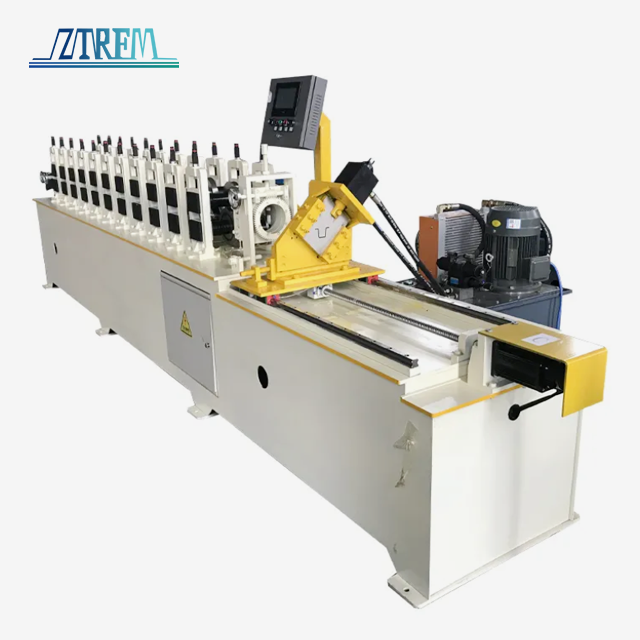
An automatic size-change stud and track roll forming machine is a highly advanced piece of equipment specifically engineered to streamline the production of light-gauge steel framing components used in modern construction. Unlike traditional roll forming lines that require manual adjustment and prolonged setup times, these automated systems integrate intelligent technologies to achieve maximum flexibility, precision, and speed. They are particularly suited for manufacturers who produce multiple stud and track sizes for drywall or structural framing applications.
- Quick-change tooling system: At the heart of these machines lies a rapid tooling change mechanism designed to minimize downtime. Operators can easily switch between various stud and track profiles within minutes, eliminating the need for manual roller replacement or alignment. This feature not only enhances productivity but also allows for smoother transitions between different product specifications during continuous production runs.
- Servo-driven adjustment: Equipped with advanced servo motors, the machine provides precise, automated positioning of forming rollers. This enables instant size changes and profile adjustments through digital input commands, ensuring accuracy and repeatability without manual intervention.
- Multi-axis CNC control: The integration of a multi-axis computer numerical control (CNC) system allows for synchronized management of all forming stations. This ensures consistent forming quality and dimensional accuracy across different profile configurations, regardless of complexity.
- Programmable logic controller (PLC): A centralized PLC coordinates all core machine functions—feeding, punching, forming, cutting, and stacking—into a unified control platform. This provides real-time system feedback, fault detection, and operational optimization for smooth and efficient performance.
- Automated material handling: Advanced machines often feature automatic coil loading, precision feeding, and finished product stacking systems, significantly reducing manual handling and labor costs.
- High-speed capability and quality control: With line speeds often exceeding 100 meters per minute, these machines maintain high-volume production without compromising precision. Integrated laser measurement and quality control systems continuously monitor dimensions and detect deviations to ensure consistent product quality.
- Remote diagnostics and support: Many models also incorporate remote access functionality, enabling manufacturers or technicians to perform system monitoring, troubleshooting, and software updates from any location. Together, these features define an automatic size-change stud and track roll forming machine as a highly efficient, intelligent, and future-ready solution for modern steel framing production.
Buying guide: automatic size-change stud and track roll forming equipment
When considering the purchase of an automatic size-change stud and track roll forming machine, several factors should guide your decision-making process:
- Production capacity and speed: Assess your current and projected production volumes to ensure the machine can meet your output requirements. Consider both the maximum line speed and the realistic production rate, accounting for material changes and maintenance.
- Size range and profile variety: Determine the range of stud and track sizes you need to produce, as well as any specialty profiles. Ensure the machine can accommodate your full product range without compromising on quality or efficiency.
- Changeover time: Evaluate the time required for size changes and profile switches. The most advanced machines can complete changeovers in under 15 minutes, maximizing productive time.
- Material compatibility: Verify that the machine can handle the gauge range, yield strength, and coating types of the steel you plan to use. Some machines may require modifications to process high-strength steels or specialty coatings.
- Automation level: Consider the degree of automation you require, from basic PLC control to fully integrated systems with robotic material handling and packaging.
- Quality control features: Look for machines with built-in quality assurance mechanisms, such as in-line dimension checking, surface inspection systems, and automated scrap separation.
- Tooling design and durability: Investigate the design and materials used in the forming rollers and other tooling components. High-quality, precision-engineered tooling will contribute to better product quality and longer service life.
- Energy efficiency: Modern roll forming machines incorporate energy-saving features such as regenerative drives and optimized hydraulic systems. Consider the long-term operating costs when evaluating different models.
- Maintenance requirements: Inquire about preventative maintenance schedules, availability of spare parts, and ease of access to critical components for servicing.
- Manufacturer support and training: Choose a supplier that offers comprehensive training programs, responsive technical support, and a track record of long-term customer relationships.
- Integration capabilities: If you plan to incorporate the stud and track roll forming machine into a larger production line, ensure it has the necessary interfaces and communication protocols to integrate seamlessly with other equipment.
- Footprint and layout flexibility: Consider the physical space requirements of the machine and any ancillary equipment. Some manufacturers offer compact designs or modular configurations to optimize floor space utilization.

How to evaluate a size-change roll forming machine for stud & track profiles?
When evaluating an automatic size-change stud and track roll forming machine, consider the following criteria to ensure you're making an informed decision:
- Precision and repeatability: Test the machine's ability to consistently produce parts within tight tolerances across multiple size changes. Request sample runs and dimensional reports to verify accuracy.
- Changeover efficiency: Time several profile changes to assess the real-world changeover speed. Look for machines with tool-less adjustments and automated setup features to minimize downtime.
- Surface quality: Examine finished products for any signs of surface marring, scratches, or deformation. High-quality machines should produce clean, smooth surfaces across all profile sizes.
- Edge condition: Inspect the cut ends of produced studs and tracks for burrs, distortion, or inconsistencies. A well-designed machine should deliver clean, square cuts regardless of the profile being formed.
- Noise and vibration levels: Operate the machine at various speeds and observe noise and vibration characteristics. Excessive noise or vibration can indicate potential quality issues or premature wear.
- User interface and controls: Evaluate the ease of use of the machine's control system. Look for intuitive interfaces, clear error reporting, and robust data logging capabilities.
- Material utilization: Analyze the amount of scrap generated during startups, shutdowns, and size changes. Efficient machines minimize waste and optimize material usage.
- Maintenance accessibility: Inspect the stud and track roll forming machine's design for ease of maintenance. Look for features like quick-change wear components, easily accessible lubrication points, and modular construction for simplified repairs.
- Production data and analytics: Assess the machine's ability to collect and report production data. Advanced systems should offer real-time performance monitoring and historical trend analysis.
- Compatibility with existing systems: If integrating with existing equipment or software, verify that the machine can communicate effectively with your current infrastructure.
- Scalability and future-proofing: Consider whether the machine can be upgraded or expanded to accommodate future production needs or new profile designs.
- Safety features: Thoroughly review the machine's safety systems, including emergency stops, light curtains, and interlocked guards. Ensure compliance with relevant safety standards and regulations.
- Environmental considerations: Evaluate the machine's environmental impact, including energy consumption, noise emissions, and any lubricant or coolant usage.
By carefully considering these factors and conducting thorough evaluations, you can select an automatic size-change stud and track roll forming machine that will meet your current production needs and support your business growth for years to come.

Conclusion
Investing in an automatic size-change stud and track roll forming machine for sale is a significant decision that can dramatically impact your light gauge steel framing production capabilities. By understanding the key features, considering crucial buying factors, and conducting a thorough evaluation, you can make an informed choice that aligns with your manufacturing goals and budget.
If you're in the market for a high-quality, versatile roll forming solution, look no further than Cangzhou Zhongtuo Roll Forming Machinery Co., Ltd. With over a decade of experience and a track record of successful installations in over 156 countries, we offer cutting-edge automatic size-change stud and track roll forming machines that meet the highest standards of quality, efficiency, and innovation.
Our team of experts is ready to work with you to design a custom solution that fits your specific production requirements. Whether you need a standalone machine or a fully integrated production line, we have the expertise and resources to deliver.
Don't settle for outdated technology or inflexible systems. Upgrade your production capabilities with a state-of-the-art automatic size-change stud and track roll forming machine from Cangzhou Zhongtuo. Contact us today at coo@zhongtuocn.com to discuss your project and discover how we can help you streamline your operations and boost your competitive edge in the light gauge steel framing market.
References
1. Johnson, R. (2022). Advancements in Automatic Size-Change Roll Forming Technology for Light Gauge Steel Framing. Journal of Manufacturing Engineering, 45(3), 112-128.
2. Smith, A. & Brown, T. (2023). Optimizing Production Efficiency with Multi-Profile Stud and Track Roll Forming Systems. International Journal of Metal Forming, 16(2), 87-102.
3. Technical Committee on Roll Forming. (2021). Best Practices for Evaluating and Selecting Automatic Size-Change Roll Forming Equipment. American Society for Manufacturing Engineers.
4. Zhang, L., et al. (2023). Energy Efficiency and Environmental Considerations in Modern Roll Forming Machinery. Sustainable Manufacturing and Recycling Technology, 8(4), 215-230.